Skip to content
Executive Coaching

Executive Coaching

Executive Coaching ·
Coach the Person, Not the Curriculum

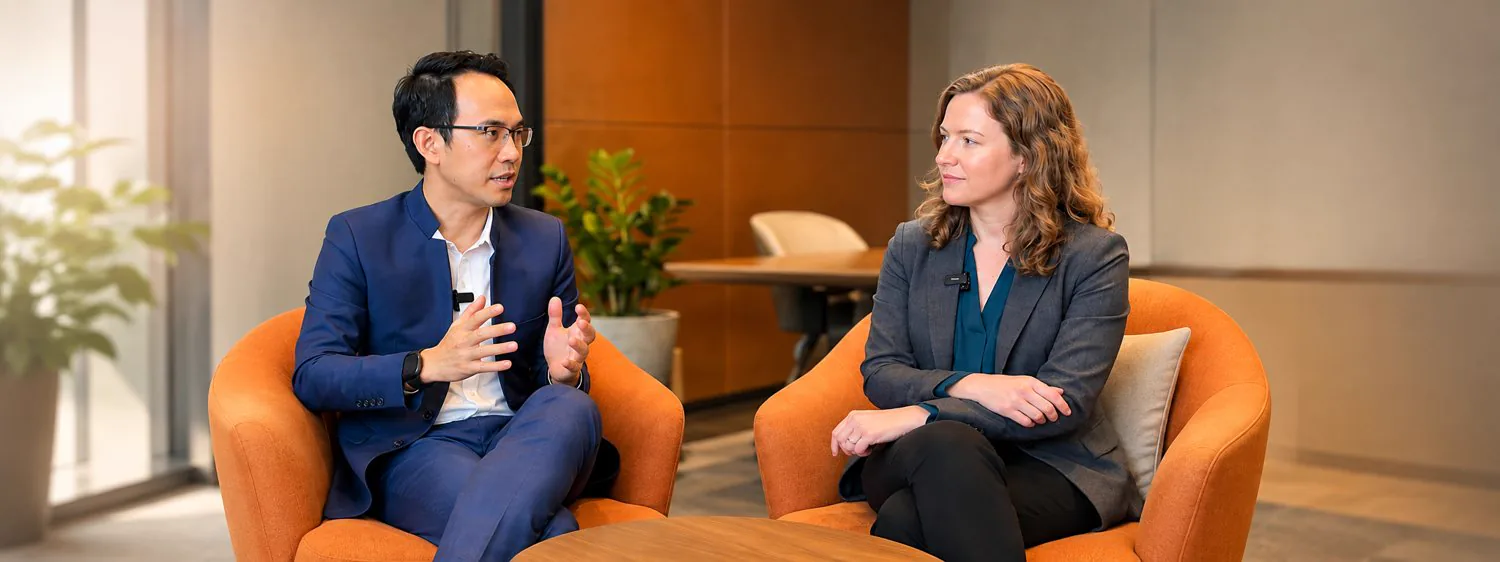
Accelerate leadership capability. Every engagement is built around the leader in front of us — the live situation, the real stakeholders, and the decision that does not have a clean right answer.

Engagement Snapshot

Format
1-on-1 · Small group · Team
Duration
3, 6 or 12-month engagements
Cadence
Every 2–4 weeks, 60–90 minutes
Delivery
In-person Singapore · Virtual
Confidentiality
Coach–coachee confidential by default
Approach
Solution-focused · ICF-aligned · Stakeholder-centred

The Session

Leaders rarely need more answers. They need a better thinking partner.

Coaching has sat alongside every Deep Impact leadership engagement since 2007. The people we coach are capable and busy, and they are carrying decisions without a clean right answer — a new mandate, a difficult stakeholder, a team that has stopped raising problems early.

The work is practical rather than therapeutic. Each session starts from a live leadership situation instead of abstract theory, and between sessions the leader experiments in the real work. Sessions build on strengths rather than cataloguing gaps, because at senior level the constraint is usually clarity, not capability.

Engagements are contracted three ways — coach, coachee and sponsor — with the outcomes agreed at the start and reviewed against at the close. What is said inside the session stays there, and that boundary is exactly what makes the sessions worth having.

What You Get

Outcomes

  • Get clear on the decision actually in front of you, not the one you assumed
  • Build on existing strengths instead of working through a deficit list
  • Handle stakeholder and team conversations with more confidence
  • Turn a broad development goal into observable behaviour
  • Keep momentum between sessions with small, agreed commitments
  • Measure the shift against the outcomes set at the three-way kickoff

How It Works

A five-step coaching engagement

The same shape whether the engagement runs three months or twelve.

01

Fit-call and scoping

A confidential 30-minute conversation with the prospective coach to clarify the situation, the shift you want, and whether the chemistry is right. No commitment, no charge.

02

Three-way contracting

A joint session with coach, coachee and sponsor. We agree the outcomes, what good looks like, the confidentiality boundary, and how we will know it is working.

03

Coaching sessions

Structured 60–90 minute sessions every two to four weeks, each built around a live leadership situation. The gap between sessions is where the leader experiments.

04

Mid-point review

We revisit the contract halfway. What has shifted, what still needs focus, and whether the coaching goal needs a re-steer.

05

Outcome summary and transition

We summarise the shift against the original outcomes and agree the handover — self-directed, manager-supported, or extended at a lighter cadence. Coaching is scaffolding, not a permanent dependency.

Engagement Types

Three ways the coaching runs

Executive Coaching

C-suite, VPs and senior leaders

One-to-one coaching for senior leaders carrying complex strategic, stakeholder and organisational responsibility. Depending on the context the engagement uses a solution-focused approach, Marshall Goldsmith Stakeholder Centered Coaching, or a blend of the two.

  • Confidential 1-on-1 sessions of 60–90 minutes
  • Typically 6 or 12 months at a 2–4 week cadence
  • Works with sensitive, high-stakes and undiscussable content
  • Stakeholder feedback integrated where agreed with the sponsor

Typical fit: a newly appointed MD preparing for their first board cycle, or a technical executive moving into a people-heavy commercial role.
Leadership Coaching

Directors, mid-level leaders and high-potentials

One-to-one or small-group coaching for managers building leadership capability, often as part of a named succession plan or a stretch assignment. The focus tends to be practical: coaching the team, influencing upward, and moving from doing to orchestrating.

  • 1-on-1, or a small cohort of three to six leaders
  • Typically 3 or 6 months, paired with leadership training
  • Delegation, influencing and the tough conversations
  • Outcomes framed as visible behaviour change day to day

Typical fit: a high-potential director joining the leadership team, or a cohort of first-time managers straight out of a programme.

Team Coaching

Intact teams — EXCO, functional, regional

Coaching applied to the team as a single unit rather than to individuals in parallel. We work on how the team decides, handles disagreement, holds itself accountable and delivers as a collective — especially powerful after a restructure, a merger or an executive change.

  • Whole-team sessions, half or full day, six to eight weeks apart
  • Usually opens with a diagnostic and individual 1-on-1s
  • Alignment, decision quality and an explicit team contract
  • Pairs well with facilitated strategic planning or an offsite

Typical fit: a newly formed EXCO after a merger, or a leadership team stuck on the same three arguments for a year.

Who This Is For

Six situations where coaching is the right intervention

Post-promotion leaders

The job is bigger, the stakeholders are different, and what worked at the previous level no longer scales. Coaching compresses the learning curve without leaving them to work it out alone.

Leaders in transition

Cross-border moves, cross-functional moves, post-restructure teams, expat arrivals. The context has changed faster than the leader's operating model.

Named high-potentials

Succession-marked talent with a two-to-three year runway. Coaching becomes the accountability for applying what a programme taught.

Performance-critical moments

Pre-IPO, integration, turnaround, a major change programme. The leader's capability at that specific moment shapes whether the business delivers.

Senior teams stuck on alignment

The same three arguments keep returning and decisions get re-opened after the meeting. Team coaching works the collective pattern, not the individuals.

Leaders navigating complexity

Matrixed reporting, regulated industries, first-in-role with no internal mentor. A thinking partner outside the politics who holds the confidential space.

What To Expect

How the shift usually shows up

Indicative rather than guaranteed — every engagement is measured against the outcomes agreed in its own three-way contract.

By 3 months

Sharper clarity on the situation the leader is actually navigating, rather than the one they assumed at the start. Early behavioural experiments are running and stakeholders begin to notice small but real changes.

By 6 months

New behaviour applied more consistently in real leadership situations, especially where stakeholder feedback, reflection and follow-through are built into the engagement.

By 12 months

Capability integrated across recurring situations, with less dependence on the coach and more ownership of continued growth.

Formats

Choose the shape that fits

Solution-focused coaching

For leaders who need clarity, confidence and practical momentum in a complex situation.

Marshall Goldsmith Stakeholder Centered Coaching

For leaders who need observable behaviour change, stakeholder involvement and disciplined follow-up.

Blended coaching design

For senior leaders who need both personal insight and measurable impact across their stakeholder system.

Team coaching

For an intact leadership team where the unit of change is the collective, not the individual.

Best-fit Moments

Where this works best

Newly promoted leaders C-suite and function heads Named successors Leaders through a restructure Expat and cross-border transitions Post-360 follow-through Founders and owner-managers EXCO teams after a merger
40+
Countries
285+
Organisations
43,000+
Leaders impacted
18+
Years on stage
Top 12%
Certified Speaking Professional

Meet Your Speaker

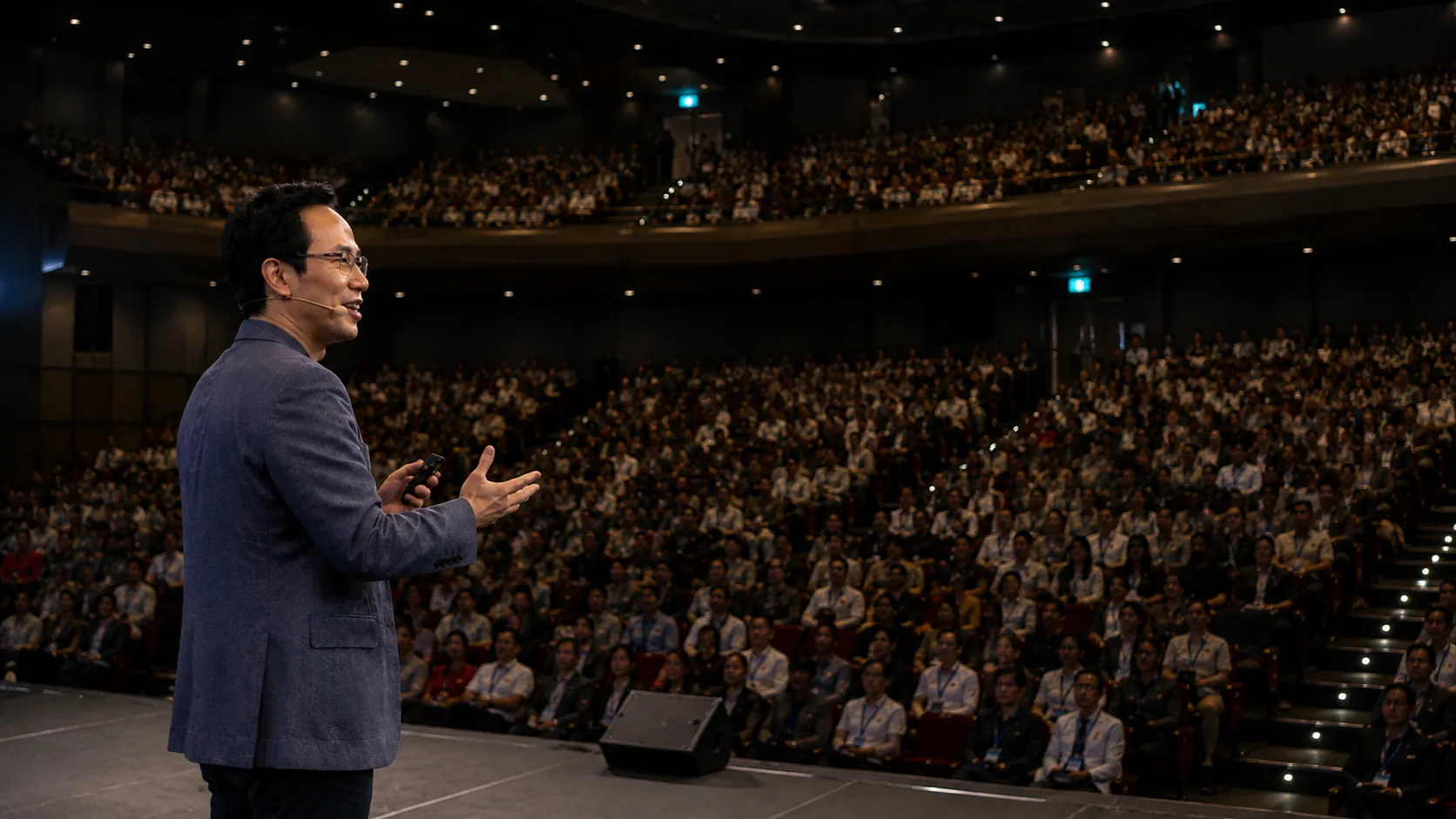
Kenneth Kwan, CSP

Over 18 years. 40+ countries. 285+ organisations. One reason they come back: the room actually moves. Kenneth has spoken from Fortune 500 boardrooms and regional HR congresses to the sales floors of banks, telcos, and hospitals.

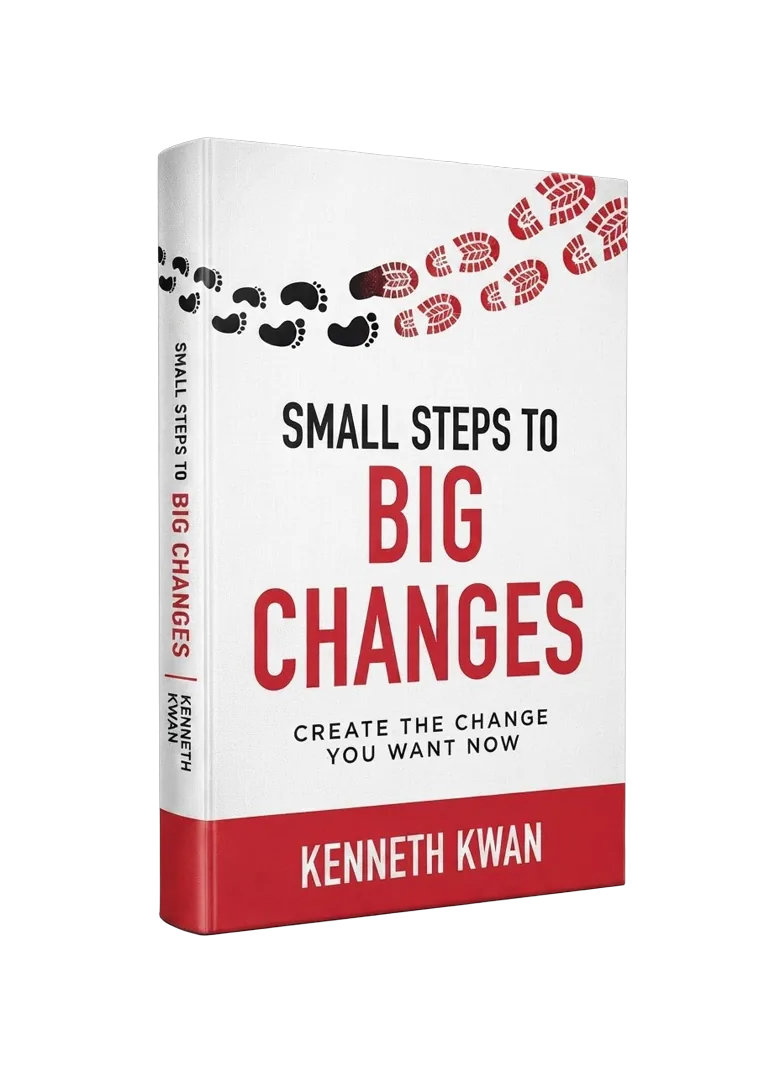
As a Certified Speaking Professional — the designation held by the top 12% of speakers worldwide — and author of Small Steps to Big Changes, he brings both stagecraft and a working method to every session. Clients like AIA, Singapore Airlines, Hilton Worldwide, Coca-Cola, and A*STAR return to him when they want more than a motivational rush.

CSP
Certified Speaking Professional — top 12% worldwide
Author
Small Steps to Big Changes
18+ years
On stage across Asia-Pacific
Featured
Channel News Asia · BFM Malaysia · TEDx
More about Kenneth

FAQ

Booking this session

How long is a typical engagement?

Most run for three, six or twelve months. Three months suits a specific, bounded situation such as a leader preparing for a particular board cycle. Six and twelve months are more common where we want sustained behaviour change and a mid-point review that lands meaningfully.

What is the cadence of sessions?

Every two to four weeks, 60 to 90 minutes each. The spacing matters: the gap is where the leader experiments with new behaviour in live work. Too close together compresses the experiment; too far apart loses continuity.

How is confidentiality handled, and who sees what?

Sessions are confidential between coach and coachee by default. What goes back to the sponsor is agreed in the three-way contracting session — usually attendance, progress against the agreed outcomes, and anything the coachee has consented to raise. Verbatim content is never shared.

How do we start?

With a free, confidential 30-minute fit-call between the leader and a suggested coach. The goal is to clarify the situation, stress-test whether coaching is even the right intervention — sometimes it is not — and gauge chemistry. Nothing is committed until both sides agree to go ahead.

How do we choose between executive, leadership and team coaching?

Executive coaching fits C-suite and senior leaders with individual, high-stakes situations. Leadership coaching fits mid-level leaders and high-potentials building capability, commonly alongside a training programme. Team coaching fits when the unit of change is a collective. If in doubt, describe the situation on the fit-call and we will recommend the format.

How do you measure coaching outcomes?

Against the three-way contract agreed at the start, not a generic template. Typical measures are structured or light-touch stakeholder feedback, observable behaviour shifts reported by the line manager, progress on the specific situations the coaching was designed around, and — in longer engagements — business results connected to the capability shift.

Can coaching be virtual, or does it need to be in person?

Both work well. Many Singapore engagements are hybrid: in person for contracting and key transitions, virtual for the rest. Fully virtual is normal for regional leaders who travel. Team coaching usually benefits from at least one in-person session at the start.

What is the difference between coaching and leadership training?

Training transfers a set of skills to a cohort through a designed syllabus, which is excellent for building capability at scale. Coaching works with one leader, or one team, on their specific situation, and the content emerges from that situation. Many clients use both — the programme builds capability, the coaching drives application.

Ready when you are

Tell us about the leader, the situation, and the outcome you need.