August 27, 2026
Leading Through Uncertainty Keynote Speaker for Leaders Facing Constant Change
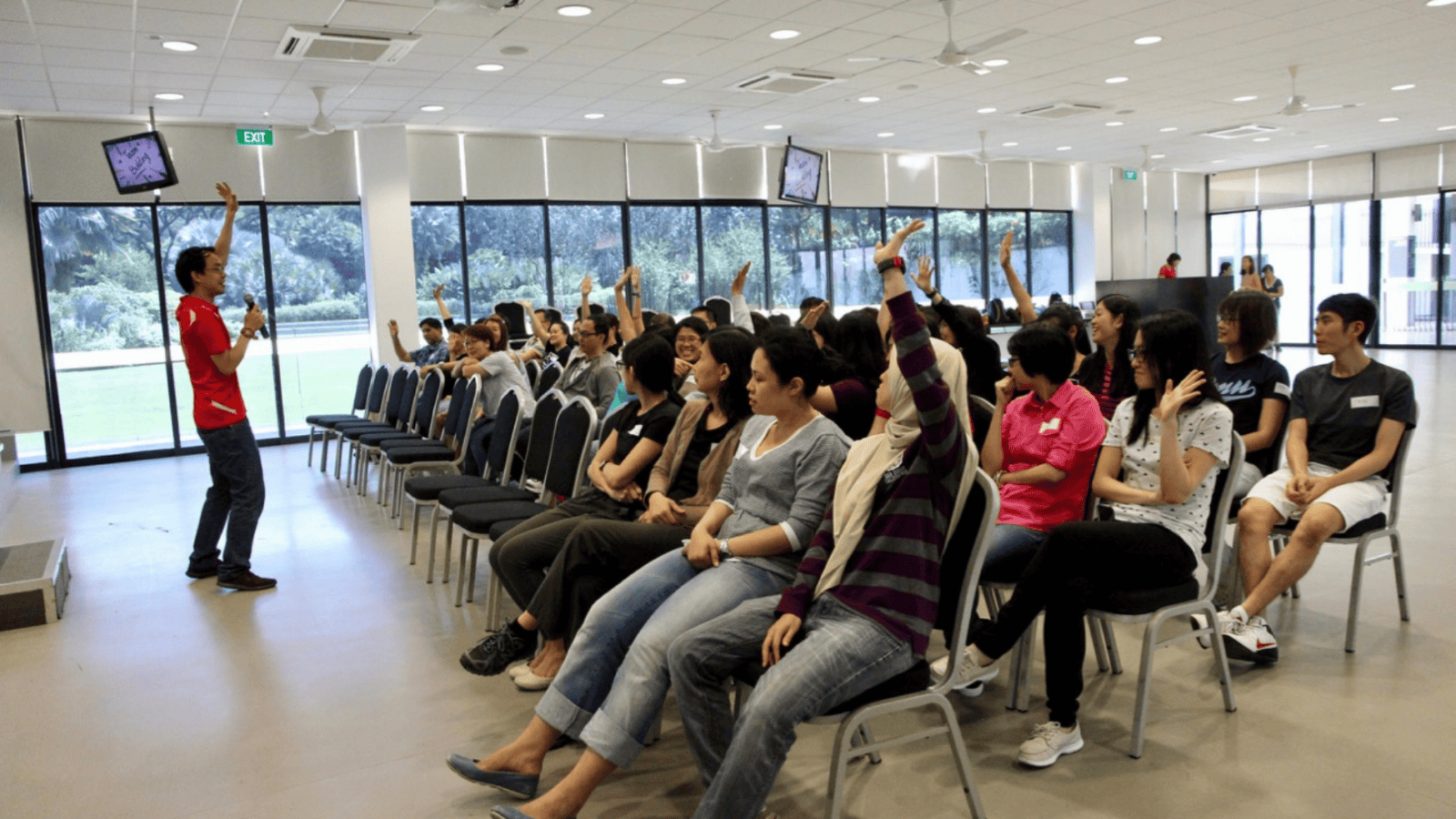
Change rarely arrives with a clear roadmap. For today’s leaders, uncertainty has become part of the job, from shifting priorities and emerging technologies to evolving customer and employee expectations.
Leading through uncertainty requires more than staying calm when things change. Leaders need to make decisions with incomplete information, communicate clearly when answers are still emerging, and help their teams keep moving without creating false certainty. A leading through uncertainty keynote speaker can help leaders develop practical ways to approach ambiguity, make purposeful decisions, and keep progress moving even when the path ahead is unclear.
Let’s explore how leaders can respond to constant change with greater clarity and adaptability. Through practical insights, relevant examples, and engaging stories, the session helps leaders rethink how they approach uncertainty, communicate with their teams, and turn unclear situations into opportunities for meaningful action.
Key Takeaways:
- Uncertainty becomes heavier when leadership conversations keep circling the problem.
- Leaders do not need false certainty; they need a practical way to turn uncertainty into movement.
- The most useful question is often: what is the next action we can take with the information we already have?
- A strong keynote can give an audience shared language, but real work still depends on follow-through.
What a Leading Through Uncertainty Keynote Speaker Helps Leaders Change

For event planners, uncertainty usually shows up as stalled action rather than a shortage of ideas
In most organisations, the issue is not intelligence. It is repetition. I see capable people spend too much time describing disruption, change, and risk, while too little time deciding what happens next. An uncertainty keynote speaker should help an audience recognise that pattern quickly, because a team rarely needs more analysis of what is obvious.
For senior leaders, productive caution is different from costly hesitation
I respect careful judgement. Some decisions need more evidence, especially where reputation, regulation, or major spend is involved. The problem starts when caution becomes the default answer to everything. In uncertain times, I encourage a leadership team to separate the decisions that truly need deeper review from the decisions that can move through a smaller test. McKinsey makes a similar point: decision quality improves when leaders distinguish between choices that need more analysis and choices that can be made and adapted.
For HR and learning leaders, the keynote outcome should be visible in behaviour
When I hear an event brief built around resilience or inspiration, I usually ask one more question: what should people do differently next week? A useful lead uncertainty keynote should leave managers with practical language they can use in meetings, not just a feeling they enjoyed for an hour. If behaviour does not change, the message was too vague.
Why Small Actions Give Leaders More Control During Constant Change
For leaders, replace the search for perfect certainty with the smallest responsible experiment
When pressure is high, people often delay because the full path is still unclear. I have found it more useful to reduce the size of the next move. A leader does not always need a complete answer. Sometimes they need a clear experiment, a review point, and enough confidence to start. That is how I help leaders navigate uncertainty without pretending the world is tidy.
For management teams, action creates belief faster than waiting does
In my experience, motivation follows movement far more often than movement follows motivation. I have watched a leadership team debate a complete communication overhaul when the better move was much smaller: one owner, one update format, one week of testing. The point was not speed for its own sake. The point was to help the team see progress in real work instead of waiting for perfect alignment.
For transformation leaders, measure movement before judging the final result
During rapid change, I look for signals that show whether work is moving: response time, clearer ownership, shorter meetings, fewer repeated escalations, and better use of available information. More activity is not the same as progress. A practical uncertainty keynote should help people recognise that difference so they can build momentum before the final outcome is visible.
How Better Leadership Questions Turn Uncertainty Into Useful Action
For Leadership Teams, Ask Questions That Move Beyond the Problem
The fastest way I know to change the quality of a conversation is to change the question. Questions such as why did this happen, who caused it, and why is this still a problem? can uncover useful detail, but they can also keep a team focused on the past. In an uncertainty keynote speaker session, I often show how a conversation can sound responsible while leaving people completely stuck.
For Managers, Shift Conversations Towards Action
Better questions move attention towards what can happen next: what can we influence, what would improvement look like this week, who owns the next step, and when will we review it? I use these questions because they create accountability with direction. CCL has also noted that leaders facing uncertainty are more effective when they create direction together rather than carrying it alone.
For Leaders, Turn Uncertainty Into a Conversation About Possibility
When the path ahead is unclear, leaders do not always need to have the answer. They need to create the conditions for better thinking. Asking what is within our influence, what could we try, and what would move us forward can help teams shift from analysing uncertainty to taking purposeful action.
For Event Organisers, Demonstrate the Method Live
I remember a public-sector session in Singapore where the room kept returning to the same friction between units. The first ten minutes were full of blame and history. Then I asked one new question: what would a useful improvement look like by next Friday, and who can own the first move? The energy changed almost immediately. People stopped defending the past and started building a solution they could test.
What Leaders Should Be Able to Do After the Keynote
For executives, create clarity without pretending every answer is known
After a strong lead uncertainty keynote speaker session, I want a leader to communicate three things clearly: current reality, present priority, and the next review point. People can handle incomplete information more easily than mixed messages. McKinsey has made the same case in its work on communication during uncertainty.
For managers, shorten meetings by changing the structure of discussion
I usually advise managers to organise a meeting in four moves: name the outcome, limit problem description to what is needed, identify options, and finish with one owner and one review date. That structure helps a team make a decision without drowning in commentary. It is simple, but simple is often what leaders need most under pressure.
For employees, restore agency when large decisions remain outside their control
Not every issue can be solved by the people closest to the work. Even so, a leader can help by separating what the team controls, what it can influence, and what it cannot currently change. That distinction reduces anxiety because it gives people somewhere honest to place effort.
For sponsors, connect the keynote takeaways to the event’s business objective
A keynote lands better when the sponsor is clear about the business challenge behind the event. Is the audience dealing with slow decisions, change fatigue, mixed leadership messages, or a loss of confidence? I can adapt the session for senior leaders, managers, or a mixed audience, but the strongest results usually come when the purpose is clear before I walk into the room.
How Do You Choose the Right Keynote Speaker for Leadership Uncertainty

Leadership uncertainty rarely comes with a clear playbook. When priorities shift, new technologies disrupt established ways of working, and teams need direction despite incomplete information, leaders need practical ways to think and act through ambiguity.
Look for Practical Leadership Experience
A strong keynote speaker should understand the realities leaders face when navigating change. Look for someone who can connect leadership principles to real situations, from making decisions with incomplete information to maintaining team focus when circumstances keep changing.
Consider Whether the Speaker Offers Practical Takeaways
A keynote should give leaders more than inspiration. Look for a speaker who provides ideas, questions, and approaches that can be applied after the event. The most useful sessions leave leaders with something practical to reflect on, discuss with their teams, and put into action.
Look for a Speaker Who Engages the Room
Uncertainty creates different challenges for different leaders, so a one way lecture may not be enough. An effective keynote uses relevant stories, thoughtful questions, and audience interaction to help participants connect the ideas to their own leadership experiences.
Match the Keynote to Your Leadership Challenge
Your organisation may be navigating AI, organisational change, innovation, growth, or shifting customer expectations. The speaker should be able to understand your context and connect the keynote to the challenges your leaders are actually experiencing.
Choose a Speaker Who Challenges How Leaders Think
The most valuable keynote may not provide every answer. It can help leaders question assumptions, see situations differently, and recognise possibilities within uncertainty. When leaders leave with better questions and a clearer sense of what they can influence, the keynote has the potential to create value well beyond the event itself.
Conclusion
Uncertainty is not something leaders can always remove. What they can influence is how they respond to it, how they communicate with their teams, and whether unclear circumstances become a reason to pause or an opportunity to move forward.
The most effective approach is not about having every answer. It is about asking better questions, creating clarity around what matters now, and identifying practical actions that can be tested, reviewed, and improved as new information emerges.
If your organisation is looking for a leading through uncertainty keynote speaker to help leaders think differently, navigate constant change, and turn uncertainty into practical action, connect with Kenneth Kwan to discuss a keynote aligned with your leadership audience and event objectives.
Frequently Asked Questions
What does a leading through uncertainty keynote speaker cover?
I usually cover decision-making, communication, team ownership, and the questions leaders ask when information is incomplete. My focus is practical: how to reduce repeated problem talk and help people move towards a clear next step. I do not try to remove uncertainty. I help leaders respond to it more usefully.
Will this actually change anything after one session?
It can, if the event is tied to a real leadership need and someone reinforces the message afterwards. A keynote can create a shared language, a better question, and a stronger first move. It cannot replace management discipline or long term change work.
Can the keynote be adapted for senior leaders, managers, and mixed audiences?
Yes. I adjust the examples, the phrasing, and the level of challenge to fit the audience in the room. Senior leaders usually need language for direction and trust, while managers often need practical ways to guide a team and make decisions under pressure.
Read more: Choose an Executive Speaker Who Leaves a Mark, Not Just Fills a Slot