August 28, 2026
Being Change-Ready Is Less About Planning and More About Habits
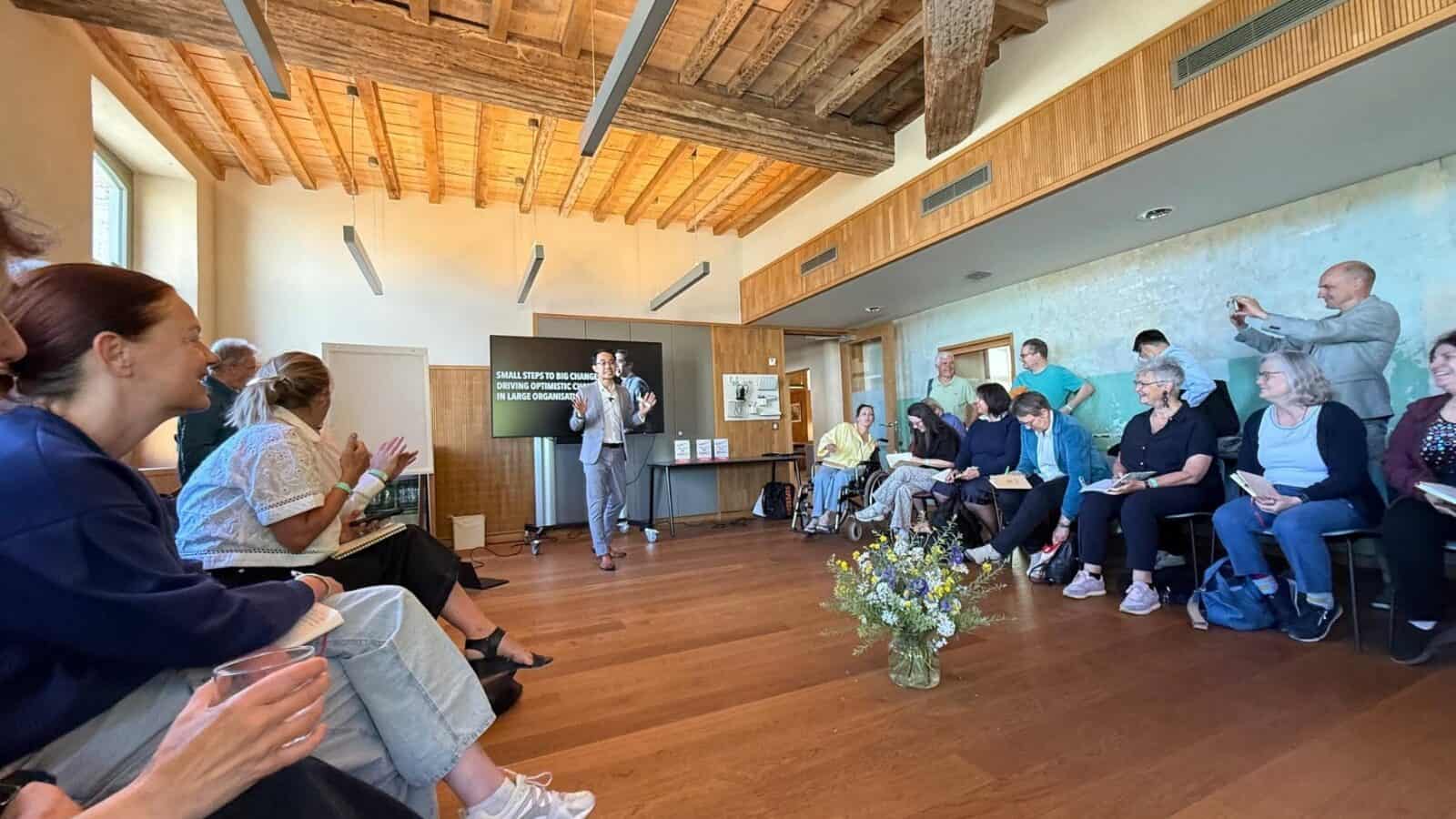
I have sat in enough boardrooms to lose count of the number of change management decks I have watched senior leaders present with total conviction. Beautiful timelines. Clear milestones. A communication plan colour-coded by stakeholder group. And yet, six months later, I am often called back in to help the same organisation because the change initiative stalled, the workforce reverted to old ways of working, and nobody can quite explain why the plan did not stick.
Here is what I have come to believe after years of meeting leaders: a plan tells people what should happen. A habit is what actually happens when nobody is watching. If you want your organisation to be genuinely change ready, you need to stop treating readiness as a document to sign off and start treating it as a set of habits to build.
Key Takeaways
- Change readiness is built through consistent habits, not detailed plans.
- Small decisions and regular reflection help teams adapt faster.
- Leaders build readiness by modelling openness and adaptability.
- A change ready culture requires everyone to take responsibility.
What does it actually mean to be “change ready”?
Change readiness is not a mood. It is not a slide that says “our people are excited about this journey.” True change readiness is the demonstrated capability of an organisation, its leaders, and its employees to absorb, respond to, and sustain a shift in direction, repeatedly, and without needing a crisis to force it.
This distinction matters because most organisations conflate two very different things:
- Change management the structured process of planning, communicating, and executing a specific change initiative.
- Change readiness (or change capability) the underlying muscle that determines whether people can actually do what the plan asks of them.
You can have excellent change management on paper and still fail, because the organisation itself was never ready to change. I have seen this happen with well-resourced teams, articulate leaders, and generous budgets. The plan was not the problem. The habits underneath it were.
According to McKinsey, the old assumption that roughly 70 percent of change programmes fail still holds broadly true but organisations that build the right capabilities can flip that figure to a 70 to 80 percent success rate. The gap between those two outcomes is rarely the quality of the plan. It is whether the organisation had already built the habits of adapting before the change ever landed.
Why planning alone does not build a change ready culture
Planning is a leadership exercise. It happens in a room with a whiteboard, a handful of senior leaders, and perhaps an external facilitator brought in to sharpen the thinking. It is valuable, I would never tell a client to skip it. But planning happens at the top of the organisation, and habits happen everywhere else, every day, at every level.
I often ask leadership teams a simple question: if I shadowed one of your frontline employees for a week, what would I actually see them doing differently because of this change initiative? Too often, the honest answer is “not much yet.” The plan exists in a document. It has not yet become a pattern of behaviour.
This is precisely the gap that Deloitte’s 2026 Global Human Capital Trends research captures. The report found that workers are absorbing change at a punishing pace, a third of employees experienced 15 major organisational changes in the past year alone, yet only 27 percent of leaders believe their organisations manage change well. The intent to manage change is there. The lived capability to do it, day to day, is not.
Even more telling is a second finding from the same research: 85 percent of leaders say it is critical to build their organisation’s ability to adapt at speed, yet only 7 percent say they are actually leading in helping their workforce continuously grow and adapt. That 78-point gap between intention and execution is, in my experience, exactly where change initiatives quietly die. Leaders plan for change. Very few build the daily habits that make people genuinely ready for it.
“You cannot plan your way into a change ready culture. You can only practise your way into one. Every habit a team repeats under normal conditions is the habit they will fall back on under pressure.”
-Kenneth Kwan, CSP
The habits that build change readiness in a company
If planning is not where readiness comes from, where does it come from? In my work with leadership teams across Singapore, I have found that change ready organisations share a small number of consistent habits, not personality traits, not culture statements on a wall, but repeatable behaviours.
1. Small, frequent decisions rather than one big rollout
Organisations that build change capability tend to make decisions in small, reversible increments rather than committing to one enormous rollout. A senior leader who is comfortable making a modest decision on Monday, reviewing its impact by Friday, and adjusting the following week is training their team in exactly the muscle they will need when a new initiative or larger change arrives. Waiting for the “perfect” long term plan, by contrast, often means an organisation never practises the decision making habit at all.
2. Continuous learning built into the working week, not bolted onto it
I have noticed that the organisations that adapt fastest treat continuous learning as part of how work gets done, not as a training course scheduled once a quarter. This might look as simple as a fifteen minute debrief after a project milestone, or a team habit of asking “what would we do differently next time?” before moving on to the next task. Over time, this habit compounds. It builds the reflex of learning from experience rather than repeating the same mistake at scale, strengthening the organisational culture needed to implement change effectively.
3. Leaders who narrate their own adaptation
One of the most underrated habits I encourage senior leaders to adopt is simply talking, openly, about the moments they had to change their own mind. When a leader says “I assumed X, the data showed Y, so I am changing course,” they are modelling exactly the behaviour they want their teams to embrace. Employees rarely learn to embrace change from a memo. They learn it by watching what their leader actually does when their own plan turns out to be wrong. This makes adaptation a visible part of the change process, rather than something employees are expected to figure out after a change is announced.
4. Psychological safety to raise a concern early
A change ready team is one where an employee can say “I do not think this is working” in week two of an initiative, rather than staying quiet until it fails in month six. This is a habit of communication, built through repeated, low stakes practice, not a policy that can be announced into existence. When people can raise concerns early, leaders can respond before small issues become barriers to implement change, helping the organisation build an organisational culture that is more responsive to new initiatives.
Leadership habits that build a change ready culture

Senior leaders often ask me where to start, particularly when they are managing a team that has grown fatigued by one initiative after another. I usually point them towards three habits that compound over time.
Start smaller than feels comfortable. A senior leader who insists on a full organisational rollout before testing anything is, ironically, slowing down the very change readiness they are trying to build. Piloting a change with one team first gives you a working example, a group of employees who can speak credibly to their peers, and an early signal of what needs adjusting.
Protect time for reflection, not just execution. It is tempting for a busy leadership team to move from one initiative straight into the next. But without a habit of pausing to ask what worked, an organisation cannot build institutional memory. It simply repeats its mistakes with new vocabulary.
Make readiness a shared responsibility, not a project office function. I have worked with organisations that assigned “change readiness” entirely to a project management office, as though it were a compliance checklist. The organisations that build genuine change capability instead treat readiness as something every team, and every employee, has a hand in shaping.
What this means for you, whether you lead a team or an entire organisation
If you are a senior leader reading this while planning your next transformation, I would encourage you to resist the instinct to reach immediately for a bigger plan, a longer timeline, or a more detailed communication strategy. Ask instead: what is one small habit my team could start practising this week that would make us more capable of adapting, regardless of what the next change turns out to be?
That question, asked consistently, does more to build a change ready organisation than any strategy document I have ever helped write. Plans expire the moment circumstances shift. Habits are what remain, and what your organisation, your leaders, and your employees will fall back on when the plan runs out.
I still believe in planning. I simply no longer believe it is where readiness comes from. If you are serious about building a change ready culture, start with the habits your teams practise on an ordinary day, long before the next change initiative ever reaches your desk.
Ready to build a more change ready organisation? Connect with Kenneth Kwan to explore practical ways to help your leaders and teams build the habits, behaviours, and capabilities needed to adapt with confidence.
Frequently Asked Questions
How can leaders tell if their organisation is truly change ready?
Look at how teams respond to unexpected challenges, feedback, new information, and changing priorities before a major transformation begins.
Can change readiness be built without a major transformation?
Yes. Everyday practices such as reflection, experimentation, open feedback, and small decisions can strengthen change readiness over time.
What is the first step towards building change readiness?
Identify one behaviour your team needs to improve and create a simple opportunity to practise it consistently.
How does organisational culture affect change readiness?
An organisational culture that encourages learning, openness, and adaptation makes it easier for employees to respond positively when change occurs.
How can employees contribute to change readiness?
Employees contribute by raising concerns early, sharing ideas, learning from experience, and staying open to adjusting established ways of working.
Read more: How Does Psychological Safety Support Teams Through Change?