In my work with organisations, I have seen substantial investments in leadership development yield disappointing results because success was never clearly defined or consistently measured.
Promising initiatives lose momentum, decisions become inconsistent across teams, and organisations often find themselves unable to link leadership behaviours to the outcomes they expect.
I have found that the answer is to approach leadership impact with the same discipline applied to any strategic priority: establish clear outcomes, measure the behaviours that drive them, and reinforce what works over time. translates into lasting organisational and people outcomes.
According to Harvard Business Publishing Corporate Learning (2025), a persistent challenge in leadership development is demonstrating a clear connection between investment and measurable business results, rather than relying solely on attendance figures or favourable feedback. Ultimately, the mark of a high-impact leader is not the impression they create in the moment, but the sustained changes in decisions, behaviours, and outcomes that follow.

I have met plenty of leaders described as decisive, warm, visionary, or direct. Those labels describe a leadership style, but they do not tell me whether that leader strengthened the team, the culture, or the business. That is why I separate style from results.
I think of leadership effectiveness as doing the role well. A high impact leader goes further. They create change that lasts beyond the meeting, the presentation, or their own personality. A leader can run tidy meetings and still leave people cautious, passive, or unclear. That may be competent management, but it isn't high impact.
First, individual performance: does each team member show better judgement and follow-through? Second, team engagement: do people speak honestly and contribute more fully? Gallup's research suggests managers account for 70% of the variance in engagement, which tells me leadership behaviour matters daily, not occasionally. Third, organisational performance: are customers better served, decisions clearer, and avoidable escalations lower? Fourth, long term growth: is the leader building strength, successors, and capability that outlasts a transition?
I often see organisations count effort because effort is easy to count. More meetings, more updates, and more training don't automatically produce a high impact leader. If activity doesn't improve trust, performance, or the quality of decisions, it's only motion. High impact leadership asks a harder and better question: what changed because this person showed up the way they did?
Once results are defined clearly, measurement becomes less mysterious. I don't look for one perfect score. I look for a chain of evidence connecting leadership behaviour to team and business outcomes.
I tell HR and L&D leaders not to wait only for revenue, retention, or annual engagement data. By then, the signal is late. Leading indicators show whether leadership is moving in the right direction now: trust, coaching frequency, clarity, collaboration, and the quality of decisions. Lagging indicators show what those behaviours produced later: retention, customer experience, productivity, and promotion rates. I want both, but I never confuse their timing.
This isn't just theory. Deloitte's own research has noted that relying only on lagging indicators has proven ineffective for gauging leadership and culture risk, with billions in valuation lost in a single year from issues that lagging metrics failed to catch early. That's the practical cost of waiting for annual numbers instead of watching the signals in front of you.
A useful dashboard is simple. I'd track engagement by manager, regrettable turnover, execution reliability, internal promotions, innovation, psychological safety, and customer patterns. What matters isn't a single number but the trend across quarters. That's where a leadership assessment earns credibility.
Numbers tell me something moved. They don't tell me how it felt. Short interviews and manager reflections fill that gap whether people feel heard, safer speaking up, or quietly disengaged underneath a good score.
Deloitte University illustrates the pairing well. Deloitte follows up with individuals or managers around 90 days after select programmes, not just to check satisfaction but to see if the coaching actually changed behaviour on the job. A number shows movement; a comment like "my manager actually listens now" shows whether it was real.
Skip that layer, and engagement scores can look strong while people feel unseen underneath them.
When I speak about behaviour change, I return to one simple idea: look for what is already working before trying to invent something new.
Very often, a high impact leadership pattern is already visible in pockets of the organisation the job is to find it, understand what's different there, and scale it.
I don't see self-awareness as a soft exercise. It's operational. If a leader misreads how they land, they repeat the same mistakes with confidence. A leadership assessment, used well, shows where a leader creates clarity, where people go quiet, and where strengths already exist. That's usually where I'd start.
Weak communication is rarely about volume. It's about whether people understand the goal, the trade-offs, and what good work looks like right now. Clear communication is a leadership skill that reduces drift and helps a team move with less guesswork.
I've watched trust rise when people can predict the logic behind a leader's decisions, even when they don't like every outcome. Consistency doesn't mean rigidity. It means the team can see principles, not mood swings. That kind of relationship grows stronger under pressure.
After a talk with leaders in a major healthcare system, one director told me he'd realised every one-to-one began with what was late and what was wrong. He changed one habit and asked where progress had happened despite the pressure. The conversation shifted from reporting upward to thinking forward and thinking forward is really just critical thinking applied to the team's own work. That's coaching.
Research in PLOS One (2022) found that engaging leadership was associated over time with stronger team effectiveness, with trust, communication, input, and participation in decisions helping explain why. I find that rings true in real rooms. People perform better when a leader helps them think, not simply comply.
Accountability doesn't need to be heavy. A weekly review, visible priorities, and a short reflection on what improved can be enough. Good systems help a leader keep practising new habits after the inspiration of a talk fades, and they set a standard the rest of the team can follow.
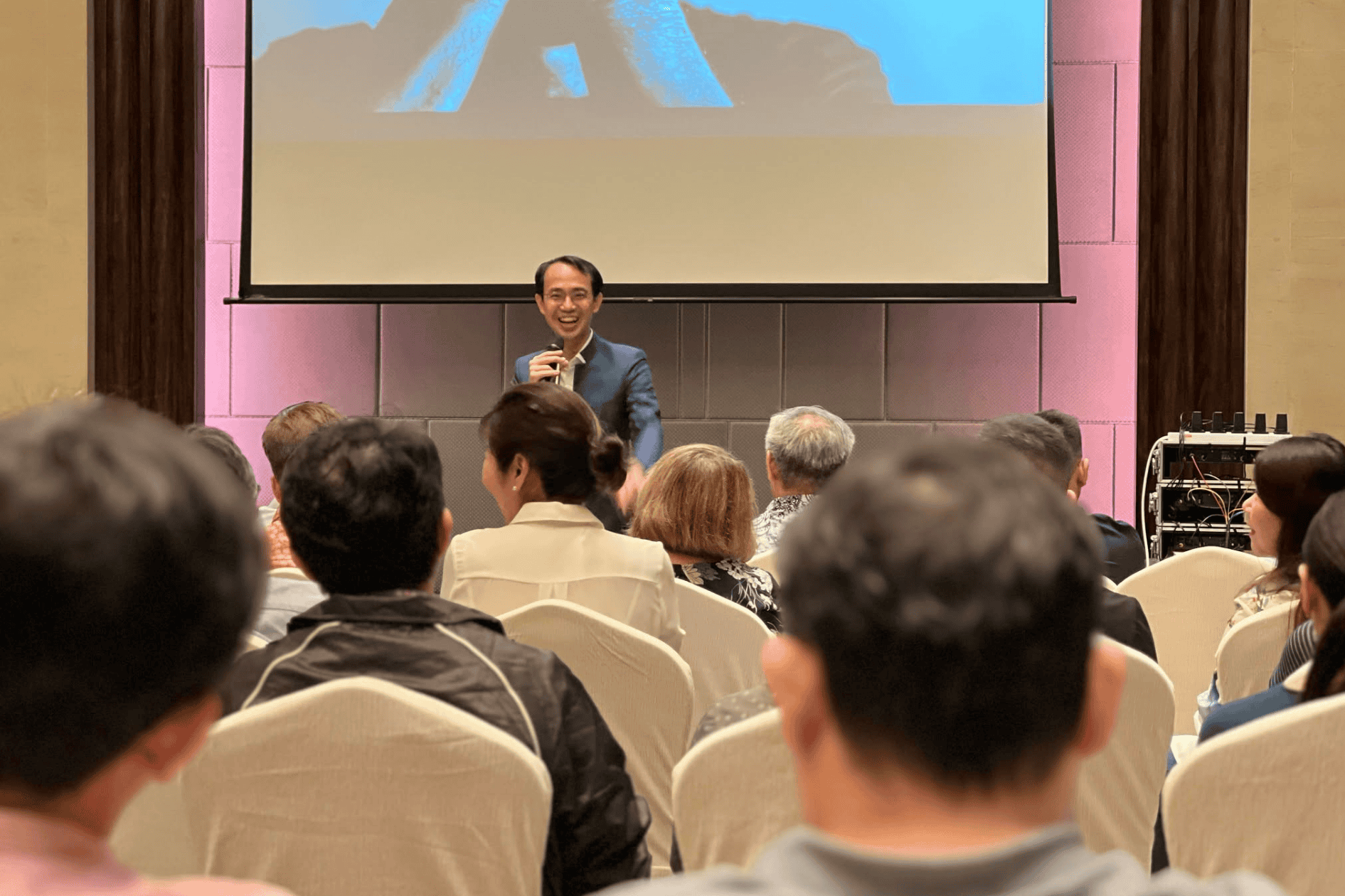
I earn my living on stages, so I say this carefully: a keynote can create an important shift, but it can't replace practice. A serious leadership development programme needs reinforcement, coaching, and managerial follow-through. Without that, even strong insight becomes a pleasant memory rather than a genuine capability.
I've seen cultures become slower and less honest when every mistake is treated as a personal threat. A great leader doesn't romanticise failure, but does build a positive environment where problems surface early, learning is possible, and people stay candid.

Improvement is one thing; staying improved is another. Sustained results happen when leadership stops being a workshop topic and becomes part of daily operations.
If expectations live only in speeches or competency documents, they vanish under pressure. I want to see them in meetings, conflict, hiring, recognition, and how leaders respond when stakes are high. That's when culture becomes observable and where a high impact leader's influence is felt well beyond their own team.
I always ask: better leadership for what? If the strategy needs innovation, leaders need safety, speed, and room to experiment. If the strategy needs operational discipline, leaders need clarity and follow-through. A strategic approach to leadership development serves the business; it doesn't sit beside it.
One of the cleanest signs of a high impact leader is whether they grow other leaders including the emerging leaders a few levels below them. If every promotion creates a vacuum, that leader's visible strength may be thinner than it appears. I look for bench strength, internal mobility, and whether people are more ready than they were a year ago.
I prefer a quarterly cadence. It's fast enough to spot patterns and practical enough to support adjustment. A short review of scorecards, input, and progress tells me far more than an annual conversation after the cost has already spread.
Most leadership problems don't arrive dramatically. They're usually small habits that look sensible at first and costly later measuring sessions run instead of what changed, promoting technical experts without checking their readiness to lead people, or letting silence pass for stability when it's really caution.
This is also where the distinction between executives and emerging leaders matters. Executives typically need sharper strategic alignment and cleaner succession pipelines; emerging leaders typically need structured development programmes, coaching, and safe room to practise decisions before the stakes get high. Treating both groups the same way is one of the quieter reasons leadership development programmes underdeliver.
| High impact leadership behaviours | Low impact leadership behaviours |
| Connects behaviour to outcomes | Confuses visibility with value |
| Uses input to adjust quickly | Waits for annual review cycles |
| Builds trust through consistency | Creates uncertainty through mixed signals |
| Coaches for ownership and critical thinking | Manages for updates and compliance |
I don't think this is mysterious. It becomes clearer the moment a leader stops asking, "Did I perform well?" and starts asking, "What changed because of me?" That's a better question for teams, for strategy, and for any organisation trying to build long term strength whether the person asking it is a first-time manager or a seasoned executive.
If you're serious about this, audit what you currently measure. Then look for one place where the outcome already exists and ask what's different there. That's often how Small Steps To Big Changes® begins. If you're ready to turn leadership potential we can connect !
I look for movement in both early and later signals. If trust, clarity, coaching, and decisions improve before the bigger business numbers move, that's usually a credible sign. I also pay attention to how people describe their day-to-day experience, not only what a dashboard says.
It can start something important, and I've watched that happen many times. A strong talk can create the perspective shift, language, and urgency a leader needs. What happens next depends on whether that insight is reinforced in daily work.
Executives usually need strategic alignment and succession focus; emerging leaders usually need structured development and coaching. The dimensions I track are the same trust, clarity, decisions, growth but the starting point and pace of a development programme should differ.
Read more: Leading with Authenticity When Trust Has Broken Down