In my work with organisations, I have seen substantial investments in leadership development yield disappointing results because success was never clearly defined or consistently measured.
Promising initiatives lose momentum, decisions become inconsistent across teams, and organisations often find themselves unable to link leadership behaviours to the outcomes they expect.
I have found that the answer is to approach leadership impact with the same discipline applied to any strategic priority: establish clear outcomes, measure the behaviours that drive them, and reinforce what works over time. translates into lasting organisational and people outcomes.
According to Harvard Business Publishing Corporate Learning (2025), a persistent challenge in leadership development is demonstrating a clear connection between investment and measurable business results, rather than relying solely on attendance figures or favourable feedback. Ultimately, the mark of a high-impact leader is not the impression they create in the moment, but the sustained changes in decisions, behaviours, and outcomes that follow.

I have met plenty of leaders described as decisive, warm, visionary, or direct. Those labels describe a leadership style, but they do not tell me whether that leader strengthened the team, the culture, or the business. That is why I separate style from results.
I think of leadership effectiveness as doing the role well. A high impact leader goes further. They create change that lasts beyond the meeting, the presentation, or their own personality. A leader can run tidy meetings and still leave people cautious, passive, or unclear. That may be competent management, but it isn't high impact.
First, individual performance: does each team member show better judgement and follow-through? Second, team engagement: do people speak honestly and contribute more fully? Gallup's research suggests managers account for 70% of the variance in engagement, which tells me leadership behaviour matters daily, not occasionally. Third, organisational performance: are customers better served, decisions clearer, and avoidable escalations lower? Fourth, long term growth: is the leader building strength, successors, and capability that outlasts a transition?
I often see organisations count effort because effort is easy to count. More meetings, more updates, and more training don't automatically produce a high impact leader. If activity doesn't improve trust, performance, or the quality of decisions, it's only motion. High impact leadership asks a harder and better question: what changed because this person showed up the way they did?
Once results are defined clearly, measurement becomes less mysterious. I don't look for one perfect score. I look for a chain of evidence connecting leadership behaviour to team and business outcomes.
I tell HR and L&D leaders not to wait only for revenue, retention, or annual engagement data. By then, the signal is late. Leading indicators show whether leadership is moving in the right direction now: trust, coaching frequency, clarity, collaboration, and the quality of decisions. Lagging indicators show what those behaviours produced later: retention, customer experience, productivity, and promotion rates. I want both, but I never confuse their timing.
This isn't just theory. Deloitte's own research has noted that relying only on lagging indicators has proven ineffective for gauging leadership and culture risk, with billions in valuation lost in a single year from issues that lagging metrics failed to catch early. That's the practical cost of waiting for annual numbers instead of watching the signals in front of you.
A useful dashboard is simple. I'd track engagement by manager, regrettable turnover, execution reliability, internal promotions, innovation, psychological safety, and customer patterns. What matters isn't a single number but the trend across quarters. That's where a leadership assessment earns credibility.
Numbers tell me something moved. They don't tell me how it felt. Short interviews and manager reflections fill that gap whether people feel heard, safer speaking up, or quietly disengaged underneath a good score.
Deloitte University illustrates the pairing well. Deloitte follows up with individuals or managers around 90 days after select programmes, not just to check satisfaction but to see if the coaching actually changed behaviour on the job. A number shows movement; a comment like "my manager actually listens now" shows whether it was real.
Skip that layer, and engagement scores can look strong while people feel unseen underneath them.
When I speak about behaviour change, I return to one simple idea: look for what is already working before trying to invent something new.
Very often, a high impact leadership pattern is already visible in pockets of the organisation the job is to find it, understand what's different there, and scale it.
I don't see self-awareness as a soft exercise. It's operational. If a leader misreads how they land, they repeat the same mistakes with confidence. A leadership assessment, used well, shows where a leader creates clarity, where people go quiet, and where strengths already exist. That's usually where I'd start.
Weak communication is rarely about volume. It's about whether people understand the goal, the trade-offs, and what good work looks like right now. Clear communication is a leadership skill that reduces drift and helps a team move with less guesswork.
I've watched trust rise when people can predict the logic behind a leader's decisions, even when they don't like every outcome. Consistency doesn't mean rigidity. It means the team can see principles, not mood swings. That kind of relationship grows stronger under pressure.
After a talk with leaders in a major healthcare system, one director told me he'd realised every one-to-one began with what was late and what was wrong. He changed one habit and asked where progress had happened despite the pressure. The conversation shifted from reporting upward to thinking forward and thinking forward is really just critical thinking applied to the team's own work. That's coaching.
Research in PLOS One (2022) found that engaging leadership was associated over time with stronger team effectiveness, with trust, communication, input, and participation in decisions helping explain why. I find that rings true in real rooms. People perform better when a leader helps them think, not simply comply.
Accountability doesn't need to be heavy. A weekly review, visible priorities, and a short reflection on what improved can be enough. Good systems help a leader keep practising new habits after the inspiration of a talk fades, and they set a standard the rest of the team can follow.
I earn my living on stages, so I say this carefully: a keynote can create an important shift, but it can't replace practice. A serious leadership development programme needs reinforcement, coaching, and managerial follow-through. Without that, even strong insight becomes a pleasant memory rather than a genuine capability.
I've seen cultures become slower and less honest when every mistake is treated as a personal threat. A great leader doesn't romanticise failure, but does build a positive environment where problems surface early, learning is possible, and people stay candid.

Improvement is one thing; staying improved is another. Sustained results happen when leadership stops being a workshop topic and becomes part of daily operations.
If expectations live only in speeches or competency documents, they vanish under pressure. I want to see them in meetings, conflict, hiring, recognition, and how leaders respond when stakes are high. That's when culture becomes observable and where a high impact leader's influence is felt well beyond their own team.
I always ask: better leadership for what? If the strategy needs innovation, leaders need safety, speed, and room to experiment. If the strategy needs operational discipline, leaders need clarity and follow-through. A strategic approach to leadership development serves the business; it doesn't sit beside it.
One of the cleanest signs of a high impact leader is whether they grow other leaders including the emerging leaders a few levels below them. If every promotion creates a vacuum, that leader's visible strength may be thinner than it appears. I look for bench strength, internal mobility, and whether people are more ready than they were a year ago.
I prefer a quarterly cadence. It's fast enough to spot patterns and practical enough to support adjustment. A short review of scorecards, input, and progress tells me far more than an annual conversation after the cost has already spread.
Most leadership problems don't arrive dramatically. They're usually small habits that look sensible at first and costly later measuring sessions run instead of what changed, promoting technical experts without checking their readiness to lead people, or letting silence pass for stability when it's really caution.
This is also where the distinction between executives and emerging leaders matters. Executives typically need sharper strategic alignment and cleaner succession pipelines; emerging leaders typically need structured development programmes, coaching, and safe room to practise decisions before the stakes get high. Treating both groups the same way is one of the quieter reasons leadership development programmes underdeliver.
| High impact leadership behaviours | Low impact leadership behaviours |
| Connects behaviour to outcomes | Confuses visibility with value |
| Uses input to adjust quickly | Waits for annual review cycles |
| Builds trust through consistency | Creates uncertainty through mixed signals |
| Coaches for ownership and critical thinking | Manages for updates and compliance |
I don't think this is mysterious. It becomes clearer the moment a leader stops asking, "Did I perform well?" and starts asking, "What changed because of me?" That's a better question for teams, for strategy, and for any organisation trying to build long term strength whether the person asking it is a first-time manager or a seasoned executive.
If you're serious about this, audit what you currently measure. Then look for one place where the outcome already exists and ask what's different there. That's often how Small Steps To Big Changes® begins. If you're ready to turn leadership potential we can connect !
I look for movement in both early and later signals. If trust, clarity, coaching, and decisions improve before the bigger business numbers move, that's usually a credible sign. I also pay attention to how people describe their day-to-day experience, not only what a dashboard says.
It can start something important, and I've watched that happen many times. A strong talk can create the perspective shift, language, and urgency a leader needs. What happens next depends on whether that insight is reinforced in daily work.
Executives usually need strategic alignment and succession focus; emerging leaders usually need structured development and coaching. The dimensions I track are the same trust, clarity, decisions, growth but the starting point and pace of a development programme should differ.
Read more: Leading with Authenticity When Trust Has Broken Down
Here's a problem most leaders don't see coming: an employee can be paid fairly, treated well, and still be counting down to their next job. Not because the work is hard, but because it feels like it doesn't matter. Ask people why they left a company that looked fine from the outside, and the answer is rarely about salary. It's usually some version of: I couldn't see the point of what I was doing.
That gap between a job that pays and a job that means something is where most retention problems actually live. Meaningful work isn't a soft add-on to engagement strategy. It's the difference between an employee who shows up and one who stays, tries, and cares whether the work is actually good.

People no longer just want a job. They want to know that the work they do has an impact, that their contribution is seen, and that their time is spent on something worth doing. Research consistently shows that employees who experience a strong sense of purpose at work are more engaged, more productive, and far less likely to leave.
Gallup's research has found that employees who find meaning in their work are considerably more likely to stay engaged, and that engagement tends to ripple outward into performance, customer experience, and team morale. I believe this isn't a soft metric. It's a business one. Organisations with genuinely meaningful work cultures see stronger job satisfaction scores, lower turnover, and teams that solve problems rather than simply report them.
The shift in what people want from work has been building for years, but it accelerated once remote and hybrid work removed some of the informal cues. The office banter, the visible customer, the shared war stories that used to make work feel connected to something. Without those cues, purpose has to be built deliberately rather than absorbed by accident.
For me meaningful work isn't one single ingredient. It's usually a combination of a few things working together, and when even one is missing, people notice.
I do not think every task needs to feel profound. People simply need to understand how their work connects to something that matters: a customer helped, a colleague supported, or a problem solved. When that link disappears, even well paid work can begin to feel hollow.
I have found that employees who have some control over their approach report higher job satisfaction than those who are merely told what to do and exactly how to do it. Autonomy signals trust, and I consider trust one of the clearest ingredients of engagement.
In my experience, meaning rarely survives in isolation. People need to feel part of something larger than themselves, whether that is a team, a mission, or a shared standard, before their individual contribution feels truly significant.
I believe work feels most meaningful when it does not require people to leave their values at the door. When an organisation’s stated purpose genuinely aligns with what employees believe in, motivation becomes intrinsic rather than manufactured.
I look for work that is important enough to stretch people. Tasks that do not draw on an individual’s skill, judgement, or creativity rarely remain meaningful for long, however clearly they connect to the mission.
Closer to home, DBS Bank has taken a deliberate step to make banking work feel meaningful by anchoring its entire people strategy around a simple, almost provocative purpose: making banking joyful. What matters here isn't the slogan itself but how far DBS has pushed it into daily practice.
Employees have direct access to senior leadership through quarterly town halls and an open channel where staff can write to the CEO and receive a personal reply, and the bank runs an "Anytime Feedback" system that keeps recognition and development conversations continuous rather than confined to an annual review. DBS has also leaned heavily into internal mobility, filling around three in ten open roles from within and offering thousands of learning programmes so employees can see a real path forward rather than a ceiling.
These efforts have shown up in the numbers: the bank's internal engagement score reached a record high in recent years, and it has been recognised externally as one of the region's top employers.
The lesson from DBS is that meaningful work doesn't only come from mission language it comes from making people feel genuinely heard, genuinely able to grow, and genuinely trusted with feedback that goes both ways.

Leaders carry more influence over whether work feels meaningful than any policy document or values statement. People don't experience organisational purpose directly they experience it through their own manager, their own daily task, and their own sense of whether anyone notices their contribution.
A leader's simplest and most underused tool is explanation. Taking thirty seconds to explain why a task matters who it helps, what it prevents, what it enables turns routine work into something with a felt purpose behind it.
Instead of only asking what's outstanding, ask what felt meaningful this week, or where someone felt they made a genuine difference. These questions invite reflection, and reflection is often what surfaces meaning that was already there but unnoticed.
Employees who are trusted with how they approach their work, not just what they must deliver, report considerably higher job satisfaction. Autonomy doesn't require abandoning oversight; it requires resisting the urge to specify every step.
A generic "great job" rarely lands as meaningful. Recognition that names the specific contribution and its actual effect helps an employee feel that their individual effort was seen, not just their output tallied.
Where possible, let people bring their own values into how they approach a project whether that's sustainability, community, craftsmanship, or care. Alignment between personal values and daily work is one of the strongest predictors of sustained motivation.
Meaningful work is not something an organisation announces once and expects to last. It is built, task by task, conversation by conversation, in the space between what a company says it stands for and what an employee actually experiences on an ordinary working day. Job satisfaction, engagement, and retention all follow from that experience far more reliably than they follow from any perk or policy.
If your team's engagement scores look fine while people quietly disengage underneath them, the fix rarely starts with a new initiative. It starts with a leader asking their people a simple, honest question: does your work feel like it matters, and if not, why?
If you’re ready to build a leadership culture where meaningful work drives engagement, stronger ownership, and lasting retention, let’s connect.
Together, we can explore practical ways to help your leaders translate purpose into everyday actions so that employees do not simply complete tasks they understand the difference their work makes and are inspired to contribute their very best.
Read more: Teams Aren't Driven by Perks, But by Purpose, Progress, and Recognition
After a leadership forum in Singapore, a senior director waited until most of the room had emptied before he spoke to me. He said, “My team agrees with me very quickly now, and that worries me more than open resistance ever did.” He was not facing a performance issue yet. He was noticing trust leave the room.
After more than 15 years of speaking with senior executives across Asia, and a CSP to show for the miles and conversations, I still come back to the same point: authentic leadership is not a personality preference or a leadership style in the superficial sense. It is a daily practice that helps a leader build trust when pressure is highest.
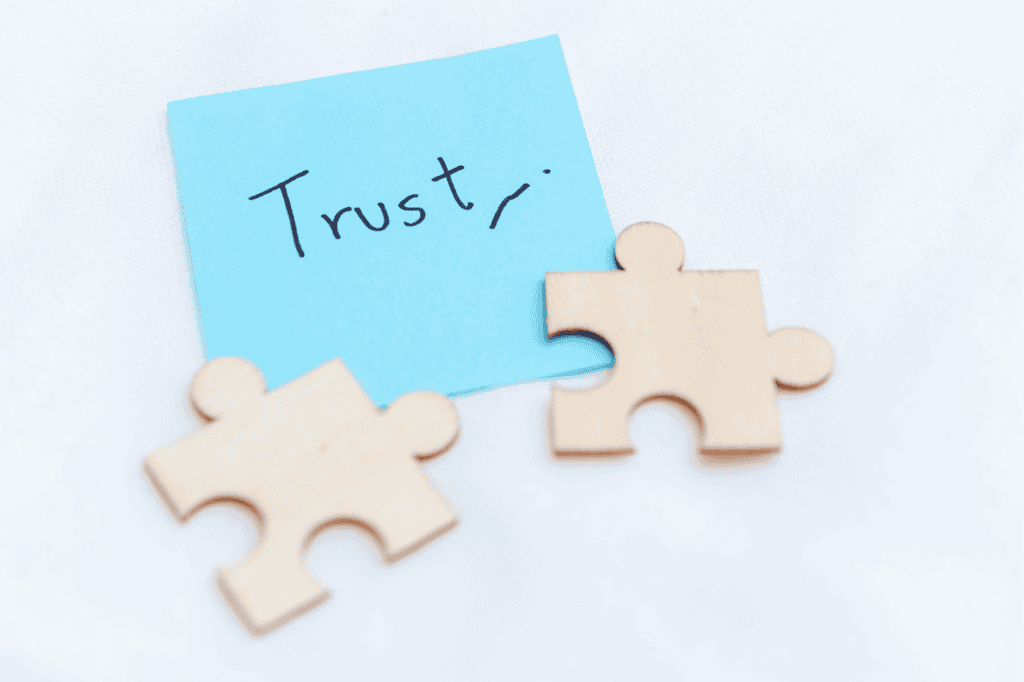
Low trust is rarely dramatic at first. I usually see it in polished updates, careful silence, and meetings that look efficient while saying very little. A team member stops testing ideas aloud. An employee starts checking the political temperature before speaking. That work environment may still look calm, but it no longer feels open.
According to the Edelman Trust Barometer (2024), employers remain among the most trusted institutions people have. That makes internal credibility even more important, because the organisation often becomes the place where people decide whether honesty is safe.
A title can secure compliance for a while. It cannot create candour, collaboration, or long term commitment. I have watched first-time managers realise this quickly: a leader can be respected in the hierarchy and still not be trusted with the full truth. Authentic leadership matters in that gap between what is said, what is done, and what the team experiences over time.
Some leaders think authenticity means saying exactly what they think, exactly when they think it. I understand the impulse, but transparency alone does not build trust. If standards shift from week to week, or challenge is invited and then punished, the relationship still weakens. An authentic leadership style is not full disclosure. It is dependable alignment.
A lot of leadership theory describes authenticity neatly: know your values, stay true to them, and communicate clearly. Useful, but incomplete. In my experience, authentic leadership becomes real when the same value principle holds in the boardroom, in a one-to-one, and in a difficult conversation with a direct report.
Self awareness does not stay private for long. It shows up in tone, timing, feedback, and what a leader chooses to ignore. If someone says people matter but only rewards short-term output, the message is clear. If bad news is requested early and then met with sharpness, psychological safety shrinks immediately.
A classic paper in The Leadership Quarterly linked authentic leadership with self-awareness and self-regulation. I find that research helpful because it shifts the conversation away from image and towards self discipline. Emotional intelligence matters here, but so does the harder part: acting in accord with your values when the easier option would protect your image.
If you want more consistency, end the day with brief self reflection. Ask yourself: where did I act in line with what I say matters; where did I send a mixed message; what conversation did I avoid; and what one small correction can I make tomorrow? Authenticity grows through honest adjustment, not through self-criticism for its own sake.
Saying “I do not know yet” is not a weakness if it is followed by clarity. I have seen an authentic leader steady a room simply by saying what is known, what is still unclear, and when the next update will come. People usually cope better with uncertainty than with false confidence.
Nothing repairs credibility faster than keeping small promises. If a follow-up is due on Friday, do it on Friday. If challenge is welcome, show it in your response. This is not glamorous work, but it is how trust returns and how leadership authentic in spirit becomes visible in practice.
One of the clearest signs of an authentic leader is how disagreement is handled. If the awkward point is raised and the room goes cold, everyone notices. If challenge is met with curiosity, honesty has a future. That is how a leader can foster a culture where a team member speaks before a problem becomes political.
A decision without context can feel arbitrary even when it is sound. I do not believe employees need every confidential detail, but they do need enough reasoning to understand the trade-offs. When the thinking is explained, firmness is more likely to be read as integrity than as power.
Once credibility has been damaged, the instinct is to make one big speech and hope the matter is closed. I have never found that convincing. Start by naming the inconsistency, then show a short run of observable behaviour: follow-through, fairness, openness to feedback, and visible accountability. That is how you build trust again.
Vulnerability helps when it creates clarity or human connection. It harms when a leader hands emotional processing to the team. Your people do not need every fear in real time. They need honesty with boundaries, including a clear sense of strengths and weaknesses without making the room carry them.
Under pressure, some leaders soften standards because they want to be liked. It can reduce friction for a moment, but it weakens credibility in the long term. Respect grows when expectations are fair, visible, and steady. Approval is more fragile, and business performance eventually feels the difference.
Nothing corrodes authenticity faster than selective enforcement. Teams notice quickly who gets challenged, who gets protected, and who can ignore the rules. An authentic leader does not need to be harsh, but standards must be consistent if you want to create positive conditions for honesty.
This is where the idea gets tested. A leader may value openness and fairness, then face pressure from above, fatigue from constant transition, or conflict across functions. Research from the Technical University of Munich found that authentic leadership is linked with stronger trust partly because consistency is read as integrity. That is exactly what pressure threatens.
Watch for delayed bad news, shallow agreement, fewer real questions, and polished meetings that produce little. Notice whether employees wait too long to ask for help. By the time formal data confirms the issue, the culture has often been living with it for months.
Before a difficult announcement, I often turn to Exception Finding. I ask: when has this team handled uncertainty better than expected before, and what was different then? That question does not remove the tension. It helps a leader recognise existing capability instead of speaking as though the room has none.
After a Civil Service College session, a senior leader told me he kept repeating the plan but still felt unconvinced by the room. What shifted was not a better script. It was his willingness to say plainly, “Here is what is decided, here is what is uncertain, and here is what I need from you while I lead through this.” That kind of honesty can encourage ownership.
If a decision hurts, say so without apologising for the responsibility itself. Then explain the principle behind the call and what support remains available. Authentic leadership after a hard moment is not about making everyone happy. It is about helping people understand the purpose behind the decision.
Do not avoid the conversation about fairness. Do not avoid the conversation about what changed and why. And do not avoid the one where someone tells you trust has dropped. Once those moments are delayed, people write their own version of events, and that story is usually harsher than the truth.
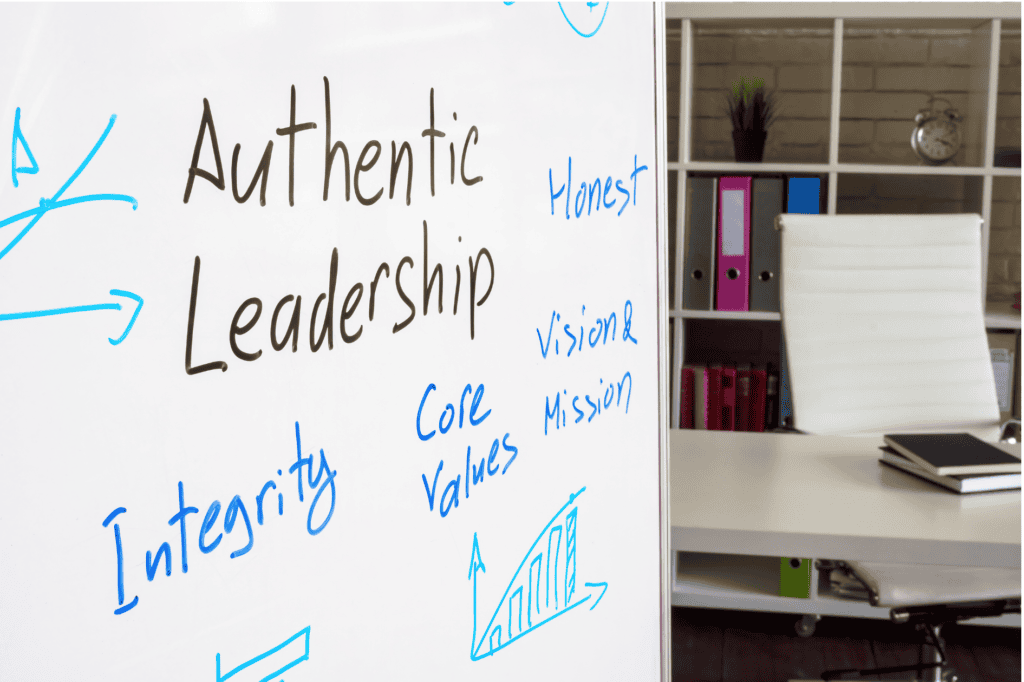
Set one meeting each week where challenge is expected, not merely tolerated. Follow up on one unresolved issue before anyone reminds you. State one principle clearly when making a difficult call. Those habits may look small, but they are often what make authentic leadership authentic in the eyes of others.
I pay attention to behavioural signs leaders can see for themselves: how quickly bad news travels upward, whether disagreement happens in the room, and whether help is requested before problems escalate. Those signals are imperfect, but they are immediate and far more useful than waiting for a late report.
Future leaders learn far more from observation than from slogans. If rising managers see an authentic leader admit mistakes, apply standards evenly, and explain decisions clearly, they absorb a leadership approach worth copying. If they see the opposite, they learn that the mission on the wall and the behaviour in the room are two different things.
Some leaders sharpen this on their own. Many move faster when an outside perspective helps them recognise the gap between intention and impact. A keynote cannot do the daily work for them, but it can inspire the right question. In the spirit of Small Steps To Big Changes, that single question is often enough to start a more authentic way of leading.
Authentic leadership is not about being universally liked or endlessly transparent. It is about consistency that others can recognise under pressure. When a leader practises that steadily, trust deepens, honesty comes earlier, and the quality of the conversation changes with it. If you want to explore a corporate keynote or leadership session on leading with authenticity through change and uncertainty, visit Kennethkwan.com.
No. “Be yourself” is too vague to help when pressure is high. I see authentic leadership as the ability to stay anchored to clear values while adapting your communication to the room. It is less about self-expression than about consistency others can recognise.
Transparency is part of it, but it is not the whole picture. I have met very open leaders who still felt inconsistent because their decisions, standards, or reactions kept shifting. An authentic leader gives enough truth for the team to understand both the decision and the principle behind it.
A keynote can ignite the shift, but it cannot do the practice for anyone. What I have seen happen is this: leaders hear themselves differently, recognise where trust is leaking, and start asking better questions. What changes after that depends on what they choose to do next.
Read more: The Overlooked Shift That Defines Truly Effective Leadership
Employee engagement is often treated as something that's difficult to define and even harder to improve. Organisations invest heavily in surveys, incentives, and workplace initiatives, yet many still struggle with disengaged employees, rising turnover, and declining productivity. The problem isn't usually a lack of effort. It's that many organisations focus on measuring engagement instead of creating the conditions that make it possible.
An engaged workforce doesn't emerge by chance. It is built through everyday leadership behaviours that help employees feel connected to their work, trusted by their managers, recognised for their contributions, and confident that their efforts make a difference. When people understand their purpose, see opportunities for growth, and believe their voice matters, engagement becomes a natural outcome rather than a target to chase.
In this article, I'll share 11 practical, research-backed ways leaders can build a more engaged workforce. These aren't expensive programmes or quick fixes. They're simple, sustainable leadership practices that strengthen trust, improve employee experience, and create a workplace where people choose to stay, contribute, and perform at their best.
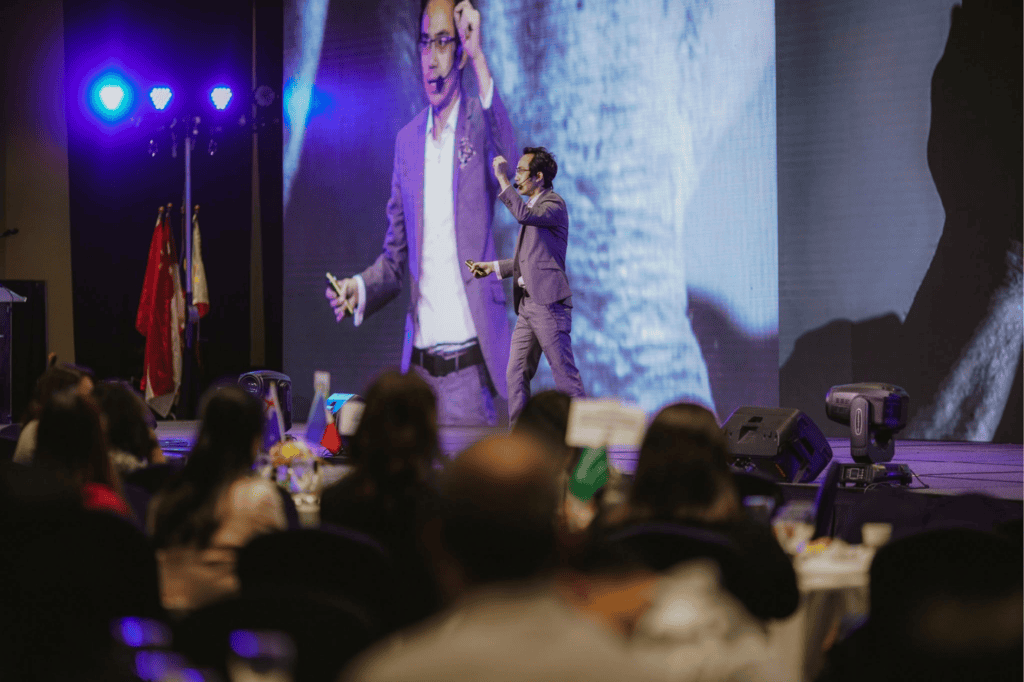
If you define engagement too loosely, you cannot build it consistently. Strong leaders stop treating it as employee satisfaction alone and start naming the behaviour that shows whether people are committed, alert and willing to contribute. Gallup’s State of the Global Workplace 2026 makes the business case plain: engagement shapes retention, productivity and performance.
An engaged team speaks up early, follows through, supports colleagues and takes ownership. If HR cannot describe that clearly, a company starts rewarding busyness instead of value. That confusion hurts culture and lowers the overall engagement level.
Employees stay engaged longer when they can answer two questions: why does this work matter, and how do I know we are moving? Purpose without progress feels rhetorical. Progress without purpose feels mechanical. Workforce engagement grows when both are visible.
Most employee engagement efforts begin by trying to fix what's broken. I've found a faster and often more effective approach is to identify where engagement is already strong. Every organisation has teams, managers, or departments where people are more engaged than others. Instead of focusing only on what's going wrong, ask what's different in those high-performing areas and how those behaviours can be replicated across the organisation.
If one team has better ownership, steadier retention or healthier meetings under the same pressure, study it. In a public sector forum, I once asked department heads to name one team that stayed constructive through a difficult period. The room changed quickly. They stopped circling the problem and started noticing small habits that strengthened culture: quicker follow-up, clearer handovers and shorter decision paths.
Once you spot a bright area, break down the repeatable behaviour behind it. Often it is simple: clearer check-ins, cleaner priorities, faster decisions and better employee recognition. That gives L&D and training teams something practical to reinforce, not another abstract message about workplace culture.
When people are tired or uncertain, they do not need more volume. They need coherence. SHRM’s guide to developing and sustaining employee engagement supports something I say often on stage: engagement is stronger when communication is ongoing, leader-led and tied to action.
Trust rises when leaders explain why a decision was made, what changed, what remains uncertain and what action matters now. Most employees can handle uncertainty. What drains engagement is silence and guesswork.
After feedback, say what you heard, what will change, what cannot change yet and when the next update will come. That simple structure helps people feel heard without overpromising. It also keeps employee engagement from dropping after a survey or listening session.
No, not for long. Employees do not experience workforce engagement through strategy documents. They experience it through the person who runs the meeting, responds to mistakes and follows up after a conversation. If that daily behaviour stays weak, the culture usually stays weak as well.
The quality of a manager’s questions shapes the quality of a team’s thinking. Even when I speak, the shift I want leaders to see is simpler than a tool: stop asking only what failed and start asking what is already working, what support is needed and what useful next step should happen now. That is how you engage employees under pressure.
A useful one-to-one covers clarity, blockers, strengths, support, development and one action before the next check-in. Good one-to-ones help employee feel seen without turning the conversation into therapy. They also give line managers a practical training habit they can repeat.
People stay when appreciation tells them their contribution matters and their future still has room to move. Recognition without development feels pleasant but shallow. Development without recognition feels transactional. Both shape employee retention, company culture and long term commitment.
| Recognition type | Employee need | Leader action |
| Immediate appreciation | To feel seen quickly | Name the contribution and its value |
| Behaviour reinforcement | To know what to repeat | Point to the action that helped the team |
| Growth-linked recognition | To see opportunity ahead | Link the contribution to learning, mentoring or stretch work |
Specific praise is far stronger than “good job”. When employee recognition is clear, fair and timely, people understand what helped and what to repeat. That is how you create a more highly engaged team without making praise feel political.
If someone keeps hearing “well done” but sees no movement, engagement fades quietly. Link recognition to development, mentoring or a new role. That strengthens success, retention and talent acquisition far more than applause alone.
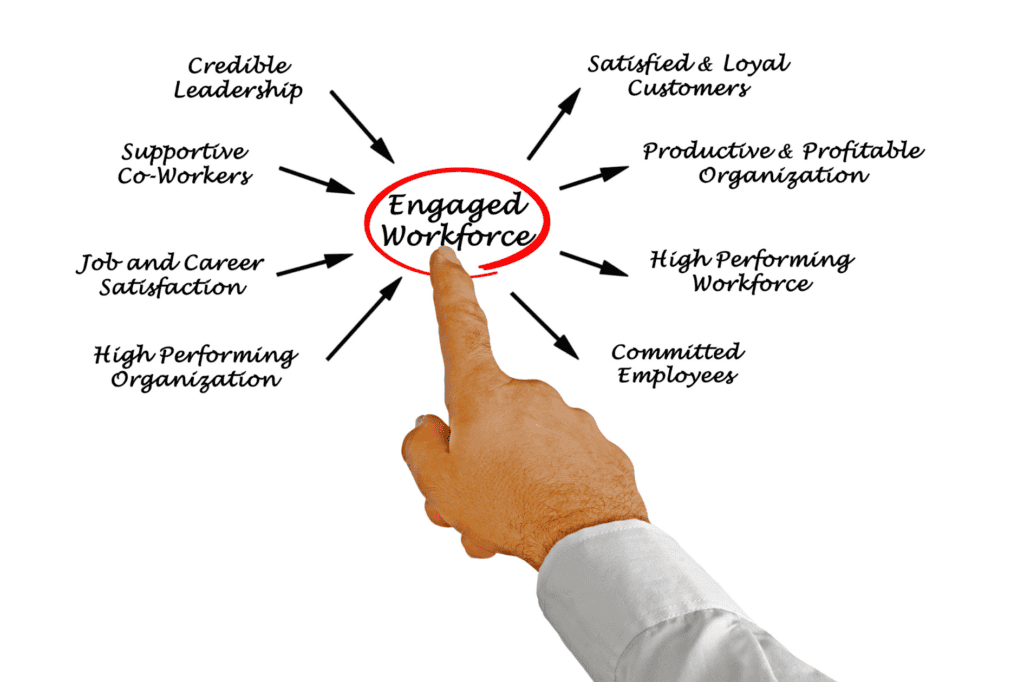
Sometimes employees are not disengaged. They are simply worn down by friction. Repeated approvals, unclear ownership and bloated meetings tell people that effort does not reliably lead to progress. That affects productivity, morale and the quality of the work environment.
If people need four approvals for a routine decision, rewrite the path. If two teams produce the same update, remove one. If ownership is fuzzy, clarify who decides. These small changes enhance performance and improve employee engagement level faster than another slogan.
The last mistake is measuring engagement only through broad sentiment and annual lag. Oak Engage’s employee engagement statistics roundup reinforces the link between engagement, retention and performance. Inside an organisation, I find a simpler question more useful: what are employees doing differently now that tells you the environment is changing?
Track voluntary turnover, stay interview themes, employee satisfaction, absenteeism, internal movement and follow-through. Add qualitative signals as well: are people raising issues earlier, taking clearer ownership and speaking with less caution? That gives you a better read on workforce engagement than survey scores alone.
A keynote can create shared language, energy and practical reflection. It cannot fix workload fairness, weak management, poor work life balance or a broken workplace culture on its own. Senior leaders should say that plainly.
If you are choosing a speaker on employee engagement, the real question is whether the room will leave with a more useful perspective. I do not promise measurable ROI from one talk.
I aim to help leaders see workforce engagement through clearer questions, stronger recognition, better decisions and actions they can take immediately after the session.
An engaged workforce is built through repeated leadership behaviour, not one-off events, perk cycles or dashboards alone. Define the behaviour, connect work to purpose, find bright spots, repeat what works, communicate clearly, close loops, strengthen one-to-ones, link recognition to development and remove friction.
If you want to explore a corporate keynote or leadership session on workforce engagement, communication and performance, visit Kennethkwan.com.
I see an engaged workforce as a group of people who understand the organisation's purpose, know how their work contributes to it, and are motivated to give their best each day. Engagement is reflected in behaviour, not just attitude. Engaged employees take ownership, collaborate with others, contribute ideas, and remain committed to achieving meaningful outcomes.
Workforce engagement is a shared responsibility. Senior leaders establish the vision and culture, HR provides the systems and initiatives that support employees, and managers shape the day-to-day experience through their leadership. Employees also play a role by participating, communicating openly, and taking ownership of their work. However, lasting engagement is difficult to achieve if leadership behaviours, organisational culture, and management practices do not support it.
Yes, but a keynote is only one part of the solution. A strong corporate speaker can inspire fresh thinking, challenge unhelpful assumptions, and encourage leaders and employees to view familiar challenges from a different perspective. A keynote can create momentum and spark important conversations, but it cannot, on its own, improve engagement.
Sustainable workforce engagement comes from what happens after the event. Leaders need to reinforce the key messages through consistent communication, meaningful action, and everyday management practices.
Read more: Purpose, Progress, and Recognition Inspire Teams More Than Perks Ever Will
I've sat in enough leadership meetings to have heard the same question asked a hundred different ways: how do we motivate employees? And almost every time, the first answer on the table is money. A bigger bonus. A pay review. A one-off reward to lift spirits before a tough quarter.
I understand the instinct. Pay matters, and I'm not going to pretend otherwise. But after years of watching what actually shifts an employee's motivation, and what data from PwC and other credible sources keeps confirming, I've come to a fairly firm conclusion: money moves the needle far less than meaning and progress do. If you want a genuinely motivated employee, you need to look well beyond the pay slip, and beyond the job title too.
PwC's 2025 Global Workforce survey, which polled nearly 50,000 workers across 48 countries, found something I think every manager should sit with. Workers who feel strongly aligned with their organisation's goals are 78% more motivated than those who report the least alignment. That's a bigger swing than most companies would ever expect from a pay rise, and it says a lot about how motivation employee outcomes are actually driven.
Trust tells a similar story. The same research found that employees who trust their direct manager the most are 72% more motivated than those who trust them the least. And perhaps the most surprising figure of all: a positive mood at work lifts employee motivation by 145%, making it the single strongest driver identified in the whole study. Pay, by comparison, barely registers against those numbers.
None of this means pay is irrelevant. Fewer than half of employees in PwC's survey received a raise in the past year, and those who didn't are markedly less likely to feel satisfied or motivated. So pay still sets a base level. But once that base is met, the extra motivation employers are chasing doesn't come from the next pay rise. It comes from clarity, trust, and a sense that the work actually matters.
This is where I find it useful to separate two ideas that often get lumped together: intrinsic motivation and extrinsic motivation.
Extrinsic motivation comes from outside the employee. A bonus, a promotion, a gift card, a public shout-out, an external reward tied to performance. Extrinsic rewards work, but only briefly. They're a spike, not a foundation. I've watched teams celebrate a bonus announcement on a Friday and be back to feeling flat by the following Wednesday. Relying on extrinsic reward alone is one of the most common mistakes I see in a company's motivation strategy.
Intrinsic motivation is different. It comes from within, driven by a sense of purpose, autonomy, competence, and connection to the work itself. It's the reason someone stays late finishing a task not because they're told to, but because they care how it turns out.
Self-determination theory, one of the most widely referenced frameworks in this space, argues that people have three basic psychological needs at work: autonomy, competence, and relatedness. Meet those needs, and intrinsic motivation tends to follow naturally, becoming a genuinely self driven force rather than something a manager has to keep topping up. Ignore them, and no reward scheme will fully compensate.
I'd argue most organisations over-invest in extrinsic reward and under-invest in the conditions that build intrinsic drive. That imbalance is a large part of why so many approaches to employee motivation quietly fail, no matter how good the intentions behind them.
If I had to name the single biggest gap I see in workplaces, it's this: employees rarely understand how their day-to-day task connects to something bigger. And that gap costs businesses more than most leaders realise.
PwC's research found that employees who see a meaningful career at work report far higher engagement, and that alignment with leadership's goals is one of the strongest predictors of motivation in the entire dataset. Employees don't need a poster with a mission statement on it. They need a manager who can explain, in plain terms, why a task matters, and how it ladders up to something the team is trying to achieve together.
This is a leadership responsibility, not an HR initiative. A good leader translates strategy into meaning at the individual and personal level. It's one thing to tell a team the company's annual goal. It's another to sit with one employee and help them understand exactly how their role feeds into it. That second conversation is the one that actually builds motivation, and it costs a company far less than most people assume.
Meaning gets people invested. Progress keeps them there.
There's a well-established idea, sometimes called the progress principle, which holds that people are motivated far more by visible forward movement than by distant, abstract goals. An employee who can see their work advancing, even in small increments, stays energised. An employee stuck without any sense of movement, even on important work, starts to disengage.
This is a genuine psychological need, not a preference. Employees want feedback on where they stand, not just a task list. Regular, honest feedback, tied to specific progress rather than generic praise, is one of the most cost-effective strategies a manager has to increase motivation. It requires no budget. It requires attention, consistency, and a leader willing to have the conversation.
I'd encourage any manager reading this to build small moments of visible progress into weekly routines. Not lengthy formal reviews, just quick, specific updates that show an employee their effort is moving something forward. It's a simple approach, and it consistently outperforms grander, less frequent gestures.
Autonomy deserves its own mention, because it's consistently one of the most underused levers available to leaders. Employees who feel trusted to make decisions about how they approach their work report significantly higher motivation than those who feel closely monitored. Micromanagement doesn't just slow work down, it actively erodes the intrinsic motivation that makes people want to do good work in the first place.
Building this kind of trust takes deliberate effort. It means giving an employee ownership over a task rather than a rigid script to follow. It means being available for support without hovering. Leaders who get this balance right tend to build teams that are considerably more resilient under pressure, and far more likely to stay engaged over the long term.
I'd be doing this topic a disservice if I didn't mention work life balance, because it quietly underpins nearly everything above. An exhausted employee, no matter how meaningful their role or how much autonomy they've been given, will struggle to stay motivated. PwC's research also flagged rising financial strain and fatigue among workers globally, both of which chip away at motivation over time regardless of how well-designed a role might otherwise be.
Supporting employee experience holistically, workload, flexibility, work life balance, alongside meaning and progress, creates the kind of work environment where motivation has a genuine chance to take root and last.

If you're a manager or business leader looking to improve employee motivation, I'd suggest starting with three questions rather than introducing another reward scheme or relying solely on extrinsic rewards.
Those questions cost nothing to ask, yet decades of research consistently show they have a greater impact on employee motivation than most organisations realise.
Competitive pay, bonuses, and other forms of extrinsic motivation certainly matter. They shape the employee experience and influence how people view a company. But if you're looking to build long-term, self-driven motivation, intrinsic motivation fuelled by purpose, progress, autonomy, and trust will always have the greater impact.
The most effective leaders don't spend all their time trying to motivate employees. Instead, they create a work environment where motivation develops naturally. They provide clarity, meaningful feedback, timely recognition, opportunities for development, and the freedom for people to take ownership of their work.
This approach to employee motivation also strengthens employee engagement. When employees understand the value of their work, receive the right support, and can see steady progress, they're more likely to stay motivated, deliver high performance, and experience greater job satisfaction.
Ultimately, the best motivation strategy isn't about offering more incentives. It's about creating a workplace where people can do meaningful work, grow through new opportunities, and achieve their goals.
When leaders focus on those conditions, motivation becomes something employees generate for themselves and that's what builds stronger teams, healthier workplace culture, and sustainable business success.
How are you creating a workplace where people want to do their best work?
Every organisation approaches employee motivation differently, and there's always something we can learn from each other's experiences. Whether you've found success through purpose, recognition, trust, autonomy, or a completely different approach, I'd love to hear your perspective.
Let's connect to continue the conversation on building workplaces where people are motivated to grow, contribute, and perform at their best.
Read more: Teams Aren't Inspired by Perks. They're Inspired by Purpose, Progress, and Recogn
I used to think free snacks and a ping pong table were the mark of a great workplace. I was wrong, and it took me a while to admit it.
For years, I watched companies pour money into perks: catered lunches, gym memberships, unlimited PTO policies nobody actually used. And every time, I noticed the same pattern. The energy would spike for a week, maybe two, and then it would flatten right back out. The team would go back to feeling exactly the way they felt before, just with better coffee in the break room.
That's when I started paying attention to what actually moves people. Not what looks good on a careers page, but what genuinely makes a team member want to show up, do good work, and stay long term. And the answer, over and over, came down to three things: purpose, progress, and recognition. Get those right, and you don't just have a functioning team, you have an inspired team.
Here's the thing about perks. They're additive, not foundational. They sit on top of the work environment rather than shaping it. You can hand someone a nicer chair or a bonus gift card, and for a moment they'll feel appreciated. But if that same person doesn't understand why their work matters, or they can't see any progress in their role, the perk becomes background noise pretty fast.
The data backs this up more clearly than I expected when I went looking. Gallup and Stand Together's 2025 research on workplace purpose found that employees with a strong sense of purpose at work are 5.6 times as likely to be engaged in their jobs as those with a low sense of purpose. That's not a small nudge. That's the difference between a team that shows up and a team that actually cares.
And the gap is wider than most leaders realise. The same research showed half of employees with strong work purpose are engaged, compared with only 9% of employees with low purpose. Burnout follows the same pattern: only 13% of employees with strong work purpose report feeling burned out very often or always, compared with 38% of those with low purpose. If you want a high performing team, purpose isn't a nice-to-have. It's the foundation everything else gets built on.
I share that stat with clients a lot, because it reframes the whole conversation. Leaders want to know the way to inspire a team, and they assume the answer is bigger incentives. But you can't buy your way to engagement. You have to build it, deliberately, one decision at a time.
I think of purpose as the answer to a simple question every person on a team is quietly asking: Does what I do here actually matter?
When people can't answer that question, no amount of praise or pay will inspire them for long. When they can answer it, even hard work starts to feel worth it. This is where leadership actually earns its name. An inspirational leader's job isn't just to assign tasks. It's to connect the daily grind to something bigger, so people can see how their individual effort ladders up to a shared goal.
I've watched this play out directly. Teams that understand the "why" behind a project move faster and complain less, even under pressure, because the friction of the work doesn't feel pointless. Teams that don't understand the why start looking for reasons to disengage, and eventually, reasons to leave the organisation altogether.
If you're a leader trying to build this kind of clarity, start small. Don't wait for an all-hands meeting to explore the mission. Explain it in the one-on-one, in the Slack message, in the way you frame the ask. Purpose isn't a poster on the wall. It's something you reinforce constantly, through verbal check-ins and small moments, until it becomes part of how the team thinks. This is one of the clearest ways leaders foster trust: by consistently showing people why their work counts.
Purpose gets people to start. Progress is what keeps them going.
There's a well-known idea in psychology called the progress principle, and it holds up in every team I've worked with: people are more motivated by small wins than by grand promises. A team member who can see that their work is moving something forward, even incrementally, stays engaged. A team member stuck in a loop of invisible effort, where nothing seems to change, burns out.
This is where a lot of leaders quietly fail their teams, not out of malice, but out of habit. They're so focused on the next goal that they forget to acknowledge the one just achieved. If you want to unlock potential in the people you lead, you have to build in moments where progress is visible. Weekly check-ins that highlight what's shifted. Milestones marked, even the small ones. A visible roadmap so people can see where they've been and where they're headed.
I've found this especially true for teams doing long term projects, the kind that don't have a satisfying finish line for months. Without deliberate markers of progress, motivation erodes even when the work itself is going well. Leaders who understand this build progress into the rhythm of the team, not just the results, and it's a habit worth cultivating early rather than fixing later.
None of this works without honest, consistent communication. Purpose has to be spoken out loud, not assumed. Progress has to be named, not just tracked in a spreadsheet nobody opens. And recognition has to be voiced, in words, to actually land.
I've come to see communication as the delivery mechanism for everything else on this list. A leader can have a clear vision and still fail to inspire a team if that vision never gets translated into plain, human conversation. Regular one-on-ones, honest updates, and a willingness to explain the "why" behind decisions all promote a sense of shared direction. It's a simple example of how much leadership is really just clear, respectful conversation done consistently over time.
If purpose is the foundation and progress is the fuel, recognition is the multiplier. And it's the one leaders most consistently underdeliver on.
The numbers here are honestly a little sobering. Research compiled from Gallup found that only about a quarter of employees strongly agree they receive adequate recognition for their work, while nearly a third go over a year without any acknowledgment of strong performance at all.
Meanwhile, employees who feel well recognised are significantly less likely to leave their company within two years, and unappreciated employees are roughly twice as likely to quit.
Read that again. Recognition isn't a soft, feel-good extra. It's a retention strategy hiding in plain sight.
What strikes me most is how cheap recognition is to give, and how rarely it happens anyway. It doesn't require a budget line. It requires a leader who notices. A specific, timely "here's what you did well and here's why it mattered" does more to build trust with a team than almost anything else I've seen tried.
Generic praise doesn't land the same way. Specific, well-timed recognition, paired with constructive feedback when it's needed, tells a team member that someone is actually paying attention, and that their contribution was seen for what it was.
I'd also add this: recognition works best when it's not just top-down. Peer-to-peer recognition, where team members openly acknowledge each other's contributions, tends to build an even stronger sense of shared ownership.
It shifts the culture from "the boss decides who did well" to "we all see and value each other's work." That shift alone can transform a work environment, and it's one of the fastest ways to empower a team to hold itself to a higher standard.
One thing I'd encourage any leader to do is run a quick, informal assessment of where the team's real strengths sit. Not a formal review process, just an honest look at who does their best work where, and what kind of recognition actually resonates with each person.
Some team members light up with public praise. Others prefer a quiet, specific word after a meeting. Taking the time to understand strength at the individual level, rather than applying one blanket approach, is what separates a good leader from a genuinely inspirational one.
None of this means perks are worthless. A good workspace, fair pay, and a bit of flexibility all matter, and I'm not suggesting leaders strip them away. But perks were never designed to inspire a team.
They were designed to make a workplace comfortable. Comfort and inspiration are not the same thing, and treating them as interchangeable is where a lot of well-intentioned leadership strategies quietly fail.
If you're a leader looking for the way to inspire a team that actually lasts, I'd encourage you to stop asking "what can we add?" and start asking three harder questions instead.
Do my people understand why their work matters? Can they see progress in what they're doing? Do they feel genuinely recognised for their contribution?
Those three questions cost nothing to ask, and answering them well costs far less than most perk programs do. But the payoff, in trust, in retention, in the kind of quiet loyalty that turns a group of individuals into a team that achieves more than the sum of its parts, is worth more than any perk could ever buy.
I've come to believe that inspirational leadership isn't about grand speeches or sweeping vision statements, though those have their place. It's about the daily discipline of connecting purpose to progress to recognition, communicated openly, over and over, until it becomes the culture rather than a campaign. That's the foundation for long term success. Everything else is just decoration.
If you're ready to build a workplace where people are inspired, not just incentivised. Let's Connect !
1. What's the difference between employee engagement and inspiring a team?
Engagement is about whether someone shows up and does the work. Inspiration goes further; it's what makes a team member want to do their best work, not just their required work. You can have engaged employees who are still just going through the motions. An inspired team brings energy and initiative that policies and perks can't force.
2. How do I know if my team needs more recognition, more purpose, or more progress?
If people seem disconnected from the "why" behind their work, that's a purpose gap. If motivation dips on long projects even though the work is going fine, that's usually a progress gap, and people can't see how far they've come. If good work goes unnoticed and turnover creeps up, that's a recognition gap. Most teams have a mix of all three, but one is usually louder than the others.
3. What's the biggest mistake leaders make when trying to inspire a team?
Assuming inspiration is a one-off event rather than an ongoing habit. Many leaders save their best efforts for the big kick-off meeting or the annual awards evening, then go quiet for months. Purpose, progress, and recognition only work if they're built into the everyday rhythm of leadership, not rolled out occasionally as a morale boost.
Read more: How to Build an Ownership Mindset in Teams That Default to Waiting for Instructions
A team member asks for approval on something they could probably handle themselves. Another escalates a problem before attempting a solution. Yet another waits for direction despite having all the information needed to move forward.
Sound familiar?
Many organisations today are struggling with a hidden productivity problem: capable people who have become conditioned to seek permission instead of taking ownership. The result is slower decision-making, overwhelmed leaders, and teams that never fully realise their potential.
I have found that this is rarely a talent issue. In most cases, the people are capable. The challenge lies in the environment around them. When trust is low, accountability is unclear, or leaders unintentionally become the centre of every decision, even talented teams can become dependent.
The strongest teams operate differently. They do not wait to be told what to do at every step. They think, act, contribute ideas, and take responsibility for outcomes. But that level of empowerment does not happen by accident. It is cultivated through consistent leadership habits that encourage confidence, ownership, and growth.
Here are nine leadership habits that help empowered teams thrive.

Most teams are not underpowered because people lack ability. They are underpowered because the signals around them say, “Check first, stay safe, do not get it wrong.” If I want to empower a team, I have to look honestly at the way work is being approved, challenged, and reviewed.
That is where true empowerment is either built or quietly blocked. Before asking for more responsibility, a leader needs to understand what makes autonomy feel risky to each team member.
If I want to empower team performance, control is rarely the answer. Clarity is. Many leaders micromanage for understandable reasons: pressure from above, expensive mistakes, demanding stakeholders, and limited time. But once a leader dictates every task, every step, and every sentence, the team member stops using judgement and starts protecting themselves.
I have watched this in large organisations where a team leader says, “I already told them exactly what to do, so why are they still passive?” The answer is in the question. If every meaningful decision has already been made, passivity is not a character flaw. It is the logical result.
According to McKinsey’s analysis on empowering employees, organisations make better decisions when authority sits closer to the people holding the most relevant information. In practice, that means defining the business outcome and the parameters, not choreographing every move.
The team needs the target, the limits, and the authority to act. That is a far more empowered way of work than constant approval.
Accountability without safety creates silence, not ownership. If a team member thinks speaking up will embarrass them, expose them, or damage their standing, self-protection comes first. In real work, that usually looks like late escalation, polite agreement, and careful language that hides the problem until it becomes harder to solve.
Google’s Project Aristotle research identified psychological safety as the most important factor in high-performing teams. That finding matches what I hear in senior rooms. The strongest team is rarely the one with the smartest slides. It is often the team that trusts the manager enough to tell the truth early.
Silence is sometimes mistaken for alignment. Very often, it is fear wearing formal clothes.
Once safety is in place, the next question is operational: where do decisions actually sit? Many organisations speak about ownership, but the structure still pulls every meaningful call upward. The language says “empowerment”; the way work moves says “wait”.
Empowerment fails quickly when leaders hoard decisions. I do not mean abandoning oversight. I mean stopping the habit of acting as the default answer to problems a capable team member can already handle. When every issue climbs the hierarchy, decision making slows, morale drops, and people learn to escalate instead of solve.
A team leader needs a disciplined way to distribute decision rights. The practical question is not, “Should everyone decide everything?” It is, “Which decision belongs at which level, and what must be escalated?”
That is what it means to empower team judgement properly. Not freedom everywhere, but clarity around where responsibility lives.
People repeat what gets rewarded. Many companies say they value initiative, then praise the manager who keeps everything neat for the boss. Employees notice the real rule very quickly: obedience is safer than intelligent judgement.
If I want an empowered team, recognition has to change. I need to name the thinking behind the action, not just the outcome. That is how personal responsibility starts to grow inside a culture.
People do not move towards personal responsibility if compliance earns the safer reward.
No empowered workplace culture survives if every mistake is treated as proof that autonomy was a bad idea. The goal is not reckless failure. The goal is intelligent experimentation: clear intent, sensible boundaries, visible assumptions, and honest learning.
What matters next is response. If the first question after a miss is “Who approved this?”, people hide. If the first question is “What did we learn, and what do we adjust?”, people stay engaged and are more willing to solve a problem well next time.
Removing fear and pushing decisions downward is not enough on its own. An empowered team also needs reinforcement. High-performing teams stay strong because leaders keep building context, capability, and visible ownership long after the launch message has passed.
Teams disengage when they are asked to act without context. Gallup’s State of the Global Workplace continues to show how many employees feel disconnected from their work. I do not read that as laziness. In many cases, it reflects a lost link between daily effort and the larger business outcome.
People are far more likely to take ownership when they understand why the work matters, what success looks like, and how their decision affects the customer, the business, or the wider team. Vision is not a line in a town hall deck. It is something a manager has to translate repeatedly.
What feels repetitive to a leader is often reinforcement to a team.
The fastest way to disempower a team is to answer every question for them. Many managers do this because it feels faster, but over time it creates dependency rather than capability.
I once asked a manager who complained about his team's dependence what he did when people brought him problems. His answer was simple: “I solve them because it’s faster.” The problem was not the team. It was the pattern.
Instead of giving answers, coach people to think. Ask questions such as:
Coaching is slower for a day. Directing is slower for a year.
Empowerment without accountability is not empowerment. It is confusion. Once a leader decentralises decisions, the team needs a visible way to track commitments, ownership, progress, and support.
Transparent accountability makes ownership easier, not harsher. It answers simple questions: who owns this, what does success look like, when will it be reviewed, and what happens if it slips?
The strongest systems are visible enough that the team can hold itself steady before the boss steps back in.

By this point, the pattern is clear: empowerment is not a one-off announcement. It is a working environment repeated over time. The real test comes when pressure rises, because that is when old habits return.
Empowered teams usually reflect developed leaders. I am not referring to a single training day followed by silence. I mean consistent investment in how managers communicate, respond under pressure, build trust, and develop judgement in others.
This matters for HR and L&D leaders because culture is not defined by what is written in a strategy document. It is defined by what employees experience every day. People learn what is truly safe, valued, and rewarded by watching how their direct manager responds in meetings, one-to-ones, and moments of tension. As a leadership speaker, I have seen that lasting culture change happens when leaders model the behaviours they want others to adopt.
If an organisation only talks about empowerment during a change mandate, control habits return very quickly.
Empowered teams are not built through policies or slogans. They are built through the daily choices leaders make. The small things how leaders delegate, respond to mistakes, and encourage ownershipoften determine whether people step up or hold back.
Building a culture of accountability, initiative, and collaboration is an ongoing leadership commitment. If you are looking to develop leaders who can empower teams to solve problems, achieve results, and thrive together, I can partner with organisations to turn leadership potential into performance, let's connect !
Yes, but not by itself. I can create the perspective shift that helps a leader or team see the habits holding them back. What changes afterwards depends on what those leaders practise in meetings, decisions, and day-to-day conversations.
Start with clarity. In many teams, people are not passive because they lack initiative; they are passive because they are unsure what they can decide safely. Define the outcome, the parameters, and the points where escalation is required. Once that is clear, you will see whether the real issue is capability, confidence, or habit.
Empowered teams often struggle to develop when employees feel they need constant approval, lack clarity around decision-making, or fear making mistakes. Empowerment grows when leaders provide trust, clear expectations, and the confidence for people to take ownership of their work.
Read more: From Pagers to Slack: How Generational Leadership Plays Out at Work
Choosing the wrong keynote speaker is one of the most expensive mistakes an event organiser can make, not just in dollars, but in credibility, audience goodwill, and the message your organisation sends. I have seen it from both sides of the stage, and I want to save you the pain.
Singapore is one of the most active corporate event markets in the Asia Pacific. With international conferences, leadership summits, financial services forums, and company-wide town halls running year-round, the demand for a skilled keynote speaker in Singapore has never been higher. Yet many event planners still treat the selection process as an afterthought, a box to tick after the venue is booked and the catering is sorted.
That is a mistake. A good keynote speaker does not just fill time. They set the tone for your entire event, shape how your audience thinks about the ideas you want them to carry away, and, when chosen well, can shift the energy, mindset, and motivation of an entire room. Research shows that companies aligning speaker content with specific business objectives report 89% greater executive satisfaction with event outcomes.
Here are 11 tips I would give any leader or event team before they start the search.

Before you open a single speaker reel or scroll through a speakers' bureau, ask yourself: what do we actually need our audience to think, feel, or do differently after this event? That question changes everything.
I have watched organisations book impressive names, polished presenters with global credentials, only to find the keynote felt completely disconnected from why the team had gathered in the first place. A good keynote speaker is not a decoration. They are a strategic tool. Define the outcome first, then find the person who can deliver it.
Worth knowing: A 2026 industry report found that 54% of corporate keynote briefs now reference audience engagement, internal communication, or post-event value as part of the booking requirement, up sharply from previous years. Organisers are getting smarter about purpose.
A keynote speaker who can engage frontline sales teams may struggle to connect with senior executives, and vice versa. Understanding your audience is one of the most important parts of choosing the right speaker.
I always advise event organisers to start by asking who will be in the room. Consider their industry, seniority, cultural background, and current challenges. Singapore's corporate audiences are diverse and expect relevance, not generic inspiration. A keynote that resonates in New York may need a different approach to connect with an Asia-Pacific audience. The best speakers adapt their message to the audience rather than delivering the same presentation everywhere.
Reputation matters, but relevance matters more. A well-known name from the US speaker circuit may have impressive credentials, yet if they have never spoken to a corporate audience in Singapore or Asia, you are taking an unnecessary risk.
Look for a speaker Singapore professionals have actually seen on stage, someone with a track record of delivering in the region. Check whether they have spoken at similar corporate events, in similar industries, and to similar audiences. Ask for references. A genuinely good keynote speaker in Singapore will have no hesitation pointing you to recent clients.
One of the clearest signs of a strong speaker is their willingness and ability to genuinely customise their content for your event. The difference between a tailored keynote speech and a recycled one is immediately obvious to your audience, even if they cannot articulate why.
Before you finalise any booking, ask the speaker: "What would you change about this talk specifically for our organisation?" A strong answer with specifics tells you a great deal about their professionalism and commitment to impact.
Every speaker has a highlight reel. The real test is watching 20 to 30 minutes of an actual keynote from a recent event, not a polished promotional cut. Look at how they handle transitions, how they engage with the room, how they respond to the unexpected, and whether the message holds up beyond the opening five minutes.
A good keynote speaker does not just have strong moments. They sustain energy, build ideas progressively, and leave the audience with something genuinely actionable. If you cannot find a full-length video, ask for one. A speaker Singapore clients keep inviting back will have them.
One of the most common mistakes I see is event organisers finding a speaker they like and then reverse-engineering a keynote topic to fit the event theme. This produces vague, uncommitted presentations that fail to inspire anyone.
Whether your event in Singapore is focused on leadership innovation, the future of work, high performance, team culture, digital transformation, or change management, the speaker's core expertise should align with the theme naturally, not be stretched to fit. In Singapore's active conference circuit, you will find specialists in every one of these areas. Do not settle for a generalist when a specialist exists.
This matters more in Singapore and Asia than almost anywhere else. A great Singapore keynote speaker understands the cultural nuances of the room, the communication norms, the relationship dynamics, and the way leaders and teams work in this part of the world.
Humour that lands in Sydney may not translate in Singapore. Case studies drawn entirely from Western companies can feel distant to a regional audience. As someone who has spent years working with leaders and organisations across Singapore, I have seen how important this context is. A motivational speaker with genuine Singaporean experience will know how to connect without alienating, challenge without disrespecting, and inspire without overreaching. This is not a small thing; it is what separates a memorable speaker event from a politely received one.
The best speakers I have worked with or observed do significant preparation before they step on stage. They want to understand the organisation's current challenges, the team's mood, what has happened in the business recently, and what the leadership team hopes their people will leave thinking or doing differently.
A thorough briefing process is a sign of professionalism. It also tells you how much the speaker cares about your specific outcome versus delivering a talk they have already given a hundred times. For high-stakes corporate events in Singapore, this preparation phase is non-negotiable. Ask every candidate how they prepare. The answers will be revealing.

Many experienced keynote speakers can extend their impact beyond a single address. Think about whether you need a workshop, a session with your leadership team, or a panel discussion in addition to the main-stage keynote. Some of the most powerful event experiences I have seen in Singapore combine a morning keynote with an afternoon workshop, allowing the audience to go deeper and begin applying ideas before they leave the room.
This approach also makes better use of your investment. A skilled speaker who can facilitate as well as present gives your organisation significantly more value than one who simply delivers a polished address and disappears.
Research insight: Research shows that content relevance is one of the strongest drivers of attendee satisfaction. According to the Bizzabo Event Experience Report 2024, attendees place the highest value on content that is relevant and tailored to their needs.
Cost matters, but it should not be the primary filter. A more affordable speaker who delivers a generic, poorly matched presentation is far more expensive in the long run than a well-matched professional whose fee reflects genuine expertise and preparation.
The data on this is quite compelling. A well-matched keynote speaker engagement can deliver between 4:1 and 11:1 ROI when both direct and indirect returns are measured across audience action, behavioural change, and organisational performance. Think of the fee not as a cost but as an investment in what your team, your leaders, and your company culture will build from the experience.
At the same time, a premium price is not automatically a guarantee of quality. A speaker perfectly matched to your audience will outperform a celebrity delivering a generic keynote every single time, regardless of the fee differential.
A keynote speaker should not simply deliver a presentation and disappear. The best speakers become trusted partners who understand your organisation, audience, and goals over time.
I always encourage organisers to think beyond the event itself. If a speaker can support future leadership conversations, conferences, or organisational initiatives, the value of that relationship often extends far beyond a single keynote.
A keynote speaker can shape how people think about the challenges and opportunities ahead. The right speaker brings clarity, relevance, and perspective to the room, helping audiences leave with ideas that extend beyond the event itself.
In my experience, the most successful events are the ones where there is a strong fit between the speaker, the audience, and the outcome the organisation wants to achieve. When that alignment is in place, a keynote becomes more than a presentation; it becomes a catalyst for meaningful conversations and lasting impact.
Use these 11 tips as a guide, and take the time to find a speaker who understands your audience and the moment your organisation is in. The investment is often worth far more than the event itself.
If you want to talk through what kind of keynote would work best for your next event in Singapore, I am happy to share what I have seen work and what has not.
Looking for a keynote speaker based in Singapore? I work with senior leaders and organisations across Asia Pacific on leadership, high performance, and building teams that can navigate real change. If you are planning a corporate event and want a speaker who will actually move the room, get in touch.
Read more: What I've Learned About Keynote Speakers for Business Events And Why It Matters to You
High performance is often treated as a talent problem. As a leadership coach, I have found it is usually a discipline problem.
During a coaching session with senior leaders in Singapore, an HR leader told me the organisation kept hiring bright people, yet execution still rose and fell depending on who was in the room. They assumed they needed more talent. What they needed was a more consistent way of leading. Many organisations overvalue gifted individuals and undervalue repeatable leadership behaviour.
That distinction matters for any business or team. Talent gives a fast start. Daily discipline is what helps performance last over the long term.
Most leaders know talent matters. What I challenge is the idea that talent alone is enough.
Once that belief settles in, organisations start treating a single achievement as proof of readiness, rewarding brilliance while excusing inconsistency. That looks impressive for a time, but rarely creates stability. Performance ends up depending on a few individual stars.
Talent-first cultures celebrate potential more than consistency. The charismatic leader who lifts a room once a quarter is easier to notice than the steady manager who brings clarity every week.
The problem appears later. Teams adjust themselves around a few high-output individuals; decisions and standards become personal rather than shared. According to Forbes on operational discipline as a growth strategy, growth often exposes weak execution systems rather than solving them. I have watched the same pattern in my coaching work: talent hides inconsistency for a while, but scale reveals it quickly. The individual performers who carry too much often burn out first.

Sustainable high performance emerges when behaviour is repeatable. Leaders who prepare properly, follow through and hold a high standard create results a team can rely on. That matters more than charisma a team needs a leader whose judgement does not swing wildly with mood or pressure. Daily discipline gives leaders real power over outcomes, not just good intentions, and it is what continues to drive performance long after a kickoff meeting's enthusiasm fades.
Short bursts of effort feel impressive. Consistency compounds. A leader who gets one per cent clearer, one per cent better at follow-through, and one per cent more thoughtful about priorities will usually achieve more than one who relies on occasional heroic pushes.
Instead of asking "Who are my stars?", I encourage the leaders I coach to ask, "What behaviour do I need repeated if I want to reach my high performance goal?" A clear standard does more to drive behaviour than a single talk; what leaders repeat is what drives results, season after season. That is the goal high performance teams chase every quarter not a single great result, but a repeatable one.
The answer is rarely dramatic. I see it in how leaders think before they act, how they review progress, and how reliably they show up for each team member, customer, or peer.
Average leaders move fast and call it decisiveness. High performers slow down just enough to get clear first deciding what matters most before the day gets noisy. Clarity is not a soft skill. It is a performance habit.
High performers do not wait for quarterly reviews to learn; they build smaller loops of reflection into the week. One useful question is Exception Finding: when did this go better than expected, and what was different?
According to Harvard Kennedy School on changing culture through one high-impact behaviour, culture change starts more effectively when leaders focus on a visible behaviour with outsized influence. Improvement sticks when a leader can define one repeatable action, practise it, and review it honestly this is how a leader can consistently raise the standard without burning out the team.
Teams trust what they can rely on. If a leader's standard shifts from Monday to Friday, nobody calls that agility they call it risk. Consistent behaviour reduces guesswork and increases psychological safety, because each team member knows what good looks like. In high performance teams, trust is built less by speeches than by reliable patterns, and it gives a real competitive advantage to organisations that get it right.
In a room of leaders from a healthcare system, one manager told me: "My team is capable, but they keep waiting." The issue was not capability the team had learned that priorities changed too often, so waiting felt safer than acting.
Leaders set tone; teams follow it. When leaders are steady, teams move earlier and take ownership. When that power is used consistently, teams stop waiting and start acting. Your discipline is never only personal it teaches the organisation, and the wider community around it, what is normal.
Motivation is visible and easy to remember, but it rises and falls. Systems stay in place when pressure returns, which it always does.
Motivation is emotional; discipline is structural. It shows up in calendar habits, meeting rhythms and review routines systems that support good behaviour without requiring someone to feel strong, or feel inspired, that particular morning.
Strong teams are not built on rescue acts. They are built on simple systems, designed deliberately, that make good behaviour easier to repeat. According to McKinsey on capturing the performance edge in transformations, organisations that sustain performance treat change as a managed system rather than a one-off initiative. Heroics make a good story. Systems make a good quarter.
This matters especially for HR and L&D leaders trying to reduce burnout without lowering standards. Perfection creates fear; consistency creates confidence. If people think high performance means never slipping, they hide mistakes and exhaust themselves. If they understand it as disciplined recovery, they improve faster and stay in the work, and in their working life, longer.
A high performance culture is not built through slogans. I have seen it grow, through years of coaching engagements, through visible behavioural standards leaders reinforce repeatedly. It shapes every interaction a leader has with their team, not just the big moments and it takes attention, language, purpose and example from the top.
Leadership training lands better when it answers a harder question: what will a leader do differently next Monday? Not what they will understand, but what they will practise. If the behaviour is not visible, it is unlikely to spread.
Culture is shaped in ordinary moments meeting rhythms, how feedback is given, whether commitments are followed up. Culture listens to behaviour more than messaging.
A keynote speaker or coach can help, because familiar truths are often heard differently from an outside voice. A good keynote helps leaders see high performance differently by naming a pattern they have stopped noticing. Leaders around the world recognise the pattern once it is named. But a keynote can only ignite reflection and momentum it cannot replace the systems leaders must keep practising afterwards.
When I coach on high performance, I am not asking leaders to become more intense, I am asking them to become more disciplined in the behaviour their teams experience every day. The standard they walk past becomes the standard they teach.
Every leader I coach sets one goal: high performance they can repeat, not just a single great quarter. The aim of every engagement is a measurable, positive impact on how a team works together, not only how it feels for a week.
High performance is often discussed as if it belongs to a gifted few. The more useful view is simpler and harder: it is built through discipline, systems, purpose and repeated behaviour. There is no single solution that fixes inconsistent execution overnight, and there rarely needs to be one.
If your organisation wants to grow high performance, or simply improve performance within a team, look at what leaders repeat, not only what they say they value. Build clarity before action. Set a high standard, and make consistency visible. Every difficult Monday is also an opportunity to reset that standard. That is the most common trait I see, as a coach, in leaders who continue to grow.
That is the spirit behind Small Steps To Big Changes®: not dramatic promises, just disciplined actions that, repeated over time, help leaders and their wider business community achieve meaningful progress.
If you would like to explore this further for your team or organisation, feel free to connect with me to continue the conversation.
The ability to deliver strong results repeatedly under real pressure. Natural ability gives an early advantage, but sustained performance comes from habits, systems, self-discipline and behaviour people develop over time.
It can change how leaders see the issue. A good keynote gives language to a pattern and creates momentum for a new conversation. What it cannot do alone is maintain the discipline afterward; leaders still need a coach, a system, or a peer to help them practise what was sparked in the room.
I do value inspiration, but I see it as a starting point. My focus is on offering a shift in perspective that helps leaders reflect on how they think and respond, especially in high pressure situations. For high performers, self awareness is not just an annual exercise. It can be built into a regular rhythm of reflection in how they work and decide. The aim is to keep it practical and applicable in their own context.
Read more: High Performance Leadership Is Built on the Focus Leaders Choose to Keep
Leadership accountability rarely fails in obvious ways. I don’t usually see it collapse because people stop caring or stop working hard. In fact, most teams are busy, responsive, and fully engaged. The problem is not silence. It is overload.
I’ve seen this pattern across organisations where everything is being worked on at the same time, and everything feels important enough to move forward. Work is discussed in meetings, tracked in dashboards, updated in chats, and still the outcome stays strangely unfinished. Not because it is ignored, but because it is constantly in motion without a single point of ownership pulling it to completion.
That is where accountability starts to blur. When too many people are involved in driving progress, responsibility stops being a role and becomes a rotation. Everyone contributes, but no one is anchored to the final result.
And it usually becomes visible later in the same familiar ways: repeated issues that never fully get resolved, execution that slows despite visible effort, and that line every senior leader eventually hears, “I thought someone else was handling it.”

Most leaders don’t set out to create unclear accountability. It builds up over time in fast-moving organisations where being involved is mistaken for owning the work, until eventually everyone is doing something, but no one is fully responsible for the result.
Leadership accountability means a leader can say, clearly, “This outcome sits with me.” That is different from giving a progress report or sharing feedback. Accountability in leadership is not only about explaining what happened after the fact. It is about visible decision rights, clear responsibility, and the courage to be named before the result is known.
Responsibility can sit across a team. Accountability cannot. A launch, policy change, or service objective may involve several roles, but one person must still hold the final outcome together. If that role is blurred, the work drifts between updates, handoffs, and polite assumptions.
I often hear a leader say, “Everyone is involved,” as if that proves control. It does not. Activity creates the appearance of commitment, but ownership only becomes real when one accountable person has the authority to decide, follow through, and take accountable action when the plan slips. When effort is measured more carefully than the goal, leadership accountability weakens quietly.
The most expensive problem is usually silent at first. A meeting ends, the action sounds implied, and then execution starts leaking through the gaps. According to McKinsey, unclear decision roles slow execution and create duplication. I see the same pattern in large organisations: communication gets heavier, yet the result gets thinner, because no leader accountable for the final call was made clear.
At this point, some leaders reach for more dashboards, more reporting, or a tighter performance review. Those tools can help, but they do not create an accountable culture on their own. A culture of accountability grows when a team can see where decisions sit, where handoffs begin, and who is accountable when the pressure rises.
The phrase “the team owns it” sounds collaborative, but it often hides ambiguity. Collective effort only works when individual ownership sits inside it. Without that, group language becomes cover for delay. Several people contribute, no team member wants to overstep, and the final outcome drifts because the decisive point belongs to nobody.
KPIs measure. They do not own. A scorecard can show a missed goal, but it cannot tell you whether the person involved had authority, support, or a clear expectation. According to Deloitte, monitoring without trust can deepen the trust deficit. That matters in any company culture. If a leader wants to hold people accountable without first making the decision clear, the system feels exposing rather than fair.
Most accountability damage happens in ordinary meetings. It happens when the agenda centres on updates rather than decisions, when feedback is shared without a named owner, and when an action list says “follow up” with no date, no role, and no decision attached. In the accountability workplace, these small habits matter because they show what the organisation truly values.
The strongest teams make ownership visible in simple ways. A decision gets a named owner. Support roles are separated from the final owner. Escalation happens by exception, not by default. The point is not bureaucracy. The point is to align action with authority so the business can move without unnecessary drag.

Many leaders hesitate here because they fear becoming controlling. Fair concern. In my experience, leadership accountability improves through smaller shifts in language and meeting behaviour than most people expect.
I start with clearer language. Replace “Can someone look into this?” with “Who owns the next decision?” Replace “Keep me posted” with “What will you decide, and by when?” If you want an accountable leader team, set clear ownership in the room rather than chasing it later. That simple discipline is a practical leadership skill.
When a team feels stuck, I sometimes ask a brief Exception Finding question: “Tell me about a time this was handled well. What was different?” I like that question because it shifts the conversation from blame to useful evidence. It also helps build trust, because the team can see that accountability leadership is not only about correction; it is also about recognising what already works.
| Reactive leader language | Accountability-building leader language |
| “Why is this still not done?” | “What is the next decision that moves this forward?” |
| “Keep me updated.” | “Who owns the outcome from here?” |
| “Let me handle it.” | “What do you recommend?” |
| “Why does this keep happening?” | “When has this worked better, and what was different?” |
| “Escalate if there’s a problem.” | “What can you resolve before escalating?” |
In a public sector conversation, I asked each table to name the final owner for a recurring issue. One table went quiet because the space beside the outcome was blank. Once they named the owner and clarified the authority attached to that role, the discussion became shorter and calmer. That is how accountable leadership starts to show up: not through louder reminders, but through visible ownership that makes better action easier to take.
If I strip this subject down to its core, leadership accountability is a design issue before it becomes a performance issue. A team responds to the structures, questions, and signals a leader creates every day. If ownership is blurred, accountability will be too.
Culture follows repeated experience. If meetings end vaguely, escalation is rewarded, and rescue happens too fast, the team learns dependency even when the organisation says it values initiative. That is why accountability leadership has to show up in daily behaviour, not only in leadership development language or company values.
Stop treating follow-up as proof of leadership. Stop ending a meeting with general agreement and no named owner. Stop taking over before asking what your manager or team member recommends. If the goal is stronger execution, those are the first habits I would change.
When ownership stays vague, the cost is not only slower performance. Trust erodes. Strong people become cautious. Managers spend more time coordinating uncertainty than moving work forward. In time, blame becomes more useful than initiative, which is a poor trade for any organisation trying to lead through change.
If there is one shift that consistently changes how teams execute, it is this: make ownership visible and unambiguous. Not shared in a general sense, not implied through involvement, but clearly assigned so one person can stand behind the outcome.
Because when ownership is clear, accountability stops being something leaders chase. It becomes something built into how work moves.
This is where execution starts to stabilise. Decisions get faster. Follow-ups reduce. And responsibility stops shifting from person to person depending on urgency or pressure.
If you are a leader trying to strengthen accountability in your organisation, start here, make ownership visible before you try to fix performance.
For further conversation or to explore this in a leadership context, connect with Kenneth Kwan.
No. I treat responsibility as something a team can share, while accountability needs one clearly named owner for the final result. If I blur that distinction, the work may stay busy but the outcome still slips. That difference is why leadership accountability matters so much.
I do not start by asking how to hold people accountable. I start by asking whether ownership, authority, and expectation are clear. Once those are visible, I can hold accountable in a way that feels fair rather than controlling. In my experience, micromanagement grows when a leader stays in every step instead of setting the decision clearly.
A talk can shift perspective, language, and attention. I have seen a room realise in minutes that the issue was not motivation but vague ownership. That matters, because once a leader sees the pattern clearly, different questions start to follow. What happens after that still depends on what the leader chooses to practise.
Read more: How to Foster Accountability While Avoiding a Culture of Fear and Blame