April 6, 2026
Leadership Excellence That Shows Up in Daily Behaviour
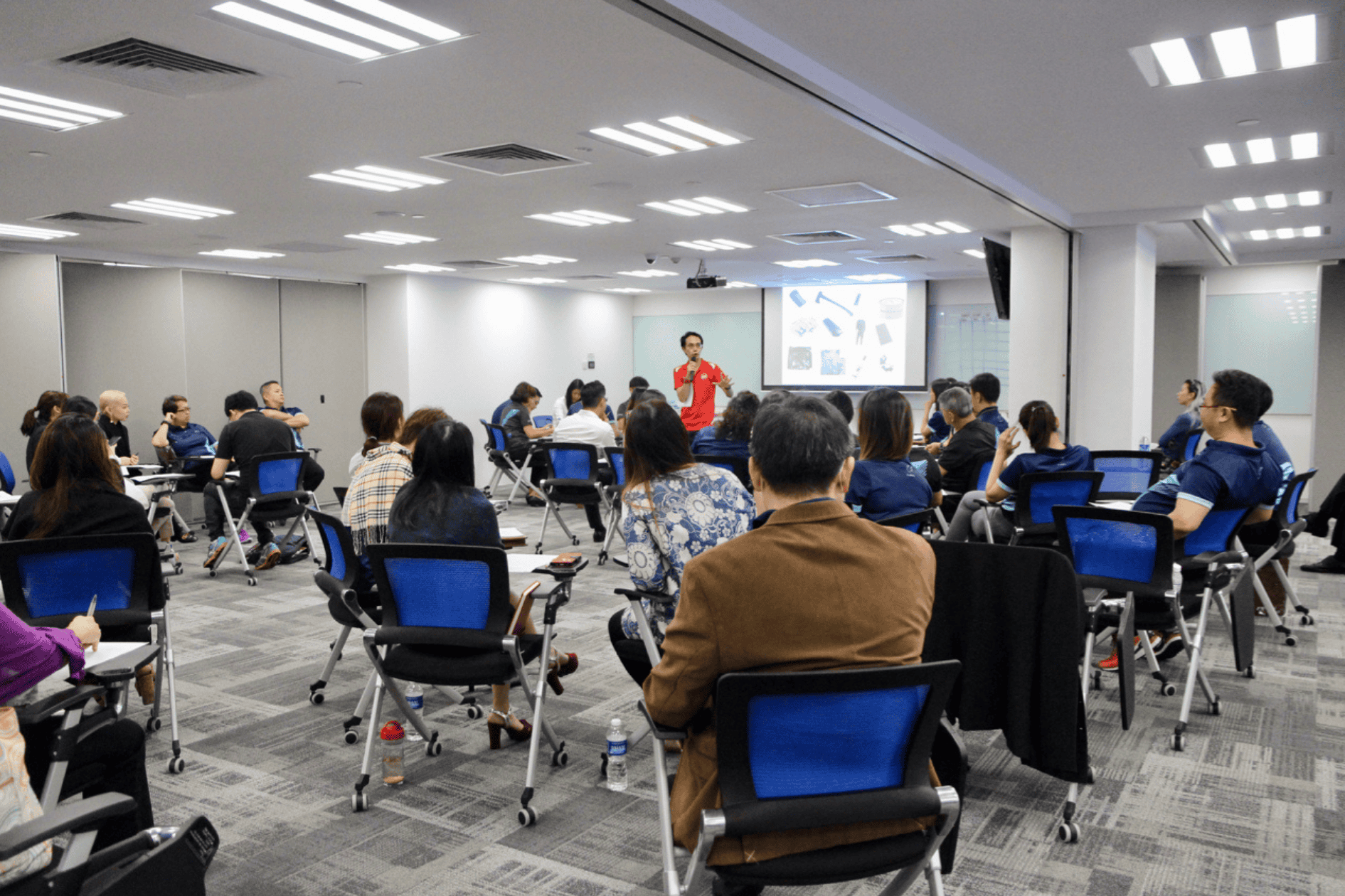
On paper, most leadership teams can describe excellent leadership with ease. The right words are never in short supply.
The harder question is whether you can see it when it counts. In the room where a difficult decision needs to be made and no one wants to go first. In the conversation where feedback is overdue but comfort keeps winning. In the meeting that ends with everyone nodding and no one quite sure who owns what next.
Having spent over 19 years working with senior leaders across Singapore and Asia, I have come to recognise that understanding leadership is rarely the issue.
Most leaders can articulate what good looks like. They have read the books, attended the leadership training, and sat through enough keynotes to know the language of effective leadership inside out.
But knowledge and behaviour are not the same thing. The gap between them is where leadership effectiveness is either built or quietly lost. And that gap shows up not in the big dramatic moments, but in the small ones that repeat every single week across teams and decisive action.
What I look for is simpler than most people expect:
Can this leader communicate direction clearly when the environment is uncertain?
Do they make decisions with the information available, or do they wait for certainty that never arrives?
Do they follow through on commitments in ways their team can feel, not just track?
And when things go wrong, do they create accountability or do they create noise?
Those daily behaviours, repeated consistently, are what separate high performing leaders who inspire genuine commitment from those who settle for compliance.
They are also what determine whether leadership excellence remains a concept on a slide or becomes the standard that shapes how an entire organisation moves forward.
Why Leadership Falls Short - Even in High-Performing Organisations
Most organisations talk about excellence and leadership journey as if it lives inside a person.
That framing quietly excuses the room from changing. It turns excellence and vision into personality judgement, and leadership development into inspiration that fades once the calendar fills again.
McKinsey’s leadership classic on why programmes fail points out recurring missteps like one size fits all design, separating learning from real work, and underestimating the behavioural change required. According to McKinsey (2025), those mistakes keep leadership development “busy” while daily leadership stays the same.
In my experience, effective leadership does not come from a new slide deck, or a one-off training day or taking over traditional visionary thinking.
It comes from the daily practices leaders repeat until those leadership skills become instinctive, even under pressure, across teams and across leadership roles.
Staying close to industry trends matters, but it is what leaders do consistently with that awareness that determines whether their organisation moves forward or stays stuck.
When organisations treat leadership development as an event, the organisation gets activity, not organisational success. When they treat it as ongoing development, supported by management and culture, leaders develop the ability to lead with clarity, and team performance becomes more consistent.
What Leadership Excellence Actually Looks Like
Leadership excellence is what I can observe in the moments that matter.
If I cannot see it in a meeting, it is not excellence yet.
When I say “observable”, I mean things like clarity of outcomes, decision ownership, how feedback is given, and what happens after commitments. It is also what leaders stop doing, circling the same issue, rescuing weak decisions, or letting tension turn into politeness. That is a clear indication of whether effectiveness is improving, because behaviour shows up before results do, and self awareness is usually the first lever.
I once spoke at a senior leaders’ forum where a director told me, “Our leaders are confident, but our execution is inconsistent.” That line stuck with me because it is common. Many organisations reward confidence in presenting more than clarity in leading.
The room looks polished, the slides are sharp, and yet no one is certain who is deciding what, by when, and based on which trade-offs. When that happens, excellence becomes theatre. The leaders are capable, but the environment is training them to perform, not to lead, and the organisation pays for it in delayed decisions, weaker communication, and uneven team performance.
Three moments reveal whether leadership excellence is present.
First, decision moments. Who decides, by when, based on what information, and what is the trade off you are willing to accept? That is decision-making, not discussion, and it is one of the simplest strategies I use to raise leadership effectiveness without adding meetings.
Second, tension moments. When there is disagreement or risk, do leaders become defensive, vague, or silent, or do they stay clear, curious, and direct? This is where emotional intelligence, active listening, and effective communication become visible, and where building trust either happens or collapses.
Third, follow-through moments. Do leaders track progress without chasing, and do they correct course early, before problems turn into escalation? This is where management becomes practical rather than performative, and where teams see whether leaders can sustain success.
When leadership excellence becomes a shared standard, something else changes too. Teams stop labelling leaders as “good” or “bad” and start using language that can coach behaviour. That matters, because behaviour is the only thing you can practise on a Wednesday afternoon, and coaching is one of the fastest ways to develop skills and capabilities across teams, including for an emerging leader stepping into bigger leadership roles.
The One Question That Makes Leadership Excellence Visible
If your next leadership meeting ended today, could every leader answer, in one sentence, “What outcome did we commit to, and who owns the next decision?” If the answer is no, you are not looking at a motivation problem. You are looking at a behaviour standard that has not been made visible.
In almost every organisation I work with, that one question lifts effective leadership because it forces objectives, ownership, and follow-through into the same sentence. It improves effective communication without adding extra process, and it does something equally important: it makes the invisible visible. Suddenly, it becomes clear who is leading and who is waiting to be led.
The best leaders I have worked with use questions like this not as a performance tool but as a discipline. They understand that clarity is a skill, and like any skill it has to be practised deliberately and consistently before it becomes natural.
It does not happen because a leader is talented. It happens because a leader has chosen to hold a higher standard for how their team operates, and then models that standard in every room they walk into.
Leadership excellence is not a destination a leader arrives at. It is a standard they return to, again and again, especially when the pressure is high and the path forward is unclear. It shows up in the quality of the questions they ask, the consistency of the expectations they set, and the degree to which their team always knows where things stand.
When that standard becomes the norm rather than the exception, something shifts across the whole organisation. Trust deepens, decision making accelerates, and the gap between what leaders say and what teams experience begins to close.
What makes this question so effective is that it works at every level. It is as useful for an emerging leader finding their feet as it is for a seasoned executive managing complex stakeholder demands. It cuts through the noise that fills most meetings and replaces it with something the team can actually act on.
Objectives become shared. Accountability becomes specific. And leadership excellence stops being something people talk about in workshops and starts being something the organisation can see and feel on an ordinary Wednesday morning.
The Questions Leaders Ask When Things Go Wrong Define Everything
The fastest shift I see comes from changing the first two questions a leader asks when something has not gone to plan.
Most leaders default to questions that pull the room backwards. “Why did this fail?”, “Who dropped the ball?”, “How did we end up here again?” It feels productive because it sounds analytical. In practice it produces defensiveness, face-saving, and a longer meeting, with worse team dynamics and lower employee engagement. The room is busy, but it is not moving.
The leaders who build genuine effectiveness ask different questions, and they ask them calmly. “What’s our preferred future instead of this problem?”, “What would good enough look like by Friday?”, “What decision can we make with what we know now?”
In my experience, the team’s mindset often shifts after those first questions shift, because energy follows attention, and team performance follows the quality of attention in the room.
The ability to unlearn outdated practices and learn new ones quickly is the most valuable trait for leaders in fast-changing environments.
Organisations that invest in leadership development also state that they improve their leadership skills by 60% through mentoring.
Leadership development should start early in a manager’s career, with offerings that establish foundational practices around communicating subordinates’ role expectations.
Visionary thinking enables leaders to anticipate future trends and steer their organisations toward long-term success.
If you want one leadership move that stops meetings becoming a replay of problems, start here. Replace “Why did this fail?” with “What is the smallest step forward we can agree on today?” Small Steps To Big Changes is not a slogan to me. It is how leaders build momentum when pressure is high and time is limited, and how they enhance team performance through simple strategies that can be repeated.
When the room is noisy, I also use what I call Exception Finding. I ask, “Tell me about a time when this was not a problem. What was different?” That question avoids blame while still producing accountability, and capabilities because it forces the group to notice the conditions that enable success, not just the conditions that create failure. It also builds a better understanding of what the team is already capable of, and it gives me practical guidance on what to repeat.
And when improvement language becomes vague, I use a simple scaling question. “On a scale of 1 to 10, where are we today?” Then, “What makes it a 4 and not a 1?” Then, “What would a 5 look like?” You do not need more resources or a spreadsheet to make progress concrete. You need a leader willing to turn fog into language the team can act on, and the ability to translate insight into the next commitment.
This aligns with what we see in broader thinking on leadership development. Harvard Business Review has argued that traditional executive education is being reshaped by approaches that are more democratic and tied to real decision-making across the organisation.
Good leaders excel in effective communication, articulating ideas clearly and actively listening to others. Excellent leaders leverage data and technology to make informed decisions while considering ethical implications.
Leadership excellence in 2026 is defined by a shift from hierarchical, control-based management to a human-centric approach that integrates artificial intelligence, fosters psychological safety, and navigates constant volatility.
According to Harvard Business Review (2019), development should not be restricted to those near the C suite, because consequential decisions are increasingly made throughout the business.
What I also notice across organisations is that the most effective leadership courses and leadership training programmes are the ones that move beyond content into behaviour.
Knowledge without practice changes little. But when leaders take what they have learned and apply it in real conversations, real decisions, and real moments of tension, that is when collaboration deepens, innovation becomes more natural, and sustained success starts to compound across the organisation.
Why Changing How You Lead Is Harder Than It Sounds
Many organisations face challenges in developing effective leaders due to skills gaps in areas such as people management and adaptability to rapid changes.
Because senior leaders are rewarded for being decisive, not for being uncertain in public.
Because hierarchy makes honesty feel risky, especially in cross-cultural rooms where saving face is real.
A significant percentage of employees report dissatisfaction with their managers, indicating a gap in effective leadership.
Only 5% of companies have successfully implemented leadership development across all levels, highlighting a major opportunity for improvement.
And because in many organisations, the meeting itself has become the work, so changing how meetings run can feel like changing identity.
Many managers feel unsupported in their leadership roles, with 71% reporting a lack of support to improve as leaders.
Under changing circumstances, leaders often default to familiar patterns, including an old leadership style that once worked but no longer fits the challenges in front of them.
Developing leadership excellence requires a disciplined approach and commitment from top leadership to create a culture of continuous learning.
The mindset response is to treat this as practice, not personality. If your leaders wait to “feel ready” before they change how they question and decide, nothing moves. Motivation follows action, not the other way round, and continuous learning is what makes the shift stick.
In my experience, the importance is not whether leaders can describe excellence. The importance is whether they can repeat it consistently, and whether the organisation will reward that behaviour when the pressure is real.
Your Next Small Step Starts in the First Five Minutes
In your next leadership meeting, pick one moment. The first five minutes.
Ask one solution-focused question before anyone offers analysis. “What outcome do we need by the end of this hour?” Then ask, “What is the smallest decision we can make today that reduces risk for next week?”
Notice what shifts when you do this consistently. Different perspectives begin to surface. People who normally wait for direction start contributing earlier. The conversation moves from reporting to thinking, and that shift alone can change the entire dynamic of how your team operates.
Do it once, cleanly, and build from there. You do not need role plays or elaborate frameworks to start. You need one deliberate question, repeated with intention, until it becomes the norm rather than the exception.
This is not leadership development in the sentimental sense. It is on going development through deliberate practice, and it is how exceptional leaders build leadership success without drama. The evidence supports this approach.
According to McKinsey (2025), leadership programmes that connect learning directly to real work and real decisions produce significantly stronger and more lasting behaviour change than those built around content alone.
Over time, this kind of consistency is what allows leaders to draw out the full potential of the people around them, fostering an environment where ownership, initiative, and accountability grow naturally.
Gallup research reinforces this, finding that organisations with highly engaged leaders report 21% higher productivity than those without.
Organisations that invest in leadership development report improved leadership skills and employee engagement.
We can take inspiration from global leaders who have redefined leadership itself those who first identified the core challenges and then thoughtfully reshaped their approach to address them.
Nadella revitalized Microsoft’s culture, driving a pivot toward cloud computing and AI, resulting in the company’s valuation surpassing $3 trillion.
Jobs transformed Apple from a struggling company into the world’s most valuable brand, pioneering markets for personal computers and smartphones.
Likewise, Huang transformed Nvidia from a gaming graphics card company into a dominant infrastructure provider for the global AI revolution.
Nooyi’s “Performance with Purpose” initiative balanced financial success with environmental sustainability, increasing net revenue by over 80% during her leadership.
Organisations with highly engaged leaders report significant benefits, including 21% higher productivity and outperformance of the stock market by 120% for purpose-driven brands.
And that is what aligns with career progression, not just for the leader, but for everyone they are responsible for developing.
Leadership effectiveness is a highly significant determinant of many performance outcomes, including employee satisfaction, productivity, and financial results.
Remember, empowerment and delegation are hallmarks of good leadership, fostering a culture of accountability and creativity. Also, continuous learning and growth are essential traits for effective leaders, as they seek opportunities for self-improvement and encourage a culture of learning.
Case Study: The Retreat That Almost Went Wrong
A leader once came to me, visibly carrying the weight of his team on his shoulders.
He was preparing for his department’s annual strategic retreat, a full day with his people, away from the noise of the office, and he had mapped out exactly how he wanted it to begin. He would open by asking everyone to lay out their challenges. Name the obstacles. Identify what was holding them back. He believed, with genuine care for his team, that this honesty would clear the air and set the right foundation for what came next.
He leaned forward as he described it to me, clearly proud of the thoughtfulness behind it.
I gently stopped him.
“If you open that door,” I told him, “be ready for what walks through it.”
“Because here’s what happens when you ask a tired team to list everything that’s wrong: they will. And they won’t stop. The frustration that has been quietly building for months, the lack of resources, the impossible workloads, the decisions made above their heads, will finally have a room and a microphone. What begins as honest context becomes a slow bleed. Energy drains. Eyes drop. And before the retreat has even found its feet, the very people you need to be hopeful are already rehearsing why nothing will work.”
He sat back, the pride in his plan replaced by something more uncertain.
“So what do we do instead?” he asked.
“We talk about the future they actually want”, I told him.” Not the problems of yesterday, but the possibilities of tomorrow. We ask: If everything went right, if your team were doing all the right things and your clients couldn’t stop talking about you,what would that look like? We let people dream out loud, together, in the same room. That kind of question doesn’t drain a room. It lifts it.”
“And we look back, too but differently. Not at what failed, but at what quietly succeeded. Every team has wins they’ve half-forgotten, moments where they got it right and moved on without pausing to understand why. We find those moments. We hold them up to the light. We ask: how do we do this again, on purpose, every time?”
That shift, from what’s broken to what’s possible, changed everything about how the day unfolded.
His team walked into that retreat braced for the usual dissection of disappointments. What they found instead was an invitation. To imagine. To remember their own capability. To build something together rather than diagnose something together.
By the end of the day, the room felt different. You could see it on people’s faces, not the polite, tight-lipped expressions of people enduring a corporate exercise, but something genuine. There was laughter. There was disagreement that felt productive rather than personal. There was a moment, near the end, when one of his quieter team members stood up and said, “I actually believe we can do this.”
The leader told me afterwards that he hadn’t heard that kind of conviction from his team in a long time.
That’s what a change in focus can do. It doesn’t erase the real challenges, they’ll still be there on Monday morning. But it determines what kind of energy your people bring to those challenges. And a team that enters a new financial year carrying clarity, hope, and genuine belief? That team already made the leader smile at the change of mindsets his people developed.
As an Emerging Leader, What to Expect After the Team Leaves
A keynote can create a window where leaders recognise their own patterns without feeling attacked.
That window is valuable, and it is brief.
If leaders return to the same meeting norms and incentives, behaviour will snap back. That is why the most useful question for any buyer is not “Was the content good?”, it is “Will our environment reward the behaviour we say we want?” That is the difference between a moment of insight and leadership success that holds over time.
Harvard Business Review’s research backed guidance on leadership development highlights that many organisations invest heavily, yet the impact is unclear unless programmes are designed for lasting change. According to Harvard Business Review (2023), leaders and teams benefit most when development is designed to drive real, lasting impact rather than short-term inspiration.
In my work, organisational success is usually predictable when the culture supports the behaviours leaders say they value, and when support systems make coaching, mentoring, and constructive criticism normal rather than awkward.
That is what turns development into team performance, not just good intentions, and it is a form of holistic development that leaders actually feel in daily work.
If you want leadership development stay sustainable, I look for three things: clear expectations, resources that adapt practice, and managers who communicate priorities consistently. Without that, even the best leaders will revert to the strongest incentives in the environment.
If this is the kind of lasting shift you are aiming for, working with Kenneth Kwan can help you move beyond moments of inspiration and embed leadership behaviours that truly endure.
Read More: Understanding What Effective Leadership Looks Like in Organisations