Every organisation has one factor that truly determines whether it thrives or merely survives leadership. I have seen firsthand how inspired leaders energise teams, lift performance, and build cultures where people want to give their best.
At the same time, uninspired leadership quietly erodes confidence, weakens mindset, fuels turnover, and leaves even the smartest strategies stranded.
Everything rises and falls with leadership.
-Kenneth Kwan
That is why leadership development is not just an HR initiative, it is a business imperative.
In a world where talent is in high demand and the pace of change continues to accelerate, organisations are increasingly focused on preparing leaders for the future.
Investing in leadership capability is one of the most effective ways to sustain performance, strengthen confidence, and help organisations reach greater heights. Leadership training providers in Singapore work closely with clients to understand their unique organisational challenges, align resources effectively, and create practical solutions that drive measurable results.
Through my work as a consultant, author and executive coach, I have spent years partnering with organisations to design and deliver leadership training that goes well beyond theory. This work focuses on mapping leadership journeys that are personal, practical, and grounded in real business realities and cultural context.
The aim is to identify the behaviours and capabilities leaders need at each stage of growth and to support lasting mindset shifts that improve performance.
The difference between good leadership training and forgettable training often comes down to facilitation.
Strong leadership training facilitators know when to push, when to pause and how to connect learning initiatives to real workplace challenges using relevant resources and meaningful leadership events.
When done well, these programmes do more than build skills. They strengthen confidence, shape how leaders think, and influence how they show up every day to lead their teams toward the future.
This is exactly what a great Leadership Training Program delivers taking you from PowerPoints to Power Moves, transforming learning into action, insights into impact, and managers into true leaders.
Strong leadership sits at the heart of business success. Organisations led by capable and self aware leaders consistently experience higher employee engagement, stronger performance, and better retention.
Leadership is not something people are simply born with. It is developed over time through experience, reflection, and structured learning that supports individuals in becoming a great successful leader.
Leaders are not always born, but also bred.
-Kenneth Kwan
Leadership training plays a vital role in preparing leaders who can succeed in diversified situations. Each leader gains clarity around role expectations, the realities of the job and the skills required to lead others effectively. Practical learning experiences help leaders communicate direction clearly, align employees around shared goals, and make confident decisions in complex or uncertain environments.
Effective leadership training also strengthens a leader’s ability to manage people and performance. Participants work through real workplace scenarios that challenge how they think, respond and lead.
These experiences build capability in managing diverse teams, supporting employees through change, and maintaining focus under pressure. As leaders strengthen these capabilities, they become better equipped to drive performance across their teams.
Leadership programmes also shape how leaders think about responsibility, accountability and impact. Awareness of how leadership behaviour influences culture, engagement, and results enables leaders to build trust, support growth, and create environments where employees feel motivated to perform at their best.
A strong example is Singapore Airlines, which is widely recognised for developing leaders who perform effectively in high-pressure and complex operating environments. The organisation treats leadership development as a core business priority, ensuring leaders are prepared to manage people, uphold service standards, and deliver results at scale. Leaders are not only developed initially but are also continuously provided with training, coaching and development opportunities to adapt to evolving challenges. This sustained focus on ongoing leadership development has contributed to a strong pipeline of leaders who consistently drive performance and uphold the airline’s high standards.
From a business and governance perspective, the impact is clear. Organisations that invest in leadership training reduce execution risk, strengthen succession planning, and build leadership depth across levels. A focus on developing leaders who can perform across different situations positions organisations to sustain performance, adapt to change, and create lasting value through great leaders.
The best leadership programmes go beyond theory and equip participants with practical skills they can apply from day one. You will develop an effective leader, learning how to prioritise effectively, make data-informed decisions, and manage competing demands without losing sight of strategic objectives.
Leaders gain techniques for running effective meetings, giving constructive feedback, and handling difficult conversations with confidence all interpersonal skills that directly improve team performance and collaboration across organizations.
Communication is a major focus. You will strengthen your ability to clearly articulate goals, inspire commitment, and influence stakeholders across different levels and functions. These programmes also teach how to delegate effectively, coach your team and recognise and leverage individual strengths creating an environment where employees feel trusted, supported and motivated to perform at their best.
You will also learn how to adapt your leadership style to different situations, helping managers and executives guide their teams more effectively and deliver results that meet the needs of clients and the wider organisation.
When stepping into a top-management position, leadership is not only about analysing data or achieving targets it’s about managing teams and empowering people to exceed their own potential. Leaders need to be available for their teams, actively listen and hear them out, understand individual strengths and challenges, and demonstrate emotional intelligence reading team dynamics, managing stress, resolving conflicts, and providing empathetic guidance. Balancing strategic priorities with people-focused leadership ensures decisions are effective and sustainable, strengthening both performance and organisational culture.
Resilience and adaptability are reinforced through real-world simulations and in-person scenario exercises, helping leaders stay focused under pressure, navigate uncertainty, and respond decisively to change. A practical takeaway you can implement immediately is the “Two-Minute Feedback Technique”: during daily check-ins, spend just two minutes giving a colleague specific, actionable feedback on one task. This simple habit improves clarity, accelerates development, and strengthens team trust without requiring long meetings or formal evaluations.
Finally, all of these capabilities are underpinned by leading with integrity making decisions transparently, holding yourself accountable, and building lasting trust with teams, peers, and stakeholders. Developing these skills shapes effective leaders who can inspire confidence, guide their teams successfully, and create meaningful impact across organizations.
With so many senior leadership programmes and workshops in Singapore, it can be overwhelming for team leaders, executives, and HR professionals to know which ones actually make a difference. From my experience as a trainer, the first thing I look at is relevance. A programme must tackle the real challenges leaders face and align with the organisation’s priorities. When the content connects to actual business scenarios and strategic goals, participants can immediately apply what they learn improving people management, boosting team performance, and driving tangible results.
Bite-sized learning is key. Breaking content into practical, manageable modules allows leaders to absorb concepts, practise skills, and integrate them into daily work without disrupting busy schedules. Hands-on experiences case studies, simulations, and real-world exercises let participants test strategies, make decisions, and see the outcomes in a safe environment. Understanding a concept is one thing; experiencing it is another.
Mentorship and coaching accelerate development. Working with experienced executives or expert coaches helps leaders navigate complex situations, manage change, and guide diverse teams with confidence. These interactions give participants the tools and insights that shape them into leaders who inspire others and drive consistent performance.
Crucially, one size does not fit all. Sending leaders to a high-level C-suite programme, or enrolling senior executives in a generic leadership course, often misses the mark.
The most effective programmes are need-based and designed around participants’ specific responsibilities, challenges, and areas for growth. For expats and international leaders, this is even more important. They often require guidance on leading multicultural teams, adapting to local business practices, and integrating into a new organisational culture. Tailored learning ensures every leader, regardless of role or background, can translate knowledge into action and achieve real impact.
A great leadership programme doesn’t end when the workshop does it’s journey-focused.
Rather than a one-off leadership crash course, effective development requires leaders to apply what they’ve learned over time, in real situations that matter to the business. At Deep Impact, we emphasise that leadership programmes deliver results only when learning is followed by intentional application.
That’s why we work closely with senior leaders on live business initiatives, asking them to put new thinking and skills into practice against real challenges and to deliver tangible outcomes within a defined timeframe.
This follow-through is where learning becomes behaviour, behaviour becomes impact, and impact becomes results.
Finally, networking is more than a bonus it’s a multiplier. Interacting with peers from different industries and functions sparks fresh ideas, fuels innovative thinking and builds a network of contacts that lasts long after the programme ends.
For leaders, these connections often lead to collaborations, knowledge-sharing and strategic partnerships. The right leadership programme doesn’t just teach skills it equips participants with the confidence, insights, and practical tools to make a meaningful, lasting impact on their teams and organisations.
Leadership courses deliver more than ideas. They give you practical skills and tools you can apply immediately. From sharper decision making and improved self awareness to techniques for communicating, influencing, and leading your team effectively, even a single session can make a tangible difference. You walk away with strategies you can put into action the very next day, helping your team perform better and collaborate more seamlessly.
For global and expat business leaders, personalised programmes take it further. They provide hands on guidance, cultural intelligence, adaptive leadership strategies and team building tools, helping you navigate diverse teams, align expectations, and achieve measurable results. These programmes equip leaders to handle complex situations with confidence, resolve conflicts effectively, and inspire their teams even under pressure. These aren’t just lessons they are tools and approaches you can integrate into your daily leadership practice to create lasting impact.
From a strategic perspective, continuous, personalised leadership development delivers measurable returns.
Organisations that invest in these programmes consistently report higher employee engagement, stronger collaboration, improved retention, and more effective execution of complex projects. Beyond enhancing individual leaders’ skills, these programmes provide teams with the tools and guidance needed to apply knowledge effectively across the organisation, ensuring that learning translates into tangible business impact.
In Singapore’s dynamic, global business environment, this kind of leadership development reduces risks, builds resilience, and maximises the ROI of talent, equipping leaders with the confidence, insight, and actionable tools to lead effectively, make informed decisions, and sustain high performance across their teams and organisations.
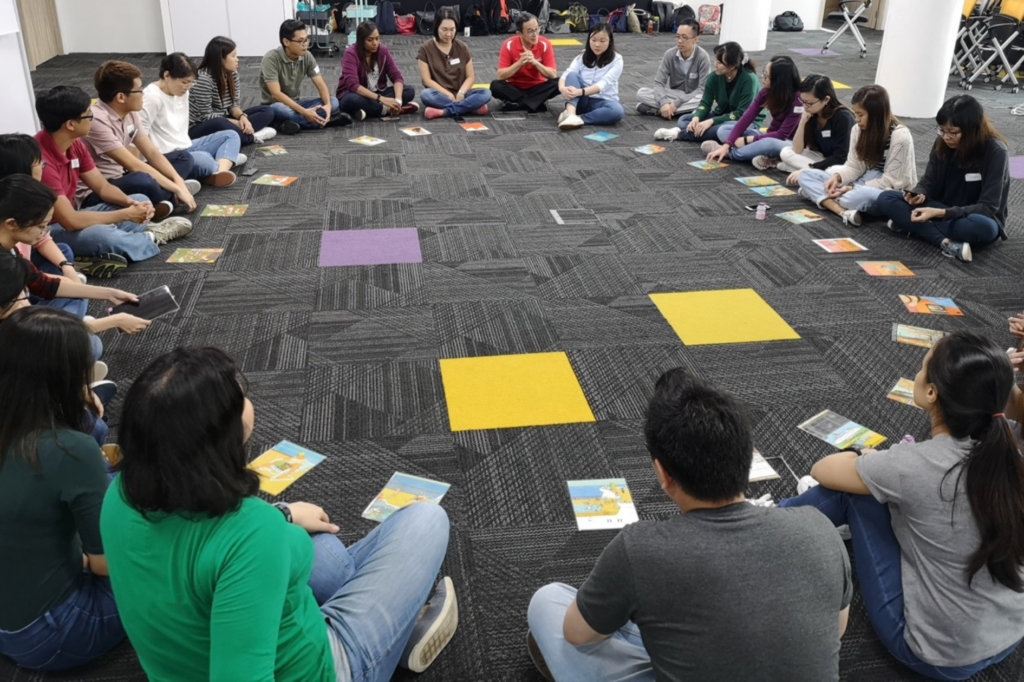
A department was struggling with inventory discrepancies and slow workflows, which exposed the team to significant operational risks. The solution was not just new processes or tools it was leadership development.
Using the DEEP Model from the Small Steps To Big Changes programme, leaders were challenged to lead change, overcome inertia and deliver real results. The leaders stepped up to the challenge, and the results were striking. These emerging managers were able to guide their teams with confidence and make decisions that had an immediate impact on business performance.
The leaders worked together and co-created with their teams to redesign the inventory management process, introducing a modified cycle count sheet with automated error detection. This change quickly improved transaction accuracy and sped up communication across departments.
Instead of waiting days to resolve discrepancies, teams could act immediately, reducing operational risk and improving reliability.
The numbers tell a compelling story. Transaction error rates dropped sharply, reducing recounts, write-offs, and service delays. Discrepancy resolution time went from a week-long baseline to just one day, unlocking working capital and improving operational efficiency. Inventory accuracy consistently stayed between 95 percent and 100 percent, lowering shrinkage and audit exceptions.
Automation and reduced manual tracking also freed up time and labour, creating substantial cost savings. Using the formula ROI = (Annual cost avoided + Productivity hours saved × loaded labour rate + Working capital unlocked) ÷ Programme cost, finance teams could clearly see the tangible business value of investing in leadership development.
The impact went beyond the metrics.
For executives, this case provides a clear lesson: the right leadership programme equips leaders to tackle complex challenges, innovate processes, and reduce risk while strengthening organisational capability. Leaders gained the confidence, skills, and insight to navigate high-pressure situations, becoming successful leaders who can sustain long-term results. The organisation benefited from stronger performance, faster results, and long-term resilience. This proves that leadership development, when applied strategically, can transform not just people but the entire business.
I’ve always believed that leadership is more than a title or a set of skills it’s about showing up for the people around you, listening, understanding, and guiding teams in ways that help them grow and perform at their best. True leadership development is not a three-day workshop ending with loud applause; it’s a journey where coaches, mentors and peers support leaders over time, helping them apply what they learn, reflect on real challenges and strengthen their confidence and judgment every step of the way.
Leaders are notoriously time-starved. Without intentional moments for reflection and application, even the most well-designed leadership intervention quickly loses its impact and becomes little more than a forgotten event.
For me, the most meaningful growth happens when leaders handle tough conversations with care, inspire teams through uncertainty, and recognise the potential in those around them. Leadership isn’t about perfection it’s about presence, consistency, and a willingness to grow alongside your people.
That’s why I see leadership development as an investment in people, not just processes. When leaders grow personally and professionally, the impact ripples across their teams, their organisations, and beyond. It’s this ongoing journey not a single workshop that shapes leaders who can make a lasting difference, build trust, and create cultures where people consistently bring their best selves to work.
Convinced? Let’s connect to discover how a tailored leadership programme can equip your leaders with the confidence, capability, and connections to drive real impact. Together, we can transform your teams, streamline processes, and strengthen organisational performance.
You can also read: Rethinking Leadership Training: Why It Fails to Motivate and What Actually Works