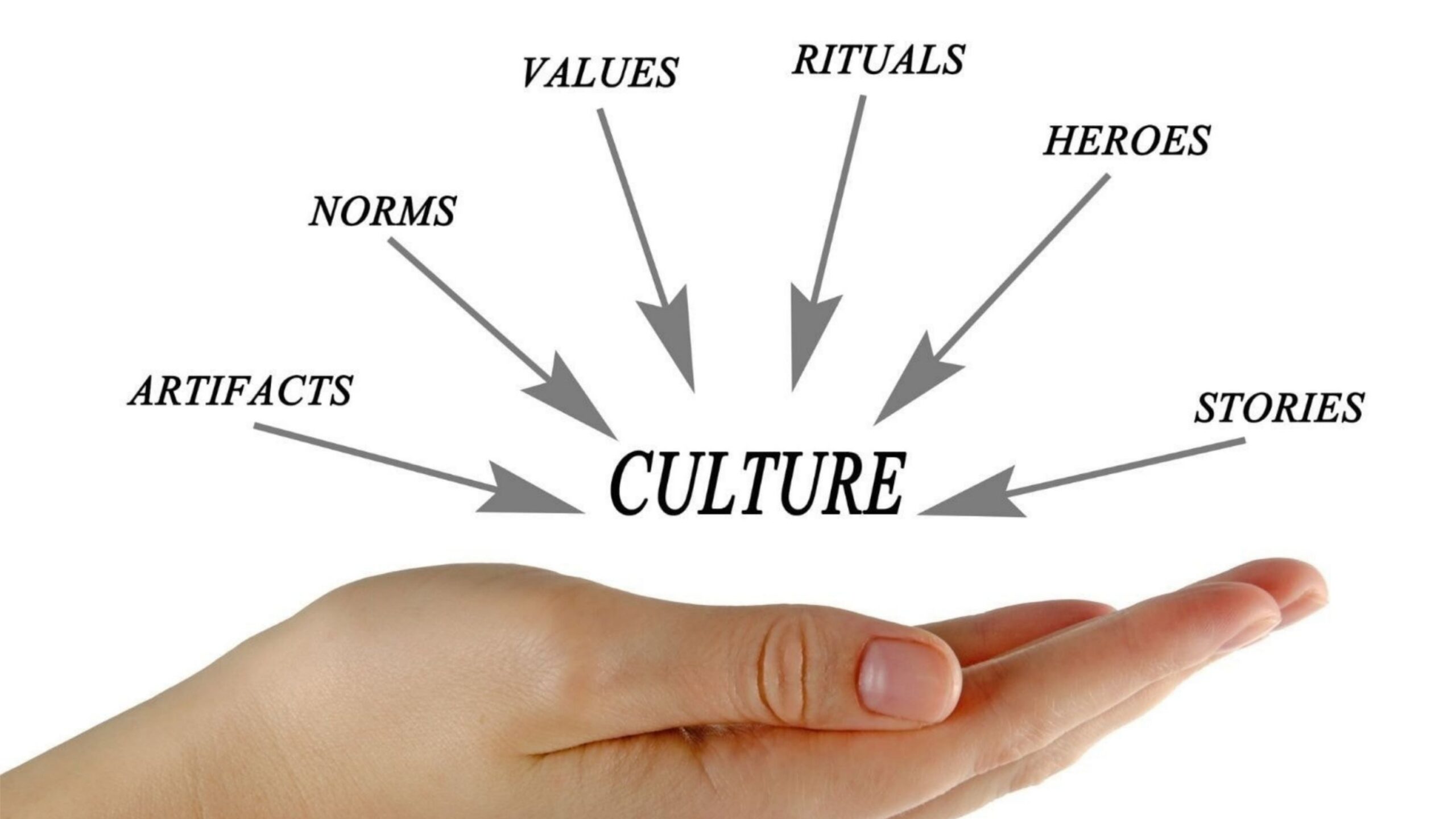
Culture isn’t something you can mandate with a memo or design on a slide. It starts with stories the small, real moments that define how people experience work every day. The stories you tell, the examples you highlight, and the behaviours you celebrate send a signal about what really matters in your organisation and help create a positive workplace culture.
But culture doesn’t stop at stories. Lasting change happens when those stories lead to a shift when behaviours, habits, and ways of working align with the values you want to live by and support your business goals. Building culture is a journey that begins in narrative and ends in action, and the leaders who understand that journey are the ones who turn intention into impact.
Culture building isn’t a programme you launch and tick off.
It’s a continuous set of purposeful behaviours, story telling, recognition and shared expectations that get reinforced again and again, until they become the way things actually get done and influence the overall way of work. Great leaders recognise that culture is not pinned to posters or statements; it’s lived in the daily experiences of employees and seen most clearly in the rituals and decisions that shape everyday work.
Facts and figures speak to the logical brain, but stories speak to the heart.
Real culture building begins with what people believe and belief is shaped more by narrative than by policy. When you want to change how an organisation functions, you don’t start with a new procedure or rule. You start with a story that inspires team members to engage, contribute, and show up authentically. Stories also play a key role in driving employee retention by creating a sense of purpose and connection that keeps people committed to the organisation.
Stories offer context and humanise abstract ideas like “innovation,” “collaboration,” or “customer focus.” When a manager shares a story about a team that went the extra mile, that narrative gives others a concrete example of what excellent performance looks like and encourages a positive work environment.
Stories stick because they connect with people’s emotions and experiences, making the intangible elements of culture something real, relatable, and memorable, and shaping how people choose to work every day.
In practice, leaders can weave stories into all kinds of settings leadership briefings, internal newsletters, team meetings, or one‑on‑one conversations. But the real power of storytelling isn’t in grand speeches alone. It’s how narratives thread through everyday dialogue and influence the decisions managers and team members make when no one is watching.
You might also like: How Leaders Master Personal Efficiency Through Story
Think about the unwritten rules in any workplace. People model their behaviour based on what gets noticed, celebrated, and shared. Those moments quickly become the living folklore of an organisation.
Leadership stories whether shared in a keynote, a team meeting, or even a casual hallway conversation signal what truly matters far more effectively than any handbook. They give abstract values life and show what “good” looks like in practice, helping managers build stronger relationships with their teams and encouraging conversations that reinforce shared norms.
Our brains are wired to remember stories far better than isolated facts because stories engage our emotions and create mental models that stick. In cognitive psychology, narratives activate both emotional and memory centres, making information far easier to recall later on than standalone data points—especially when emotions like pride, empathy, or shared challenge are involved. This makes employees more likely to internalize the behaviours and values that leaders highlight.
In cognitive psychology, narratives activate both emotional and memory centres, making information far easier to recall later on than standalone data points
What this means in leadership terms is simple: people don’t just absorb instructions they absorb meaning.
When leaders highlight real examples of collaboration, courage, or customer focus, those stories become the benchmarks others emulate. Conversely, if leaders repeatedly celebrate only short‑term results without linking them to cultural values, the behavioural cues that shape culture devolve into a focus on output over identity.
It’s one thing to inspire people from a stage, and quite another to translate that inspiration into everyday action. Leaders often deliver powerful speeches or host energising workshops, but if the message doesn’t connect to tangible behaviours, the impact fades quickly.
Culture isn’t built on applause it’s built on follow‑through and the everyday choices people make.
Turning stage moments into strategy starts with clarity. Leaders must articulate what success looks like in the day-to-day work environment. What behaviours reflect the values you want to see? Which habits need to shift to support a positive workplace culture? Once these outcomes are clear, stories and messages can be deliberately mapped to real‑world actions that reinforce the culture they want to grow.
It also takes visibility and consistency. Leaders need to model the behaviours they highlight and recognise when others do the same.
Feedback loops are essential so lessons aren’t just heard they’re lived. When leaders visibly reflect on stories, link them to learning, and integrate them into performance conversations, team rituals, or even team building exercises, culture stops being abstract and becomes something employees experience, practice, and internalise every day.
One of the most memorable moments in my leadership journey came through candid feedback from a team member. They spoke honestly about how my leadership showed up on the ground. It was uncomfortable but necessary.
That conversation made me realise I hadn’t truly empathised with what my team was experiencing day to day. My intentions were good, but my perspective was limited. Hearing it directly changed how I lead. It pushed me to listen more closely, slow down, and intentionally see situations through my team’s eyes not just my own.
A leader who celebrated a customer support team’s commitment to delighting users by sharing their stories and linking them to recognition programmes found that not only did customer satisfaction rise, but internal metrics like employee retention, cross‑department cooperation, and engagement improved as well. The message was clear: the behaviours that define culture will be seen, talked about, and rewarded consistently.
This is where culture moves from soundbites to sustainability, where story becomes strategy, and where the everyday actions of leaders and managers shape a positive, authentic, and enduring culture that aligns with business goals.
Culture isn’t built overnight, and it isn’t easy but it’s always worth it. Strong culture = stronger performance.
The ultimate goal of storytelling is not inspiration alone it’s behavioural shift. Leaders connect narratives to specific, observable actions that people can adopt. A story about customer focus, for example, becomes meaningful only when it translates into actions like prompt follow‑ups, cross‑functional support, or proactive problem‑solving.
Embedding culture requires recognition and reinforcement. Celebrating small wins, highlighting team examples, and linking actions back to organisational purpose embeds values in daily routines. Repeated behaviours create a self‑reinforcing system where culture shifts naturally, guided by the stories leaders tell.
Consistency, humility, and attention are essential.
Trust erodes when leaders say one thing and do another, so stories lose credibility if the behaviours they promote are not visible in leadership actions. Humble leaders who admit mistakes and demonstrate learning create environments where employees feel safe to do the same.
Paying close attention to the team is equally important. Leaders who notice patterns, listen carefully, and respond appropriately show that they are genuinely invested in the people they lead. These small but intentional actions, repeated over time, turn narrative into lasting cultural change.
Through example and reinforcement, narratives influence what gets rewarded and discussed, which in turn shapes what gets done. That is the power of culture activated.
A powerful example of culture change at scale comes from Microsoft, where CEO Satya Nadella took the helm in 2014 and initiated one of the most widely studied organisational transformations in modern business. Prior to his leadership, Microsoft’s internal environment was often described as competitive and siloed, with a “know‑it‑all” mentality that discouraged collaboration and openness. Nadella recognised that fixing this would require a fundamental shift in how people thought about work, learning, and each other.
Rather than mandating a list of new values, Nadella introduced the idea of a new mindset: an organisational narrative rooted in continuous learning, curiosity, and resilience. Leaders repeated this story in communications, meetings, and company events, framing mistakes as learning opportunities and curiosity as a strength. Empathy and collaboration became central themes in the narrative, not just slogans.
This narrative shift was paired with strategic actions that reinforced the desired behaviours. Microsoft revised performance systems that previously encouraged competition, removing stack‑ranking systems that undermined cooperation. Cross‑functional collaboration became a priority, and leadership workshops, hackathons, and internal forums were used to reinforce learning, experimentation, and empathy in everyday work practices.
The results have been significant. Internal engagement and collaboration improved as teams felt more secure in experimenting and sharing ideas. Psychological safety increased, allowing employees to voice concerns and learn from setbacks. The transformation also supported Microsoft’s broader strategy, helping the company pivot toward cloud computing, artificial intelligence, and integrated product development. The narrative shift did not just change morale it helped unlock innovation and align organisational behaviour with strategic priorities, while still delivering business results.
What makes this case especially relevant to culture building is how narrative and leadership behaviours reshaped norms, expectations, and identity within a large, historically entrenched organisation. The Microsoft story shows that culture does not shift merely because leaders announce new values it shifts when leaders consistently tell the right story, align systems and behaviours with that story, and model the change they want to see in others.
Culture building is a leadership strategy, not an HR campaign. It can’t live in the HR department it must be led by leaders. Policies play a supporting role, but they don’t create emotional connection or meaning on their own. Leaders who treat culture as a people‑centred strategy rather than a checklist find that employees in your organization are not just compliant they are genuinely committed.
People respond when they feel seen, understood, and invited into a shared purpose. Stories, rituals, and recognition systems give leaders a way to make that invitation concrete, turning abstract values into tangible experiences. Culture starts with how people are treated, how they perceive leadership’s intentions, and whether those intentions match observable behaviours.
This requires understanding what truly matters to employees, what gets prioritised in practice, and which behaviours are genuinely recognised and rewarded. Those elements, more than any formal policy, shape what people actually do and ultimately define the culture of the organization.

Every leader is either a culture amplifier or a culture suppressor. There is no neutral ground. When leaders give clarity, a shared language, and trust‑building habits, their positive impact multiplies across the organisation. This internal credibility is the foundation for external brand credibility. Organisations with strong cultures are more adaptable and better equipped to respond to change, because people trust leadership, collaborate effectively, and stay engaged even when external conditions fluctuate.
Leaders who embrace humility, adopt solution-focused mindsets, and listen with intent, model behaviours that others feel safe to adopt. Culture activation requires visible effort leaders integrating stories into everyday work, reinforcing behaviours consistently, and addressing gaps between stated values and observed actions.
At Deep Impact, we believe culture should be a regular agenda item in every senior leadership meeting, where leaders discuss how their actions and initiatives are shaping it.
Strong culture is also purpose‑led. When daily actions align with a long‑term mission, people find meaning in their work. The connection between individual contribution and organisational mission increases motivation, engagement, and emotional commitment. That is why research shows organisations with highly engaged workforces outperform peers in retention and productivity because people aren’t just working for the organisation; they’re working with it.
A culture that feels personal, emotional, and actionable is not a “soft perk”; it is a strategic asset. It drives discretionary effort, encourages innovation, and creates the conditions under which organisations and individuals thrive.
Common Tactic (What Companies Say) → The Truth (What Leaders Do)
“We have values posters.” → “We celebrate people who live our values.”
“We sent a memo about the change.” → “Our leaders share personal stories about why this change matters.”
“We held a one‑day workshop.” → “We practice the new behaviours in every team meeting.”
“Our culture is our ping‑pong table.” → “Our culture is how we solve problems and treat each other under pressure.”
Culture is not built through memos, posters, or one‑off workshops it is lived in the moments people experience every day. Stories create meaning, behaviours reinforce values, and leaders bring it all to life through consistency, attention, and authenticity. When leaders model what matters, celebrate the right actions, and pay close attention to how people experience work, culture shifts from intention to reality.
Building culture is a leadership strategy, not an HR campaign. It starts with a story that resonates, grows through actions that are visible and repeatable, and ultimately becomes the foundation for trust, engagement, and organisational success. Strong culture drives performance, motivates people, and shapes the way teams respond under pressure.
Leaders who understand this journey from story to strategy to behavioural shift create environments where people feel inspired, empowered, and connected to a shared purpose. That is how culture moves from being something written on a slide to something felt in every interaction, every project, and every decision. Stories, when combined with deliberate actions, don’t just communicate values they embed them.
If you want your company’s stories to shape culture and make a meaningful difference in how your people work and grow, connect with Deep Impact and start transforming the everyday experience of work.
Also read: People Leadership Program Powered by Purpose and Keynote Energy