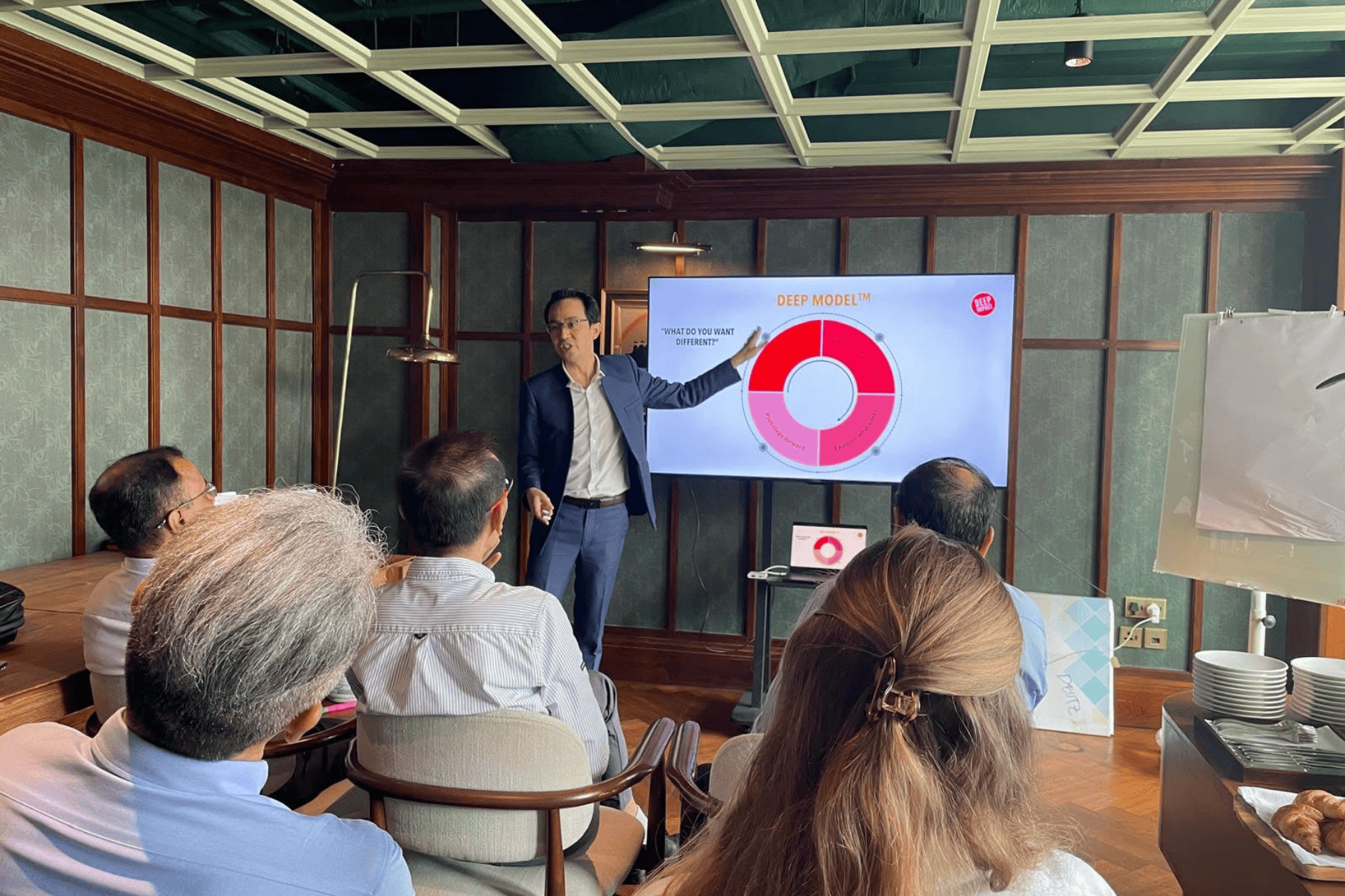
After a leadership forum in Singapore, a senior director waited until most of the room had emptied before he spoke to me. He said, “My team agrees with me very quickly now, and that worries me more than open resistance ever did.” He was not facing a performance issue yet. He was noticing trust leave the room.
After more than 15 years of speaking with senior executives across Asia, and a CSP to show for the miles and conversations, I still come back to the same point: authentic leadership is not a personality preference or a leadership style in the superficial sense. It is a daily practice that helps a leader build trust when pressure is highest.
Low trust is rarely dramatic at first. I usually see it in polished updates, careful silence, and meetings that look efficient while saying very little. A team member stops testing ideas aloud. An employee starts checking the political temperature before speaking. That work environment may still look calm, but it no longer feels open.
According to the Edelman Trust Barometer (2024), employers remain among the most trusted institutions people have. That makes internal credibility even more important, because the organisation often becomes the place where people decide whether honesty is safe.
A title can secure compliance for a while. It cannot create candour, collaboration, or long term commitment. I have watched first-time managers realise this quickly: a leader can be respected in the hierarchy and still not be trusted with the full truth. Authentic leadership matters in that gap between what is said, what is done, and what the team experiences over time.
Some leaders think authenticity means saying exactly what they think, exactly when they think it. I understand the impulse, but transparency alone does not build trust. If standards shift from week to week, or challenge is invited and then punished, the relationship still weakens. An authentic leadership style is not full disclosure. It is dependable alignment.
A lot of leadership theory describes authenticity neatly: know your values, stay true to them, and communicate clearly. Useful, but incomplete. In my experience, authentic leadership becomes real when the same value principle holds in the boardroom, in a one-to-one, and in a difficult conversation with a direct report.
Self awareness does not stay private for long. It shows up in tone, timing, feedback, and what a leader chooses to ignore. If someone says people matter but only rewards short-term output, the message is clear. If bad news is requested early and then met with sharpness, psychological safety shrinks immediately.
A classic paper in The Leadership Quarterly linked authentic leadership with self-awareness and self-regulation. I find that research helpful because it shifts the conversation away from image and towards self discipline. Emotional intelligence matters here, but so does the harder part: acting in accord with your values when the easier option would protect your image.
If you want more consistency, end the day with brief self reflection. Ask yourself: where did I act in line with what I say matters; where did I send a mixed message; what conversation did I avoid; and what one small correction can I make tomorrow? Authenticity grows through honest adjustment, not through self-criticism for its own sake.
Saying “I do not know yet” is not a weakness if it is followed by clarity. I have seen an authentic leader steady a room simply by saying what is known, what is still unclear, and when the next update will come. People usually cope better with uncertainty than with false confidence.
Nothing repairs credibility faster than keeping small promises. If a follow-up is due on Friday, do it on Friday. If challenge is welcome, show it in your response. This is not glamorous work, but it is how trust returns and how leadership authentic in spirit becomes visible in practice.
One of the clearest signs of an authentic leader is how disagreement is handled. If the awkward point is raised and the room goes cold, everyone notices. If challenge is met with curiosity, honesty has a future. That is how a leader can foster a culture where a team member speaks before a problem becomes political.
A decision without context can feel arbitrary even when it is sound. I do not believe employees need every confidential detail, but they do need enough reasoning to understand the trade-offs. When the thinking is explained, firmness is more likely to be read as integrity than as power.
Once credibility has been damaged, the instinct is to make one big speech and hope the matter is closed. I have never found that convincing. Start by naming the inconsistency, then show a short run of observable behaviour: follow-through, fairness, openness to feedback, and visible accountability. That is how you build trust again.
Vulnerability helps when it creates clarity or human connection. It harms when a leader hands emotional processing to the team. Your people do not need every fear in real time. They need honesty with boundaries, including a clear sense of strengths and weaknesses without making the room carry them.
Under pressure, some leaders soften standards because they want to be liked. It can reduce friction for a moment, but it weakens credibility in the long term. Respect grows when expectations are fair, visible, and steady. Approval is more fragile, and business performance eventually feels the difference.
Nothing corrodes authenticity faster than selective enforcement. Teams notice quickly who gets challenged, who gets protected, and who can ignore the rules. An authentic leader does not need to be harsh, but standards must be consistent if you want to create positive conditions for honesty.
This is where the idea gets tested. A leader may value openness and fairness, then face pressure from above, fatigue from constant transition, or conflict across functions. Research from the Technical University of Munich found that authentic leadership is linked with stronger trust partly because consistency is read as integrity. That is exactly what pressure threatens.
Watch for delayed bad news, shallow agreement, fewer real questions, and polished meetings that produce little. Notice whether employees wait too long to ask for help. By the time formal data confirms the issue, the culture has often been living with it for months.
Before a difficult announcement, I often turn to Exception Finding. I ask: when has this team handled uncertainty better than expected before, and what was different then? That question does not remove the tension. It helps a leader recognise existing capability instead of speaking as though the room has none.
After a Civil Service College session, a senior leader told me he kept repeating the plan but still felt unconvinced by the room. What shifted was not a better script. It was his willingness to say plainly, “Here is what is decided, here is what is uncertain, and here is what I need from you while I lead through this.” That kind of honesty can encourage ownership.
If a decision hurts, say so without apologising for the responsibility itself. Then explain the principle behind the call and what support remains available. Authentic leadership after a hard moment is not about making everyone happy. It is about helping people understand the purpose behind the decision.
Do not avoid the conversation about fairness. Do not avoid the conversation about what changed and why. And do not avoid the one where someone tells you trust has dropped. Once those moments are delayed, people write their own version of events, and that story is usually harsher than the truth.
Set one meeting each week where challenge is expected, not merely tolerated. Follow up on one unresolved issue before anyone reminds you. State one principle clearly when making a difficult call. Those habits may look small, but they are often what make authentic leadership authentic in the eyes of others.
I pay attention to behavioural signs leaders can see for themselves: how quickly bad news travels upward, whether disagreement happens in the room, and whether help is requested before problems escalate. Those signals are imperfect, but they are immediate and far more useful than waiting for a late report.
Future leaders learn far more from observation than from slogans. If rising managers see an authentic leader admit mistakes, apply standards evenly, and explain decisions clearly, they absorb a leadership approach worth copying. If they see the opposite, they learn that the mission on the wall and the behaviour in the room are two different things.
Some leaders sharpen this on their own. Many move faster when an outside perspective helps them recognise the gap between intention and impact. A keynote cannot do the daily work for them, but it can inspire the right question. In the spirit of Small Steps To Big Changes, that single question is often enough to start a more authentic way of leading.
Authentic leadership is not about being universally liked or endlessly transparent. It is about consistency that others can recognise under pressure. When a leader practises that steadily, trust deepens, honesty comes earlier, and the quality of the conversation changes with it. If you want to explore a corporate keynote or leadership session on leading with authenticity through change and uncertainty, visit Kennethkwan.com.
No. “Be yourself” is too vague to help when pressure is high. I see authentic leadership as the ability to stay anchored to clear values while adapting your communication to the room. It is less about self-expression than about consistency others can recognise.
Transparency is part of it, but it is not the whole picture. I have met very open leaders who still felt inconsistent because their decisions, standards, or reactions kept shifting. An authentic leader gives enough truth for the team to understand both the decision and the principle behind it.
A keynote can ignite the shift, but it cannot do the practice for anyone. What I have seen happen is this: leaders hear themselves differently, recognise where trust is leaking, and start asking better questions. What changes after that depends on what they choose to do next.
Read more: The Overlooked Shift That Defines Truly Effective Leadership