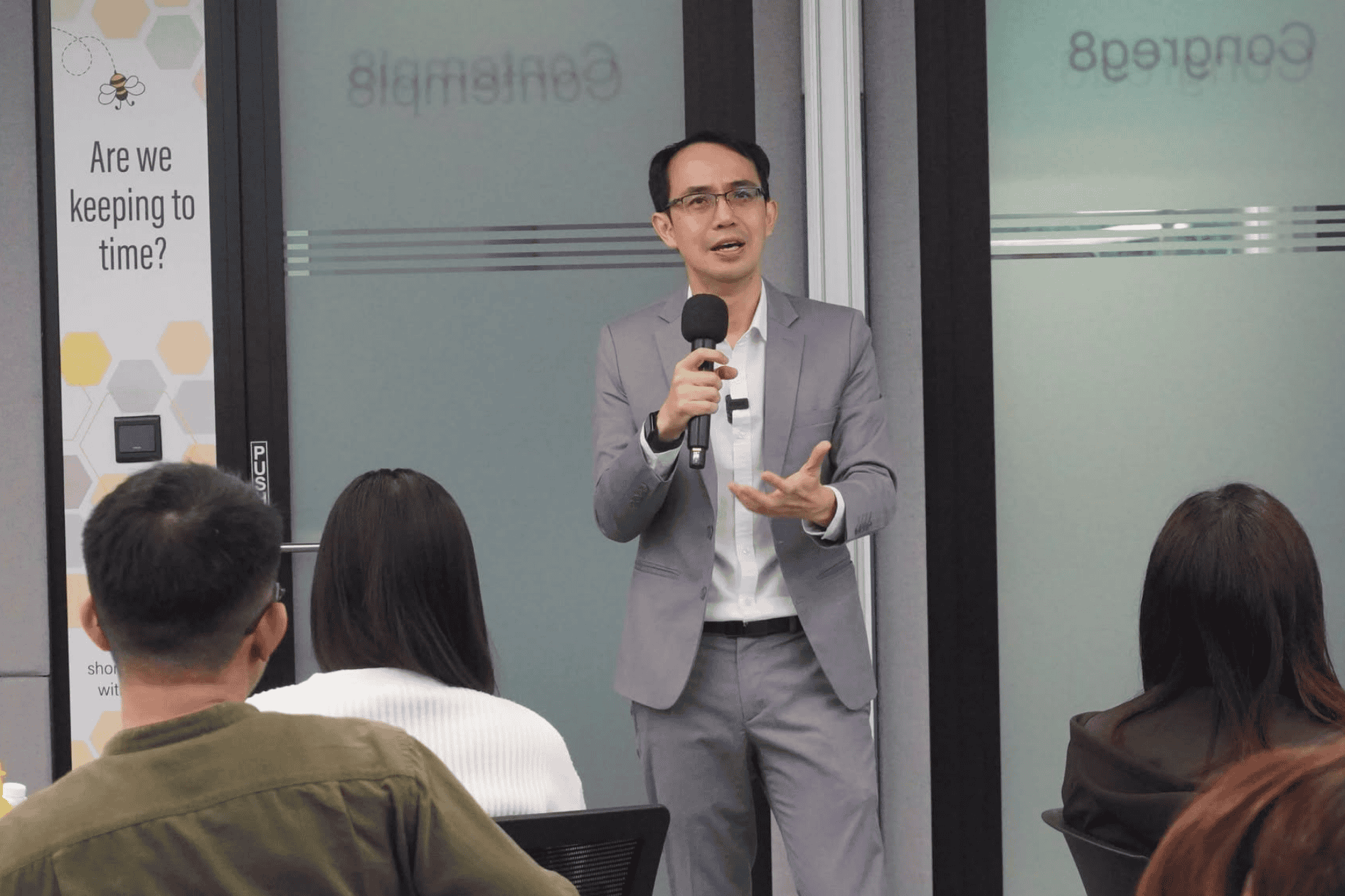
A department head once told me after a leadership session in Singapore, “My team is reliable, but they wait for me for everything.” It’s a line I’ve heard in different forms across public sector agencies, healthcare systems, logistics teams and corporate boardrooms.
What stood out to me wasn’t the problem itself, but the assumption behind it that ownership is something people are simply choosing not to take.
In most cases, that is not what is happening.
An ownership mindset rarely disappears because people lack motivation. It fades when workplaces quietly reward caution over initiative. Over time, employees learn that waiting is safer than thinking out loud and getting approval is less risky than taking a decision.
That distinction matters. If you treat passivity as a motivation problem, the response is usually more reminders, tighter oversight and increasing pressure. But if you see it as learned behaviour, you start looking at the system around it approvals, meeting structures, reactions to mistakes and what actually happens when someone takes initiative.
This is where the real work begins: not in demanding more team responsibility, but in designing conditions where people are expected to take ownership, make decisions, and lead outcomes. When decision making is unclear or constantly pulled upward, even capable teams start to wait instead of act.
True ownership shows up when team responsibility is paired with clarity on decision lead and outcome ownership, so people know not just what to do, but what they are trusted to decide and what results they are accountable for. Not louder messages about accountability and not tighter control disguised as support, but a workplace where thinking and acting are part of the same permission structure.

Most passive groups do not start that way. They become that way through repetition. A few habits, repeated over time, quietly teach people whether ownership is welcome or risky.
Employees pay attention to what gets rewarded. If every decision needs approval, every draft gets rewritten, and every mistake gets a sharp correction, the safest move becomes obvious: wait.
I have rarely seen a manager explicitly say, “Please stop thinking for yourself.” Yet I have seen systems that quietly communicate exactly that. When people must escalate small issues, check before every move, or stay silent until the boss has spoken, the message is clear even if it is never verbalised.
Over time, I notice how dependency starts to feel normal. In some cases, it even looks efficient for a while because decisions are centralised and movement feels controlled. But the cost shows up later, in slower execution, weaker judgement, and reduced team responsibility and ownership.
Capable employees do not keep bringing ideas into a room that dismisses them. They adapt. First they speak less. Then they offer only safe comments. After that, they become the very people senior leaders complain about: quiet, cautious, and waiting.
This is where many executives misread the room. Silence does not always mean agreement or low capability. Often it means people have learnt that speaking up carries more risk than value. As Harvard Business Review noted, psychological safety is not about comfort; it is about making interpersonal risk possible without punishment.
A responsible employee does what was asked, on time, and to the required standard. That matters. Reliability keeps work moving.
But reliability is not the same as ownership mindset. I have learned that ownership-driven people think ahead, spot risk early, raise options instead of only problems, and move within clear boundaries without waiting for every instruction. In my experience, that is where an owner mindset starts to show. I notice it when someone does not just complete a task; they think like an owner, see the big picture, and consider the business outcome.
By the time I see complaints about low initiative, the pattern is usually already established. I notice that the team has already learned what happens under pressure. That matters more than any speech about empowerment.
Most employees will not say, “I am afraid to take initiative at work.” They say safer things instead: “Just wanted to check,” “I thought I should wait,” or “I did not want to overstep.”
Underneath that is usually fear of blame, fear of looking incompetent, or fear of crossing an invisible political line. This matters even more across Asia, where respect, face-saving, and authority shape behaviour in subtle ways. As McKinsey notes, people contribute more openly when they trust that candour will not be punished.
Many managers are not controlling by nature. They are helpful. They step in because they care, because they are fast, and because solving the problem themselves feels efficient.
I understand the temptation. If you can fix something in two minutes, why sit through a longer discussion? The trouble is that repeated rescuing trains employees to bring problems upward rather than think them through first. What feels supportive in the moment can quietly weaken ownership work over time.
Learned dependency rarely comes from one dramatic event. I have seen it grow through routines that seem harmless: meetings centred on updates rather than decisions, managers answering every question immediately, and praise going mainly to staff who comply quickly.
Over time, I notice how these habits send a clear message about what “good behaviour” looks like. Not initiative. Not judgement. Safe execution. After enough repetition, people stop asking, “What would move this forward?” and start asking, “What answer does my boss want?”
Yes, accountability still matters. Clear ownership, deadlines, and consequences matter as well. But accountability without trust creates caution, not contribution.
If people believe the system notices mistakes more than effort, they narrow their behaviour. They do what can be defended, not what creates value. I have seen this in business settings where the language of ownership and accountability is strong, but open communication is weak. An ownership mentality cannot grow in every condition. It needs trust, and trust is built through repeated behaviour.
By the time someone complains about low initiative, the pattern is usually already established. The team has learnt what happens under pressure. That matters more than any speech about empowerment.
If one person is always the fastest answer in the room, everybody else stops becoming a thinking unit. The job becomes bringing questions upward rather than using judgement first.
At first, this can make a senior leader look decisive. Then the side effects appear: bottlenecks, slower execution, and small issues reaching levels they should never reach. I often hear a leader say they want more ownership, while their behaviour keeps signalling, “Bring it to me.”
People repeat what gets noticed. If the employee who stays quiet and follows instructions is praised more often than the one who raises a better idea, the whole team learns what is safest.
This is why meetings flatten so quickly. A team member does not only assess whether an idea is good. They assess whether it is worth the interpersonal risk. In rigid approval cultures, safe behaviour wins that calculation too often.
Some managers live in operational urgency. Every day becomes a rescue mission. Every issue is treated like an exception.
In that environment, people become reactive because reactivity is the dominant rhythm. They wait for the next escalation, the next intervention, the next correction. Long-term responsibility weakens because short-term survival takes over. The result is predictable: collaboration suffers, handovers get messy, and judgement does not deepen.
Many leaders assume the choice is binary: stay hands-off and hope people step up, or get more involved and risk micromanagement. I do not see it that way. Strong ownership sits in the middle, where expectations are clear, support is available, and thinking is required.
People hesitate when the outcome is vague. If they are unsure what success looks like, what decisions sit within their role, or what standards matter most, they seek approval more often.
Clarity reduces unnecessary escalation because it replaces guesswork with boundaries. Instead of controlling every step, define the result, the non-negotiables, and the level of authority they can use. A surprising amount of “low ownership” is really low clarity.
The goal is not to avoid hard realities. It is to stop creating dependency through your questions. If every conversation trains people to defend and explain, they bring less initiative. If your questions require thought, they arrive with more of it.
Ownership grows when people see that initiative is noticed. Not vague praise. Specific recognition of a behaviour you want repeated.
Instead of saying, “Good job,” say, “I appreciate that you flagged the risk early and came with two options.” That tells every team member what contribution looks like here. As Google re:Work suggests, better performance depends in part on people feeling safe to contribute openly.
Some leaders try to change culture with a big speech, a new slogan, or one offsite. That may create a moment. It rarely creates a new habit.
Ownership culture forms through repeated signals: how you respond when someone makes a call, how you handle mistakes, whether you stay calm when a project comes with an imperfect first idea, and whether you encourage team members to use judgement before escalation. If a CEO or senior manager wants a stronger ownership mindset team-wide, this is the strategy that matters most: consistency.
Teams rarely build an ownership mindset because someone keeps telling them to be more accountable. They build it because the system around them consistently makes independent thinking feel safe, useful, and expected.
If a team keeps waiting to be told what to do, I look first at the daily system they operate in: meetings, approval flows, reactions to mistakes, what gets praised, and what gets quietly shut down. In my experience, these ordinary moments shape ownership far more than any poster, speech, or set of values about initiative.
When people can clearly see the company goal, understand the customer impact, and connect their role to business outcomes, they are far more likely to act like owners. Ownership is rarely a mindset first. It is usually a response to clarity, trust, and reinforcement.
As the author of Small Steps To Big Changes®, I keep returning to the same principle: large shifts begin with small, repeatable actions. Ask a better question in the next meeting. Clarify one decision boundary. Recognise one act of initiative publicly.
Start there.
If this resonates, feel free to connect with me.
Yes. I have seen passive teams shift, but never because of one announcement. What changes the mindset is repeated proof that using judgement is safe, expected, and useful. If that proof is inconsistent, old habits return very quickly.
I see accountability as being answerable for the work. Ownership goes further. It means an employee or team member thinks ahead, raises options, and takes appropriate action without waiting for every instruction. A group can be accountable on paper and still avoid real responsibility in practice.
I am careful about that promise. A talk can create the perspective shift a room needs and help people understand why passivity has formed. It can also help a business leader or event organiser see the next question that needs asking. What happens after that still depends on what people choose to practise.
Read more: Understanding Leadership Mindset at Every Level, and How to Measure Yours