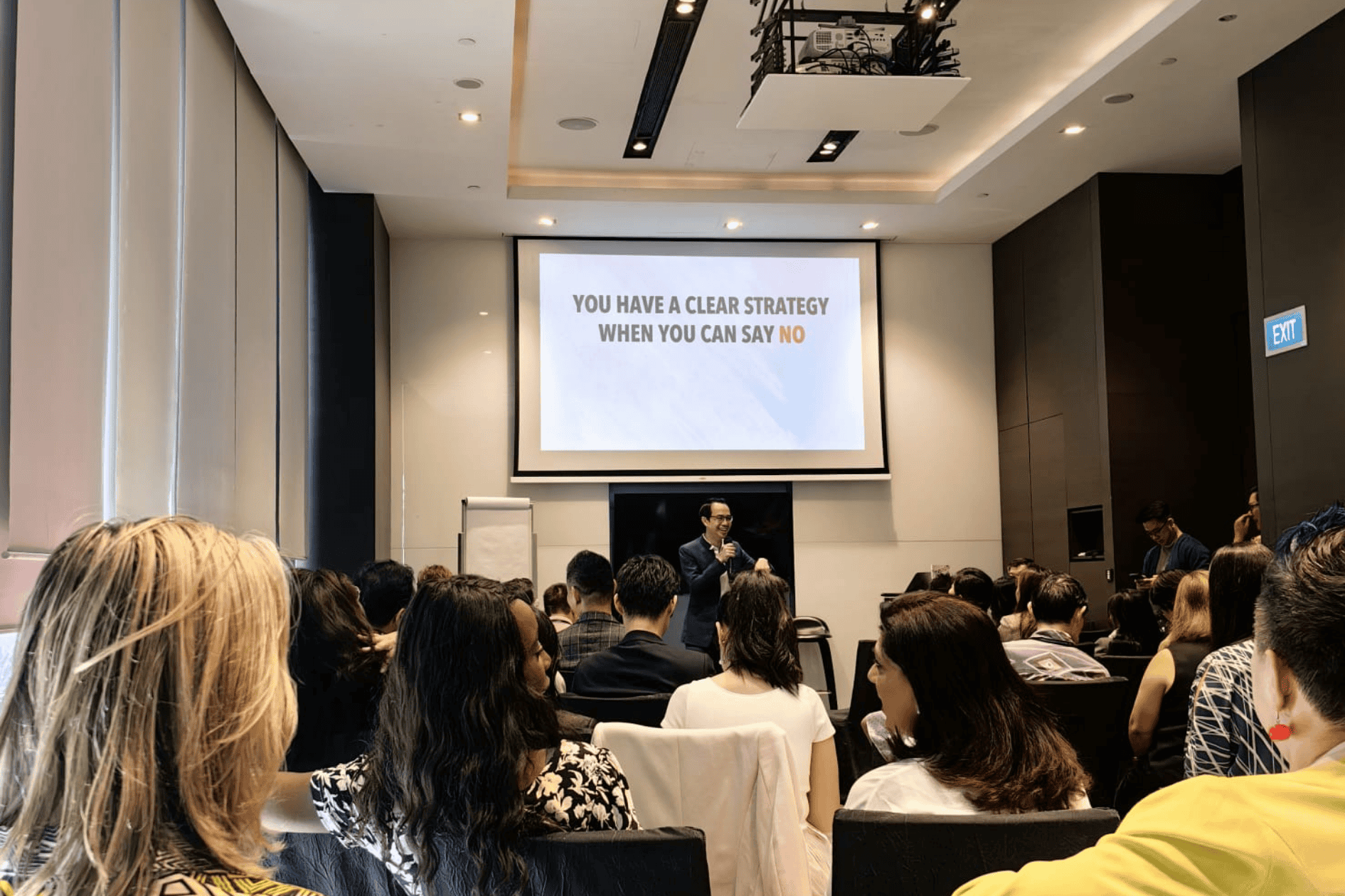
When event organisers contact me about their corporate events, most of them already know the feeling they are chasing. They want an energised room. They want people to leave believing that change is genuinely possible in how they lead, in how their teams respond under pressure, and in how they show up in their own professional life. What they are less certain about is whether the keynote speaker they are considering has designed for that shift with intention, or is simply designed to deliver a moment.
That distinction matters more than it first appears. Because the impact of a keynote is not defined by how people feel during it, but by what it reshapes in how they think about themselves and their work afterwards.
This is also where the role of growth mindset speakers becomes especially relevant. Not in the sense of repeating familiar ideas about positivity or resilience, but in how they help a room reframe the questions they are using to interpret challenge, pressure, and performance in real time.
And in my experience, the difference between those two outcomes almost always comes down to one question: whether the speaker is designing for attention in the moment, or for a shift in thinking that people can actually use long after the event ends.
When organisations search for the best growth mindset speakers, they are typically looking for someone who can make the science feel accessible, the stories feel relatable, and the possibility of change feel real.
Those are worthy goals, and I deliver all of them. But my methodology does not begin with growth mindset as a concept to teach. It begins somewhere different, and I believe that difference produces more durable change.
My approach is grounded in the solution-focused approach, a body of practice I have applied across sessions with leaders from the Civil Service College Singapore to corporate leadership forums across Asia. Solution-focused thinking does not start from the problem. It starts from a time when the problem was not happening, and asks: what was different then?
The research on growth mindset specifically reinforces this. A peer-reviewed study published in Personality and Social Psychology Bulletin examined over 500 employees across seven Fortune 1000 companies and found that employees who perceived their organisation to endorse a growth mindset reported significantly higher levels of trust, commitment, and collaborative behaviour while those in fixed mindset organisations consistently perceived more negative cultural norms.
That single question changes everything. It reframes challenges not as evidence of a fixed mindset to be corrected, but as temporary conditions to be studied and navigated. It surfaces the growth mindset that already exists in your team in specific moments, under specific conditions and asks people to examine what made those moments possible.
The practical result is an audience that does not just feel inspired by the possibility of change. They leave with actionable strategies rooted in their own lived experience. And evidence from your own experience is far harder to dismiss than borrowed inspiration from a stage.
When an HR director or event organiser frames a brief as "we want a growth mindset speaker," the sub-text is almost always one of three things.
Either the business is preparing for significant change and needs its people to build resilience and perseverance so they can sustain their wellbeing through adversity rather than retreat from it.
Or it has a leadership team that is technically excellent but struggling to drive the innovation and continuous learning that a growth culture requires. Or it is trying to shift a culture that has calcified around hierarchy and risk-avoidance in ways that limit both career development and long-term business success.
The world of corporate Asia has its own specific version of this overcome challenge, one that requires a speaker with genuine cultural expertise and the intelligence to read the room they are entering.
In many organisations across Singapore and Asia, the question is no longer whether growth mindset matters. Most leaders already agree it does. The real challenge is how to embed it inside a system that is still strongly shaped by hierarchy, seniority, and face.
Because in practice, senior managers are not operating in a vacuum. They are making decisions in environments where tone matters as much as content, where disagreement can carry social cost, and where “being open” has to coexist with expectations of composure and control. So what looks like resistance to growth mindset from the outside is often something more subtle: people trying to adopt new behaviours without breaking the unwritten rules that still govern how respect is maintained.
This is where many well intentioned keynotes miss the mark. They speak about openness, vulnerability, and feedback as universal behaviours, without fully accounting for how differently those behaviours land across levels of seniority. The result is usually agreement in the room, but little change in how conversations actually unfold afterwards.
The organisations that make real progress are the ones that treat this as a design question, not a messaging one. They do not ask “how do we teach growth mindset?” They ask “how do we make growth mindset feel safe enough to practise inside our existing hierarchy?”
That shift in framing changes everything. It allows senior leaders to model reflection without losing authority, and it gives teams permission to engage more honestly without feeling they are overstepping. In that sense, growth mindset does not replace hierarchy it evolves within it.
The most polished growth mindset talk will not shift what it is designed to shift if it only delivers the concept.
Audiences leave informed. They leave inspired. Many leave genuinely moved by stories of resilience and overcoming adversity. And a significant number return to their teams the following week and continue asking the exact same questions they were asking before the session.
The gap is not one of content. It is one of framing. And the data makes this uncomfortably clear. Research from McKinsey suggests that only 11% of executives strongly agree that their leadership development programmes deliver meaningful results, despite billions invested globally in training every year. The reason, as McKinsey notes, is that most initiatives focus on competencies and behaviours at the surface level, while the deeper questions that drive how leaders actually respond under pressure go unaddressed.
The distinction I use when preparing any keynote on human performance is this: inspiration changes how people feel about their situation. A shifted question changes how they actually engage with it. Both matter. Only one reliably produces new behaviour and builds a sustainable competitive advantage.
In my work with high performance teams and senior leaders, this is where the difference becomes visible. Inspiration may lift the room, but it is the quality of the questions that shapes execution, decision-making, and follow-through long after the keynote ends.
As a leadership expert, I have seen that organisations consistently outperform not because they are more inspired, but because they are better at shifting how people think in the moments that matter.
But if the first question they reach for when a challenge lands on their desk the following Monday is still "why can't my team handle this?" rather than "what is one thing we could try differently?" the keynote speaker has not done its deepest work.
This is not a niche observation. A 2024 TalentLMS study found that while 9 in 10 leaders believe leading by example is key to creating a growth mindset culture, 43% of employees believe the growth mindset is simply being used as an excuse to assign more responsibility without adequate support. The concept is landing. The behaviour change is not following.
McKinsey's research on organisational transformation found that companies that took the time to identify and shift deep-seated mindsets were four times more likely to rate their change programmes as successful , not those that simply communicated the message, but those that changed the underlying questions people were asking.
At a leadership forum I addressed for a government agency in Singapore, a senior director said something after the session that I have returned to many times since. She had spent her career managing teams through organisational change and, by every visible measure, she was already deeply successful.
She said: “I have always believed in developing people. I just did not realise I was asking them all the wrong questions.”
That shift from believing in growth to noticing the specific questions she was actually using in her meetings is where meaningful professional development and personal development begins to translate into practice. It is also where a high performance mindset starts to take shape in real organisational life.
That level of reflection does not happen by accident. It requires a speaker who is thinking carefully about the question they are leaving behind, not just the insights they are delivering on stage. In the context of leadership development, that distinction matters more than most frameworks or models.
And often, the real signal is not what people remember from the talk, but what quietly changes in how they speak afterwards. The language in meetings becomes slightly simpler. Decisions take less time to surface. People start challenging assumptions earlier, not later.
That is usually where the shift shows up first not as a dramatic transformation, but as a subtle change in how the room thinks, responds, and moves forward together, which is ultimately the foundation of high performance teams.
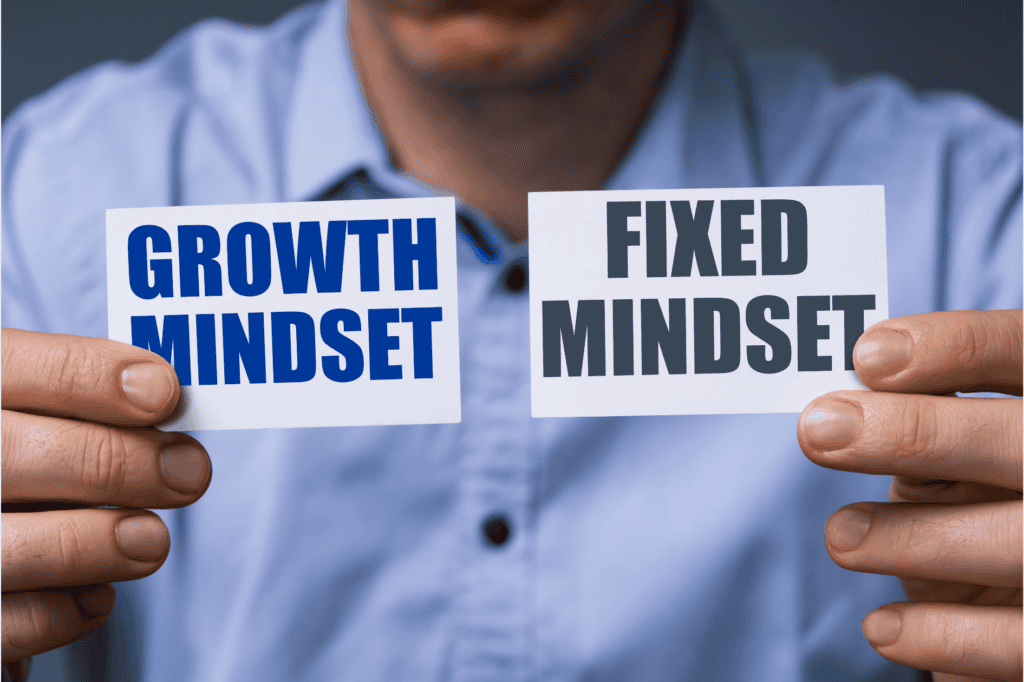
The solution-focused approach is far more than positive thinking. It is a tested methodology for change, and in my experience working with leaders across Asia, it does not simply acknowledge a growth mindset. It actively builds one by giving people practical ways to think, respond, and move forward.
One of the core assumptions in the book Small Steps Big Changes, is that change is happening all the time, and our job is to identify and amplify useful change. This directly challenges the fixed mindset belief that people and situations are static. And that challenge is precisely where growth mindset begins: not as a concept to adopt, but as a capacity to discover.
Most people only recognise big changes. They miss the small ones, the quiet shifts in behaviour and habit that accumulate over time. This is where a growth mindset either takes root or stalls. I worked with a senior leader who was convinced his team had stopped growing.
When I asked him to recall one moment in the past month when someone had handled something better than before, he paused, then said, "Actually, yes. There was one moment last week." That single moment shifted the entire conversation from failure to progress. That is how a growth mindset is strengthened: not through inspiration alone, but through the repeated discovery that progress is already happening.
Small changes in the right direction also build the foundation for larger ones. I worked with a procurement manager, Martin, who had spent six months trying to convince his Quality Department to adopt a new inspection process, and getting nowhere.
The breakthrough came when Martin stopped asking why they were resisting and started asking what they needed in order to say yes. That one shift in question unlocked more progress in a single discussion than six months of problem analysis had produced. A growth mindset is not just about believing things can improve. It is about knowing which questions move you forward, and having the courage to ask them.
The same logic applies to building confidence incrementally. I worked with a Head of Sales whose team was consistently falling short of a target of fifteen new clients a month. Rather than pushing harder on an unachievable number, I suggested resetting the target to just above what they were already doing giving them the experience of winning first.
A year later, more than half the team was hitting fifteen. Huge, unrealistic targets do not build a growth mindset. They quietly destroy it by making people feel like they are always losing. Growth requires the belief that the next step is possible, and that belief has to be earned through experience, not declared from a stage.
That is what a solution-focused approach does for a growth mindset. It redirects energy away from problem analysis and toward action. It replaces the question "why aren't we there yet?" with "what is already working, and how do we do more of it?" People do not need more theory. They need evidence from their own experience that they are already capable of growth. That is precisely what Small Steps Big Changes makes possible.
A well designed session does not claim to transform a business on its own. It creates a shift in attention. It changes the questions leaders begin to ask, and the language they can immediately use in their next team conversations, particularly around pressure, resilience, and how challenges are framed when the stakes are real.
"People do not change because they are told to think differently. They change because they are shown, through their own evidence, that a better way is already within reach."
- Kenneth Kwan
But that shift is only the beginning. What determines whether it lasts is what happens in the days and weeks after the room empties.
The organisations that get the most from a session are not those that treat it as a standalone moment, but those that deliberately extend it into action. A simple but effective starting point is to ask one question in the days that follow:
“What is one thing you are going to do differently in your career or with your team based on what you heard?”
The purpose is not to extract perfect answers, but to move thinking into application while the ideas are still active. The consistency of that follow through matters more than the quality of any single response.
Before booking any keynote speaker, the more important question is not what will be delivered on stage, but what will be done with what is catalysed afterwards. Who ensures the ideas translate into behaviour? Who holds the commitment to action, even in small ways?
That accountability, not the session itself, is what turns a keynote from an engaging experience into something that genuinely supports performance, leadership behaviour, and organisational culture over time.
I work with senior leadership teams, event organisers, and learning and development professionals across Asia who are thinking carefully about what they want to happen after the room empties. If you are exploring whether this approach fits your team or event, feel free to reach out and connect with Kenneth.
The most effective growth mindset keynote speakers for senior audiences focus less on defining the concept and more on changing the question the audience asks under pressure. Senior leaders have generally heard of growth mindset. What they need is ~a new question they can apply in their next difficult business meeting not a more compelling argument for why mindset matters for success. Look for a mindset speaker who can describe the specific behavioural shift they are designing the session around: not just the inspirational outcome, but the practical insights and actionable strategies the audience will leave with, and how those strategies apply to the realities of career in your industry and world.
A motivational speaker shifts how an audience feels their confidence, their self-belief, their sense that full potential is within reach. That has genuine value, especially in high-stress environments where wellbeing and motivation need restoring. My solution-focused approach operates at a deeper level: it changes the questions professionals automatically reach for under stress. Those questions shape behaviour long after the inspiration fades. Both have their place. The real question is what your business actually needs right now a lift in motivation, or a shift in the questions your people are asking themselves under pressure, in their careers, in their teams, and in the continuous learning journey that sustainable high performance requires.
One keynote can do one thing well: it can open a window that was previously closed. It can make embracing challenges feel real and accessible in professional life rather than merely aspirational. It can give a team the language, the self-belief, and the practical strategies to begin different conversations about learning from adversity, about what perseverance actually looks like in their specific world, about what high performance genuinely requires. What it cannot do is substitute for the leadership follow-through, the structural permission to fail safely, and the sustained practice that genuine culture change requires. The keynote is the starting point of the solution-focused journey. Choosing the right speaker for that starting point matters more than most organisations realise.
Read more: Transforming Performance Conversations Into Tangible Results