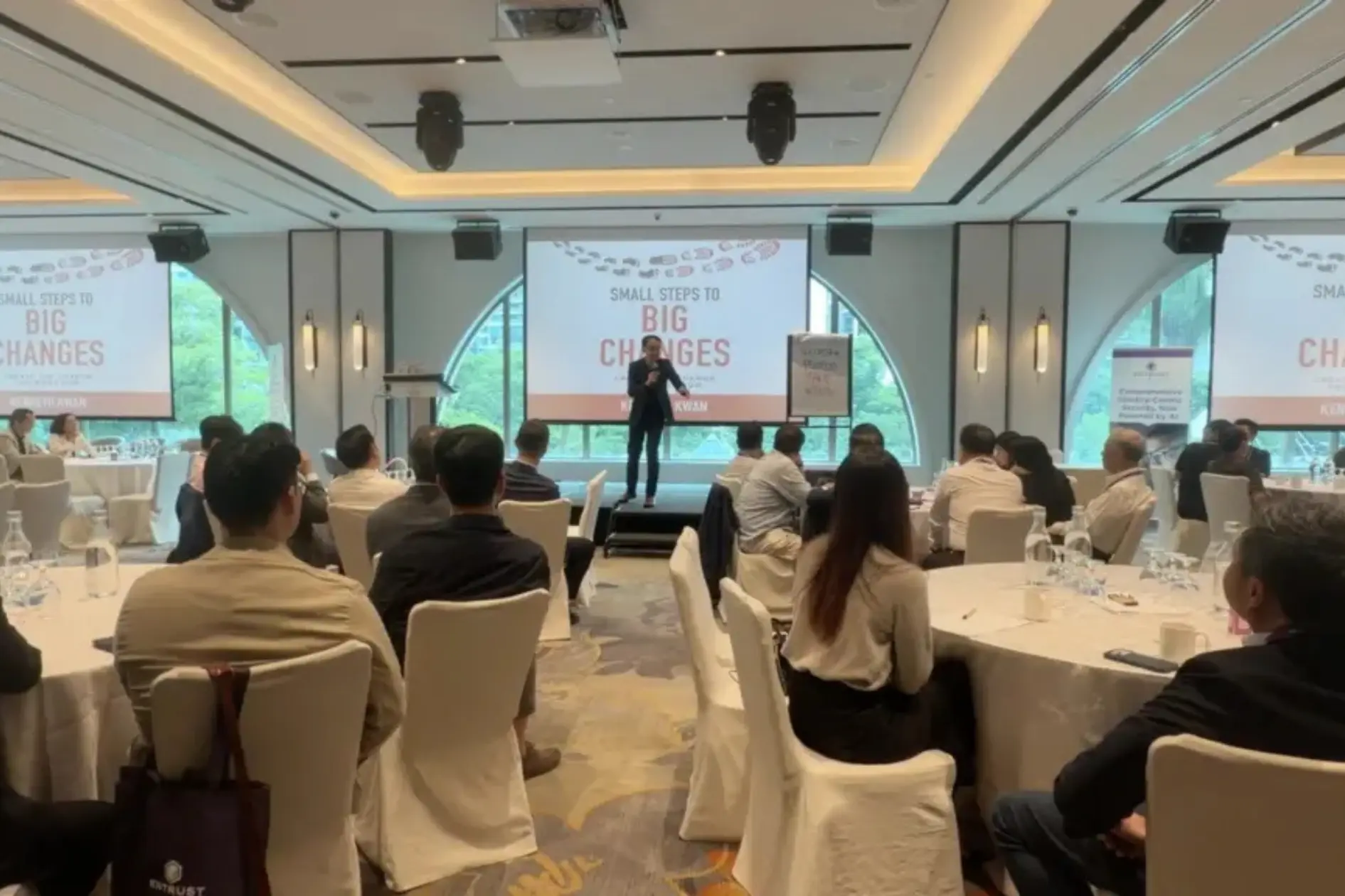
I’ve spoken on many stages over the years, but Singapore holds a special place in my work as a business keynote speaker. This is a market where expectations are high, talent is strong, and performance pressure is constant.
Executives here are serious about results yet increasingly aware that results are shaped as much by mindset, culture, and leadership development as by strategy, systems, and marketing.
What I’ve learned, through repeated engagements with organisations across Asia, is this: teams rarely fail because they lack capability.
They falter because they lack alignment, connection, or confidence in the midst of change. And when those gaps persist, performance inevitably suffers.
A keynote, when approached thoughtfully, becomes more than a speech. It becomes a strategic pause a moment where corporate executives, business strategists, and their teams step back, see themselves more clearly, and recalibrate how they work together.
That’s the role I strive to play: not to motivate briefly like many motivational speakers, but to help organisations move forward more deliberately and cohesively, delivering lasting impact and actionable takeaways.
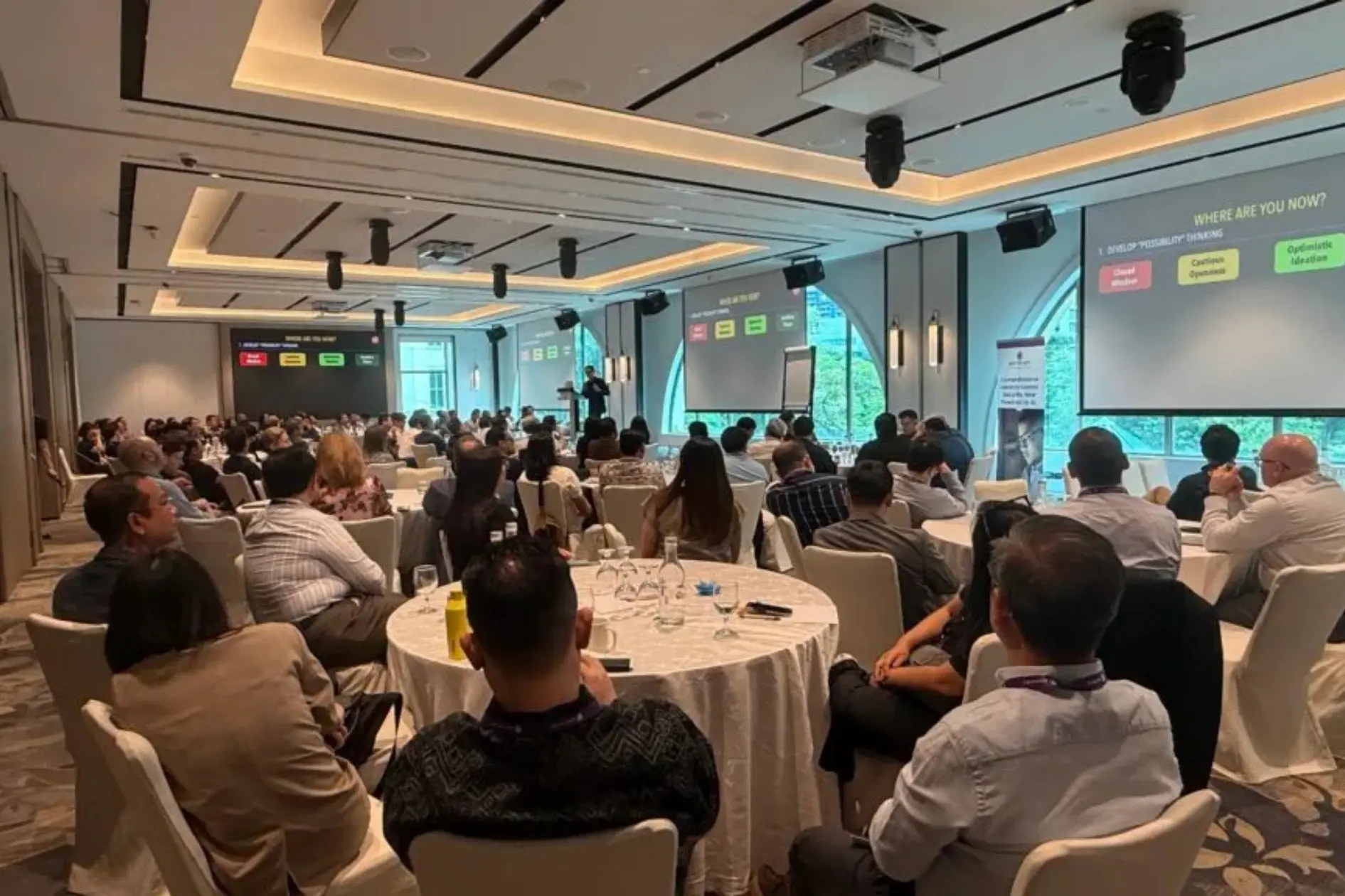
Singapore’s workforce is among the most skilled and educated in the region, yet engagement and connection remain ongoing challenges. Research shows that while many employees here report positive workplace environments, fewer describe themselves as fully engaged or deeply connected to their organisations. This gap matters because engagement is closely linked to productivity, retention, and overall business performance.
Recent workforce studies indicate that a significant proportion of employees in Singapore would consider leaving their organisation if they do not feel a sense of belonging or connection at work.
At the same time, organisations with higher engagement levels consistently outperform peers on productivity, profitability, and customer experience. These findings reinforce what corporate executives intuitively know: performance is not just a technical outcome it is a human one.
Researching potential speakers is important to ensure they fit the event's theme and audience. Defining your event goals and audience is the first step in choosing a keynote speaker. This is why keynote experiences still matter.
A well-designed corporate event led by the right keynote speaker can create that space not for abstract inspiration, but for shared understanding, actionable strategies, and renewed focus on the goals and theme.
You might also like: Engage a Top Leadership Speaker Singapore to Inspire Your Organisation
The best corporate keynote speakers in Singapore do more than inspire they provide actionable frameworks that address the unique challenges of each organisation.
They are the most sought-after speakers because they combine deep understanding, real-world experience, and a track record of measurable outcomes while challenging conventional wisdom.
Fortune 500 companies look for best keynote speakers who cover topics such as leadership, resilience, innovation, and culture, ensuring insights translate into actionable strategies that influence organisational performance. Research shows that structured alignment practices and regular cross-functional communication help teams reduce workflow bottlenecks, improve collaboration with a better customer experience. (GrowthSquare, 2023)
Companies that foster psychological safety and a culture of experimentation consistently see higher innovation and better track records. For example, multinational technology firms like Google have demonstrated that psychologically safe teams where members feel comfortable sharing ideas generate more creative solutions and implement experimental projects more effectively (PMC, 2014).
Similarly, organisations that provide structured time for innovation, like 3M’s 15% time and Atlassian’s ShipIt events, enable employees to work on exploratory projects, resulting in tangible product outcomes and reinforcing a culture of experimentation. (Wikipedia)
Keynotes that focus on leadership alignment, clarity of decision-making, and cross-functional collaboration equip executives to work more cohesively. Research shows that teams with shared goals and clear role definitions coordinate more effectively and achieve better operational outcomes. (FEPBL, 2022)
Early in my speaking career, I focused heavily on delivering content frameworks, models, and insights drawn from over three decades of influential people and bestselling books. Over time, I realised that information alone rarely changes behaviour. People don’t need more knowledge; they need clarity, permission, and belief.
Today, I design every keynote with one guiding focus: how can we help people think and work differently to enhance performance and results? The goal is beyond KPIs, aiming to strengthen alignment, accountability, and a culture of continuous improvement, so that insights from a session translate into practical, sustainable action rather than temporary motivation.
In addition, audiences want to know how ideas are translated into reality and into positive results. Whenever I share real business stories, business audiences value relevance, real-world experience, and hands-on methods that connect directly to their organisational reality hybrid teams, cross-functional complexity, rapid scaling, and constant change.
So I focus less on conventional leadership ideals and more on practical mindset shifts that corporate heads, co-founders and executive teams can apply immediately.
Remember, inspiration without application is entertainment. Momentum comes from insight paired with ownership.
Research from Grant, a New York Times bestselling author, and other influential management thinkers shows that organisations with high team engagement and psychologically safe environments consistently outperform their peers on multiple metrics.
For instance, Gallup's 3 Key Insights Into the Global Workplace (2022) found that companies in the top quartile for workforce engagement experience 23% higher profitability and 18% higher productivity compared to the bottom quartile.
Drawing on these insights, I design keynotes that blend evidence with practical world experience, and artificial intelligence, ensuring lessons are directly applicable to hybrid teams, leadership development, and evolving organisational structures.
Integrating findings from research-backed studies, bestselling books, and firsthand corporate experience, the content resonates deeply with audiences while providing actionable strategies that deliver measurable results.
For example, applying Adam Grant’s principles of giving and collaboration, organisations that encourage structured peer-support initiatives see measurable improvements in team effectiveness and collaboration. Studies indicate that employees in environments that promote giving behaviours and knowledge sharing are more engaged and productive. (Grant, 2013)
Based on my personal experience, around the world audience in 2025 prioritise "lived experience" over theoretical knowledge. This approach ensures that the keynote moves beyond inspiration to practical, measurable impact that strengthens culture, leadership alignment, and team performance.
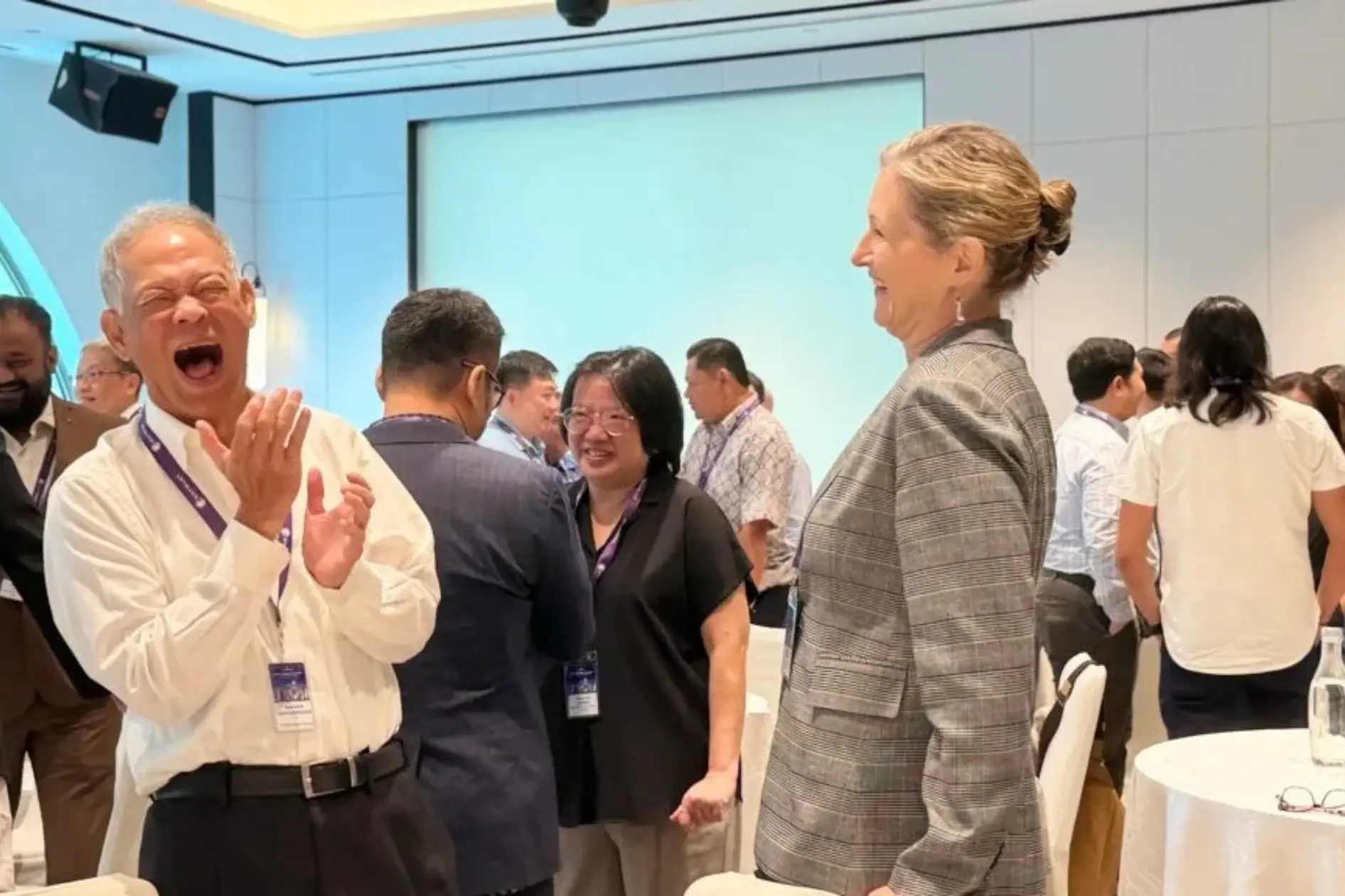
One keynote-led leadership engagement clearly reflects this philosophy involved Entrust. a digital security company providing identity-centric solutions for secure digital and physical experiences, focusing on identity verification, data protection, and secure credential issuance for governments, banks and enterprises.
In an era of rapid digital disruption, organisations often invest heavily in technology, systems, and strategy. Yet one critical factor is frequently overlooked: how leaders think about change. This is where an effective business keynote speaker plays a strategic role not to motivate for an hour, but to create clarity, alignment, and readiness for action.
The engagement began with a strategic keynote designed to introduce possibility thinking. This matters because possibility is the precursor to change. If leaders cannot imagine a different future, they will instinctively defend the current one even when it is no longer sustainable.
Rather than focusing on problems, the keynote invited leaders to examine assumptions, question familiar patterns, and consider what might be possible if they led differently. This solution-focused approach helped leaders move from “what’s not working” to “what could work next”.
The keynote then addressed the reality of change that leaders faced. Not all change feels positive, and not all progress is linear. Through real organisational stories, leaders explored how change-ready cultures are built by noticing small signs of progress and deliberately amplifying them.
This resonated strongly in Asian business contexts, where hierarchy and risk sensitivity can make change feel personal. Leaders were encouraged to see change not as disruption to manage, but as a capability to develop.
One of the most powerful outcomes was the creation of a shared leadership language. The keynote surfaced uncomfortable but necessary truths about ownership, alignment, and leadership behaviour without blame or hype.
Instead of chasing motivation, leaders gained a common way to discuss siloed thinking, misalignment, and execution gaps. These conversations became easier because everyone was anchored to the same ideas and insights.
A well-designed business keynote speaker does more than inspire. It creates alignment, reframes thinking, and shapes conversations that continue long after the event ends.
In this engagement, the keynote helped leaders move from asking, “Why is change so difficult?” to “What is already working, and how do we build on it?”
Because meaningful change does not start with systems or strategy.
It starts with how leaders choose to think and lead differently.
A recurring question emerged during post-keynote leadership conversations:
“We hire the best people why doesn’t alignment just happen?”
The keynote helped leaders see the blind spot behind that question. Alignment does not occur automatically, even with exceptional talent.
Under pressure, people protect what they are measured on. Without deliberate leadership signals, silos become rational survival strategies rather than cultural failures.
The keynote created space to examine everyday behaviours that were rarely discussed openly. Leaders recognised how efficient but transactional meetings, polite avoidance of tension, and unspoken assumptions were shaping daily execution. This collective awareness marked a critical turning point.
Research consistently shows that psychological safety, shared responsibility, and clarity of ownership are foundational to high performance. In Singapore’s hierarchical and high-accountability context, leaders play a decisive role in setting the tone for openness and collaboration.
The keynote anchored collaboration around ownership rather than goodwill, challenging leaders to reconsider how success was being defined by role, function, or KPI instead of shared organisational outcomes.
This practical framing reflects why such engagements are often led by highly sought speakers who understand the real pressures leaders face.
Drawing on the Small Steps to Big Changes® philosophy and real-life experiences from comparable organisations, the keynote shifted attention from ambition to behaviour.
Leaders explored situations they recognised immediately: meetings that ran long without decisions, emails that became defensive, and frustrations directed outward rather than examined inward. These familiar moments created space for leaders to overcome obstacles that had quietly slowed execution.
A pivotal moment emerged when participants from the corporate events recognised how well-intentioned behaviours were unintentionally reinforcing silos.
The shift from blame to ownership created momentum that extended beyond the session itself. Through relevance and credibility not theatrics the keynote succeeded in captivating audiences and leaving a lasting impression that translated insight into action.
Rather than introducing new systems or processes, the keynote emphasised small, repeatable leadership behaviours that leaders could apply immediately and reinforce consistently in daily work, ensuring the impact endured well beyond the room.
The keynote concluded with clear leadership commitments grounded in discipline rather than aspiration, creating an unforgettable experience that moved beyond insight into action.
Meetings were reframed to focus on shared outcomes instead of functional reporting, enabling leaders to break free from habitual update-driven conversations that often reinforce silos. Leadership discussions shifted to prioritise intent, clarity, and accountability over efficiency alone, ensuring that alignment was treated as a driver of success, not a by-product of speed.
Cross-functional conversations began with a deliberate effort to understand pressures and constraints before moving into solutions, encouraging leaders to step outside familiar comfort zones and engage more openly with one another’s realities. These shifts helped surface issues earlier and strengthened collective ownership across teams.
Rather than requiring structural redesign, these commitments relied on leadership consistency, emotional intelligence, and a willingness to act on a powerful message delivered during the keynote demonstrating how small, intentional behaviour changes can unlock meaningful and sustained organisational progress.
The impact of the keynote-led engagement became evident within months, reinforcing why organisations across the business world increasingly turn to a business keynote speaker to share insights from almost two decades of experience and create clarity and alignment during periods of complexity and change.
Documented outcomes included a significant reduction in average meeting duration, alongside a marked improvement in the quality of leadership conversations. Vice presidents and senior leaders consistently reported greater clarity, stronger alignment, and more effective decision-making following the engagement. Several strategic initiatives achieved shorter lead times, accelerating execution and go-to-market delivery in a fast-moving environment where speed and coordination are critical.
Collaboration strengthened across teams and external partners, enhancing organisational impact and equipping leaders to tackle challenges with greater confidence and shared ownership. Leaders also reported spending less time firefighting and more time thinking strategically, enabling them to focus on long-term priorities rather than reactive problem-solving.
These outcomes reflect a broader truth widely supported by organisational research and leadership practice in the business world: when leadership behaviours align around shared ownership and clarity, performance becomes more resilient, scalable, and sustainable even under sustained pressure and complexity.
This engagement reinforced a lesson seen repeatedly across many global organisations: culture does not change through policies or slogans. It shifts through daily leadership behaviour, modelled consistently by leaders at every level, from board member to frontline manager.
A keynote alone does not dismantle silos.
However, a keynote that surfaces uncomfortable truths, challenges entrenched assumptions, and aligns leaders around shared ownership supported by actionable strategies and disciplined follow-through can act as a powerful catalyst for lasting change.
This is why businesses seeking meaningful transformation increasingly look beyond inspiration alone and prioritise engagements that translate insight into behaviour.
The Entrust experience demonstrates how a thoughtfully designed keynote, delivered by a highly sought speaker and reinforced through structured frameworks and small, consistent actions, enables leaders to embrace change with clarity, innovation and confidence.
Every keynote I deliver includes immediate actionable takeaways: clear action items, reflection prompts, and tools leaders can implement immediately. From reframing meetings around shared outcomes to small, consistent recognition rituals, these micro-actions compound into meaningful performance improvement over time.
Leaders leave with tools to embed change into their daily routines rather than relying on abstract inspiration.
Drawing on the principles from Small Steps to Big Changes, I provide insights to the leaders and teams to focus on incremental behaviour shifts that build momentum. Leaders are encouraged to introduce the habit of helping others take small steps forward, such as starting every team meeting by highlighting a colleague’s success. Over time, these recognitions strengthen psychological safety and engagement. Reflection is also critical: teams are prompted to consider what small actions during the week contributed to success, reinforcing accountability and continuous learning.
Practical experimentation is another cornerstone. Teams are invited to test small adjustments in processes or communication, observe the outcomes, and scale the practices that work.
Leadership modelling is equally important, with consistent, visible demonstration of desired behaviours reinforcing change. Even minor acts, repeated over weeks and months, compound into substantial shifts in culture and team dynamics.
Integrating these Small Steps to Big Changes strategies ensures that the keynote moves beyond inspiration, equipping leaders and teams with actionable tools that deliver measurable improvements in engagement, performance, and organisational resilience in today's business world.
Not all business speakers are created equal. The ones who drive measurable change combine a deep understanding of team dynamics, corporate culture, and team engagement with applied frameworks that leaders can apply post-event. In Singapore, where corporate expectations are high and performance pressures are constant, business leaders value speakers who can translate insight into real-world application.
A truly effective speaker engages beyond charisma. They observe organisational pain points, understand team interactions, and identify gaps between strategy and execution.
For instance, in engagements with Singapore-based tech and finance firms, I noticed that cross-functional misalignment often occurs not because of lack of skill, but due to unclear ownership and insufficient psychological safety. A speaker who can address these issues while connecting lessons to metrics like employee engagement, project delivery speed, and retention rates provides measurable value.
Do understand that the right speaker can transform a corporate event from a memorable session into a strategic inflection point. Successful speakers can deliver equally powerful presentations in person, virtually, or in hybrid formats.
In an era of constant information and limited attention, a keynote creates something rare: a shared moment of alignment. It allows organisations to pause, reflect, and recommit not just emotionally, but strategically. In organisations, where hybrid work and fast-paced project cycles dominate, teams rarely have structured opportunities to step back and consider how their daily interactions align with company objectives.
A keynote provides this strategic pause, offering leaders and teams a common framework for thinking about collaboration, ownership, and innovation. Teams that engage in deliberate discussions about goals, processes, and decision-making are better able to integrate diverse perspectives and make higher-quality decisions.
In practice, teams that take time to reflect collectively and align around shared goals are far more likely to execute initiatives successfully, translating insights into tangible outcomes and sustaining high performance in complex business environments.
The right business speaker blends real-world experience, research-backed insights, and corporate context. Drawing on thought leaders such as Adam Grant and insights from bestselling business books helps leaders ask better questions about how they lead, collaborate, and define success.
Most importantly, it focuses on empowering and inspiring individuals, equipping team members with the confidence, mindset, and tools to take ownership, innovate within their roles, and translate insights into lasting organisational performance. The keynote becomes the anchor for behaviour change ensuring that inspiration leads to practical action, rather than fading into a temporary motivational boost.
After years of working alongside former CEOs, current CEOs, and corporate leaders across Asia and around the world, one belief has become unshakable for me: sustainable performance is never driven by pressure alone it is driven by alignment, trust, and shared ownership.
In today's business world, where people feel respected, challenged, and connected to a larger purpose, performance stops being something leaders have to push for. It becomes something teams choose to pursue. They think beyond job titles, collaborate beyond boundaries, and act with confidence even in uncertainty a critical aspect of the future of work.
That is the work I commit to as one of the leading business speakers today, whether at corporate events or in forums for social entrepreneurs. My goal is not to deliver fleeting motivation or polished soundbites, but to create moments of clarity and provide a clear takeaway that helps leaders see differently, lead more intentionally, and shape corporate culture where people take responsibility for outcomes together.
When that shift takes place, inspiration does not fade with time. It becomes momentum. And with the right leadership behaviours in place, that momentum translates into meaningful, measurable performance that lasts.
Also read: People Leadership Program Powered by Purpose and Keynote Energy