From Paper to Practice, Do Change Management Frameworks Really Work for Any Organisation
“Seventy per cent of change initiatives fail. The missing link? A proven framework.”
I share this statistic in workshops, and the room usually goes quiet not because it’s new, but because almost every leader has lived through it: a rollout that stalled, an integration that dragged on, or a culture shift that never quite shifted.
After more than 18 years working with organisations across Singapore and Asia, I’ve learned that change rarely fails because the strategy was wrong; it fails because the human side was underestimated. Frameworks are important they give structure and direction but frameworks alone don’t create change. People do.
Frameworks alone don't create change. People do.
-Kenneth Kwan
Change doesn’t happen in learning; it happens in doing.
You can know exactly how to lose weight, but progress only comes when habits change. The same applies at work. Change can’t sit only with senior leaders; peer support matters.
Thinking matters, but so do daily behaviours. Knowledge helps, but rigid application slows momentum. When change feels overwhelming, people don’t need big moves they need small, clear actions. Actions they can try immediately, repeat, and improve. That’s how change becomes real and sustainable.
Change Management Framework -What I’ve Learned
Clarity on “how”—not just “what”—drives adoption
Over the years, I’ve noticed that people often use models, strategies and frameworks interchangeably—usually in the middle of a change initiative that already feels overwhelming.
The distinction matters more than we think.
In simple terms, a change management framework is a practical roadmap for organisational change management. It doesn’t live in a slide deck for reference “later”; it guides the real, day-to-day decisions business leaders and teams make when change is happening to real people, in real time.
Strategy answers the what and the why. A framework answers the how helping leaders form a strategic vision, support employees and embed continuous improvement in every step of the change journey.
When I work with change leaders, a framework provides valuable insights into team dynamics. It helps create a shared language, make sense of complexity, align actions, and have more productive conversations especially when resistance shows up (and it always does).
Leaders can pause, reflect, and ask: “Where are we in the change? Do we have a sense of urgency? What do people need right now to succeed?” This approach allows leaders to create a sense of direction and purpose while supporting employees through uncertainty.
A textbook answer for successful organisational change management depends on a systematic approach integrating both technical execution and human dynamics. But in practice, this is exactly what I see: change fails less because the plan was wrong and more because the people side was left to chance.
Without a framework, leading change can feel like driving without GPS. You might know your destination, but you’ll take unnecessary detours, miss warning signs, and arrive far more exhausted than necessary.
A solid framework doesn’t eliminate uncertainty but it gives business leaders direction, consistency, and confidence, while embedding management practices that support employees, reinforce adoption, and drive meaningful outcomes.
The Change Frameworks Leaders Rely on Most (and When to Use Them)
When I facilitate leadership workshops, I often touch base on what I call the “Big Five” of change management the frameworks that keep resurfacing in boardrooms, transformation programs, and multinational strategy sessions. I remind leaders that these are adaptive tools, not checklists to be followed blindly, and that the critical aspect is how they’re applied to fit the organisation’s culture and context.
ADKAR Model
ADKAR focuses squarely on the individual experience of proposed change, guiding Awareness, Desire, Knowledge, Ability, and Reinforcement. It’s particularly useful when leaders need to understand where adoption stalls. For example, when a technology rollout in an Asian subsidiary slowed because employees understood the process but lacked desires to use it, ADKAR helped pinpoint that middle managers hadn’t received adequate training to coach adoption. Targeted coaching and reinforcement then closed the gap. Research shows ADKAR excels at diagnosing employee resistance, especially in high-context cultures, and helping teams internalise new behaviours.
Kotter’s 8-Step Process Change Model
This top-down, leadership-driven roadmap creates momentum and sustains it through short-term wins and visible progress. When Japanese companies globalise or restructure, leaders often struggle to generate a sense of urgency because consensus-building is deeply embedded in the culture. Kotter’s focus on a guiding coalition and early wins can accelerate engagement across silos, helping change managers maintain attention on the key elements of transformation. McKinsey notes that successful change often requires leaders who can narrate the journey, model behaviours, and maintain a clear change focus, driving both adoption and organisational alignment.
Lewin’s Change Management Model
The classic three-stage model Unfreeze, Change, Refreeze helps leaders understand how to shift entrenched systems and mindsets. A strong example is Nissan’s turnaround under Carlos Ghosn: the Revival Plan unfreezed old habits, mobilised cross-functional teams to implement changes, and then refroze new behaviours by embedding performance incentives. This demonstrates that even in traditionally conservative Japanese corporate cultures, structured phases combined with strong leadership can create lasting impact and competitive advantage.
DEEP Model (Deep Impact)
The DEEP Model is a practical, people-centred change framework designed to help organisations move from intention to sustained action.
Unlike many change models that focus heavily on communication plans, timelines, or governance structures, the DEEP Model works on a more fundamental assumption:
Change doesn't fail because the strategy is wrong. It fails because people problem-focused, rather than solution-focused.
DEEP provides leaders and teams with a structured way to think, talk, and act during change—especially when uncertainty, resistance, or fatigue sets in. The model shifts organisations: from problem-talk to solution-talk, from overwhelm to progress and from compliance to ownership.
The DEEP Model works because it makes change feel achievable, builds momentum through progress, not pressure and embeds change through behaviour, not slogans
Most importantly, it turns change into something people practise, not just understand.
Bridges emphasises psychological transition Ending, Neutral Zone, New Beginning making it invaluable when cultural shifts or role transitions are central to change. Leaders in Asia frequently underestimate how much identity and loss influence adoption. Bridges’ framework helps teams navigate the emotional journey, ensuring employees don’t just comply but start to own new ways of working. It works especially well alongside process-oriented models like Kotter when employee readiness is a critical aspect of success.
While emotion-focused frameworks such as the Satir Change Model or the Kübler-Ross curve deepen empathy and anticipation of resistance, I’ve found that for business execution, a blend of ADKAR for adoption and Kotter for strategic push tends to offer the most practical traction: ADKAR helps individuals move through change, and Kotter helps leaders mobilise the organisation around a strategic vision.
Great change leaders never ask, “Which model should we follow?” A more impactful question is: “Which framework helps us understand our people’s readiness, integrates the five building blocks, and strengthens the organisation’s competitive advantage?”
There Is No Best Change Framework Only the Right Fit
Walking through a bustling market, you’ll notice that the “best” outfit on display isn’t always the right one. A jacket may be expertly tailored, the fabric luxurious, the colour striking but if it doesn’t fit your frame, suit your style, or match the occasion, it will never make it out of the shop. Buying clothes is not just about what looks good; it’s about what works for you.
The same principle applies to change frameworks. Organisations often hunt for the “perfect model,” comparing Lewin, ADKAR, Kotter, or DEEP as if one guarantees success.
There is a story where leaders debated Lewin versus ADKAR for months. Every argument focused on theory, and no one asked the critical question: what fits our organisation, its business environment and its key performance indicators?
One simple question changed the conversation:
“What is the culture of your decision‑making?”
That question cut through the noise. Just as a well‑cut suit only works when it matches the wearer, a change framework only delivers results when it aligns with an organisation’s culture, leadership style, and how people experience change including their emotional responses.
Without that fit, even the most celebrated model will hang unused admired, but ineffective.
Four factors consistently determine that “fit”:
1. Organisational Culture
Every framework carries an implicit philosophy about leadership and decision‑making. Hierarchical cultures, common across much of Asia, often respond well to top-down models such as Kotter’s. Success comes from adaptation rather than imitation.
A strong example is Toyota’s global transformation programmes. Toyota blends a structured approach with deep respect for consensus ‒ an embodiment of Kotter’s coalition building and urgency principles, adapted to Japanese decision norms. Rather than imposing change, senior leaders cultivate cross-functional steering teams and stakeholder engagement, achieving buy-in before moving forward. This multi-layered approach honours hierarchy while ensuring broad engagement.
2. Scale of Change
Not all change demands heavyweight machinery. A minor process tweak is more like picking a shirt off the shelf; a full enterprise-wide digital transformation requires a bespoke solution and new processes.
SMBC Group (Sumitomo Mitsui Banking Corporation)faced this reality during its digital banking transformation. Rather than deploying isolated digital pilots, SMBC adopted a McKinsey 7‑S-like diagnostic, aligning its digital strategy with structure, systems, skills, and shared values. This holistic alignment helped prevent costly silos between IT, retail, and risk functions a lesson in how scale influences framework choice.
3. Urgency
Some situations demand speed and clarity over complexity. When operational efficiency must improve quickly, Lewin’s Unfreeze–Change–Refreeze model offers a simple but powerful mental map.
Nissan’s revival under Carlos Ghosn illustrates this well. When he took charge through the Nissan Revival Plan (NRP) in 1999, the company was deep in financial trouble. Ghosn’s plan combined bold restructuring including cutting costs, closing plants, and reducing debt with cultural change and cross‑functional collaboration. Within two years of launching the plan, Nissan returned to profitability, demonstrating how structured phases coupled with strong leadership can deliver lasting impact and competitive advantage even in traditionally conservative corporate cultures.
4. Team Dynamics
Emotional resistance often lies beneath surface-level compliance. When change triggers fear, loss, or identity shifts, the Bridges Transition Model helps leaders address what people are experiencing, not just what they are doing.
Research on change management emphasises that success depends not just on the choice of framework but on how well it aligns with leadership style, organisational capacity, and readiness to adapt. Studies show that organisations with higher readiness and stronger leadership involvement achieve better outcomes during change because they actively engage employees and build internal competencies to face uncertainties, rather than relying solely on models or technical plans.
The most effective leaders rarely ask, “Which framework is best?”
A more impactful question is: “What kind of organisation are we, and what kind of change are we asking people to live through?”
When that question leads the conversation, the right framework usually becomes obvious just as the right outfit becomes clear once you know your style, your measurements, and your occasion.
Avoiding Pitfalls in the Change Management Process
One of the most common mistakes I see is treating a change management framework like a checklist. Leaders assume that sending an email to create awareness and holding a training session to build knowledge means the change is complete. In reality, successful change requires behavioural shifts, not just information dissemination.
Too often, many organisations fall into predictable traps. Some rely too heavily on phases, assuming change is linear, when in fact it is messy and iterative. Others try to force a framework onto the organisation, insisting that a model must fit every situation rather than adapting it to culture, context, and people. This is especially problematic during technology implementations or large-scale organisational change, where multiple stakeholders are involved and the risk of misalignment is high.
A clear example is Sony’s ongoing organisational restructuring in the 1990s and 2000s, when the company repeatedly reorganised its business units and corporate structure in response to market shifts and internal complexity. These efforts highlighted how structural change can often outpace attention to culture and behaviour, requiring subsequent adjustments to make reforms stick.
Communication can also fall short if leaders fail to create psychological safety, leaving people afraid to ask questions or voice concerns. Many initiatives push for the late status quo too quickly, ignoring the “Neutral Zone” the period of uncertainty and disruption that people naturally experience between the old and new ways of working.
Others spend excessive time analysing why the current state is failing, instead of helping teams visualise the desired future and understand their role in shaping it.
Research published in Cogent Business & Management (2025) confirms what I see in practice: many change failures occur because organisations fail to address the complex interplay between technology implementations and human behaviour, leading to resistance and poor adoption.
The most effective leaders focus on managing change by adapting frameworks to fit their organisation, leveraging what already works, and using easy-to-use tools to build momentum. This approach makes change achievable rather than forced, and ensures key stakeholders are engaged and aligned throughout the process.
Making Change Work in Practice Through Company Culture
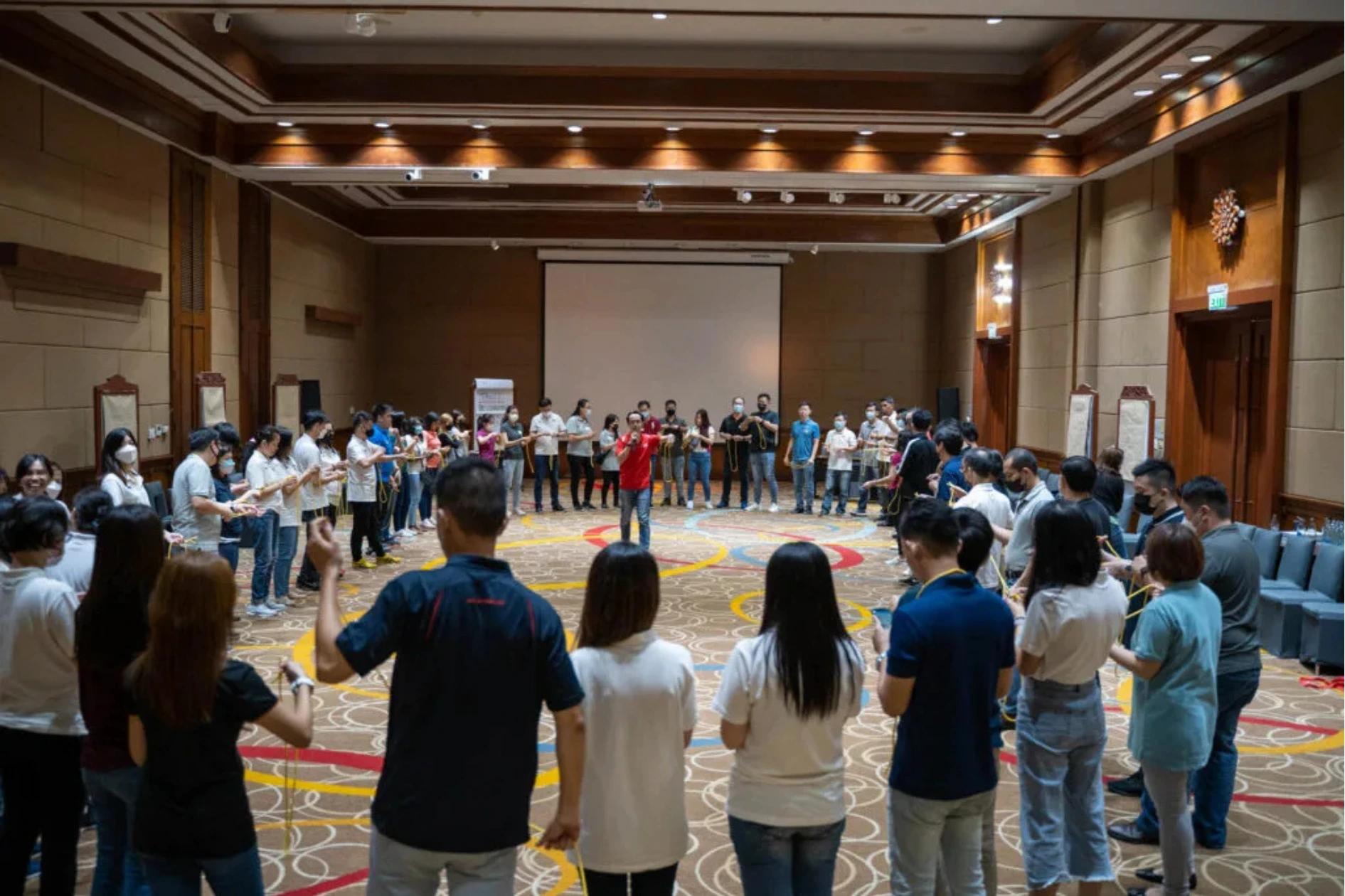
Practical exercises translate frameworks into sustained behaviour change.
Understanding a change management plan is only the first step. The real challenge lies in turning models into actionable momentum that fits your organisation’s culture, people, and context. Too often, leaders try to force a framework onto teams, treating it like a checklist or rigid plan, and wonder why adoption stalls. Successful change happens when frameworks are adapted, paced, and monitored, ensuring they guide behaviour and foster new behaviours rather than dictate them.
Leaders can blend frameworks where appropriate. A purely top-down approach may fail in collaborative cultures, while a purely bottom-up approach can stall in hierarchical environments.
For instance, Sony’s restructuring combined structured change steps with staged communication and coaching, helping employees navigate emotional transitions and move toward a new status quo a clear example of a framework succeeding when adapted rather than imposed.
Similarly, Toyota engages cross-functional steering teams to secure buy-in before rolling out strategic initiatives, demonstrating how culture-sensitive application ensures engagement without disrupting hierarchical norms.
Pacing change is equally critical. Rolling out all phases at once can overwhelm teams. Introducing changes incrementally and embedding feedback loops allows leaders to monitor adoption, make adjustments, and reinforce momentum.
This also provides an opportunity to measure real adoption and behavioural change, rather than just compliance with training or communications. Metrics should include both quantitative indicators such as adoption rates, productivity gains, or response to technological advancements and qualitative feedback, like employee sentiment, focus groups, and observation of workflow adaptation.
Monitoring adoption through surveys and feedback is essential to gauge progress and celebrate milestones during change implementation. Leaders should also pay attention to cultural and emotional adoption: are teams moving through the “Neutral Zone” and embracing new ways of working, or are they merely following processes without internalising them? This approach aligns with the ADKAR Change Management Model, which model focuses on individual adoption, Kotter for organisational mobilisation, and Bridges for psychological transition, showing that change is about people, not just processes.
When leading large scale organizational change, applying frameworks thoughtfully, adapting them to context, pacing implementation, and actively monitoring adoption ensures change is both measurable and sustainable. The combination of structured guidance and real-time human insight prevents frameworks from feeling forced, allowing them to empower teams, build momentum, and achieve lasting transformation.
From Paper to Practice: Making Change Process Happen
Too often, change initiatives live only on paper beautifully drafted change management plans, polished presentations, and detailed timelines yet stall when it comes to execution. Over the years, I’ve seen countless efforts fail not because the frameworks were wrong, but because the human side of change was overlooked.
In my experience working across Singapore and Asia, the organisations that succeed aren’t the ones that follow a model to the letter they’re the ones where leaders adapt popular change management models to fit their culture, pace change thoughtfully, and guide their people through the emotional journey of transition.
Turning theory into action requires more than project charters; it demands attention to behaviour, context, and engagement. I’ve watched leaders transform iniand blending structured frameworks like ADKAR and Kotter with practical, solution-focused approaches.
These leaders excel at managing organizational shifts, introducing new processes, and executing digital transformations in ways that stick. Applying project management principles alongside behavioural insights ensures initiatives are implemented efficiently while maintaining engagement.
Key components of an effective change management framework include executive sponsorship, defined roles, impact analysis, and resistance management.
The lesson I share with every executive is simple: don’t ask which framework is “best.” Ask how you can make change real, measurable, and owned by the people driving it. When leaders answer that question with intention, every initiative from a minor process update to a large-scale transformation becomes an opportunity to build a resilient, change-ready culture.
Frequently Asked Questions (FAQs)
Can the DEEP Model be used for modern digital transformations?
Yes. The DEEP Model is particularly effective in digital transformation because of its simplicity and flexibility. It helps teams clarify the preferred future they want to create, honestly assess where they are today, and identify what is already working before deciding on practical next steps to move the change forward.
The model has been applied in large-scale digital initiatives, including the Digital Strategy work at SingHealth and change efforts at Ng Teng Fong Hospital (Singapore), where teams were navigating complexity, uncertainty, and resource constraints.
By keeping conversations focused, constructive, and action-oriented, the DEEP Model enables teams to lead digital change with confidence without adding unnecessary complexity to an already demanding transformation journey.
Many organisations struggle with adoption despite using a framework. Why?
Frameworks alone don’t ensure success. Many organisations treat models as checklists instead of tools to drive real behavioural change. Without adapting steps to the company culture, pacing the rollout thoughtfully, and embedding continuous feedback loops, initiatives quickly stall. True success comes from aligning the framework with team readiness, engaging key stakeholders, measuring adoption, and celebrating short-term wins to build momentum. In addition, leaders must constantly demomstrate the behaviours they want to change, so that the rest of the organisation can witness and follow. All change is leader led.
How do I manage resistance during large-scale organisational change?
Resistance is natural. Use tools like ADKAR to understand individual barriers, Bridges’ Transition Model to guide emotional transition, and Kotter to maintain organisational momentum. Encouraging open communication, psychological safety, and staged implementation for new behaviors helps teams move from the late status quo to new ways of working.
When is the best time to adjust a change framework during implementation?
Adjustments should happen continuously. Early wins, feedback loops, and monitoring adoption rates indicate whether pacing, messaging, or support needs recalibration. Large initiatives, particularly in technology implementations, often require mid-course corrections to prevent stalling.
Kenneth Kwan is an internationally recognized Author, Global Leadership and Motivational Speaker, renowned for his ability to inspire and empower audiences worldwide. With over a decade of experience, he has spoken to leaders from 40 countries, helping transform cultures and shift mindsets within Multi-National Companies (MNCs) and Government Organizations. Kenneth’s expertise in solution-focused thinking and strategic planning has guided numerous businesses toward significant results and high-performance environments. Featured in esteemed media outlets like Channel News Asia and Malaysia's BFM89.9, his insights on leadership and motivation are highly sought after. Kenneth's book, "Small Steps To Big Changes," showcases his profound wisdom and practical strategies, making a lasting impact in lectures and training programs across the region.